April 17

Samuel Fairbank of Mandarin

Samuel Fairbank is  listed on the 1830 Florida Census Mandarin , Florida.  Samuel Fairbank was also the first postmaster of the Mandarin post office as confirmed by Mary Graff, author of the 1968 book, Mandarin on the St. Johns River.  According to the Mandarin Museum Facebook page, Miss Graff wrote the  National Archives in Washington, DC.  Forrest R. Holdcamper returned a letter  November 6, 1947 with the information of all of the postmasters for Mandarin.  
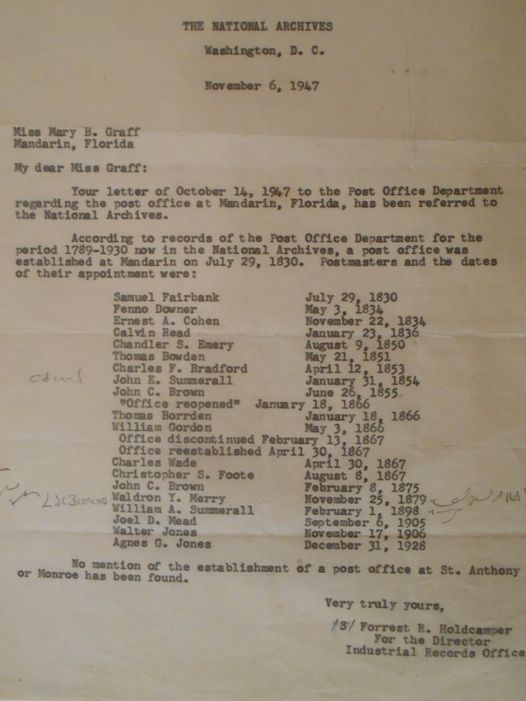
Mary Graff Letter, Collection of the Mandarin Museum and Historical Society

Mandarin on the St. Johns River, as Ms. Graff called it was “established by the British in the 1760’s”, noted by Wikipedia. In 1830, Calvin Reed, named the area Mandarin because of the citrus industry in the area.   It is interesting to note that in 1821 Florida was a Territory and divided by the Suwanee River into two separate counties; East and West Florida.     St. Johns County, also known as East Florida and Escambia County, also known as West Florida.  

Duval County was created in 1822 from St. Johns County and named for William Pope DuVal, the territorial Governor from 1822-1834.  The area of DuVal at the time was from the Suwannee River stretching all of the way east to the Atlantic Ocean bounded by the St. Johns River. More divisions were made to accommodate Nassau county, in 1824 and Clay county in 1858. Jacksonville consolidated on October 1, 1968.  “Atlantic Beach, Baldwin, Jacksonville Beach and Neptune Beach maintain their own municipal governments.”(North Shepherd Moss, Genealogy Trails, Duval County History). 

There is a George R. Fairbanks of New York who settled in St. Augustine in 1842, twelve years after Samuel Fairbank was postmaster of Mandarin’s postoffice.  George became an attorney, historian, author and politician but it does not appear he was related to Samuel Fairbank.

According to genealogy Trails, which seems to have taken information from the early microfiche and documents,  the first census in the Mandarin area was taken in 1830’s.  Based on the information gathered, the two race population was 1,336 which included all of St. Johns County.  By 1860, Genealogy Trails indicated the Federal Census has all of St. Johns County with 1,953 people.

Samuel Fairbank is listed in this survey as living in St. Johns which in his case became “Duval”.  Under the leadership of Governor John Branch, Florida became a state on March 3, 1845  with William D. Moseley elected as the first Governor and David Levy Yulee, U.S. Senator. 

Fairbanks Road in Mandarin is said to have been a dirt road stretching all fo the way to the King’s Road that ran East and West parallel to the coast of Florida. 

In the Mandarin area, there is a Fairbanks Road, Fairbanks Forest Dr., Fairbanks Grant Road W, Fairbanks Grant Road N. 

See you tomorrow.

Nan

Sources:  Genealogy Trails, 1830 Florida Census, History of Duval County, Mandarin Museum and Historical society, Mary Graff, Wikipedia.

This information including Ramey photos may be used with credit to Ramey Collection. Photos may be 3rd party for which may be secured by copyrighted owner.

If you believe you are a copyright owner or can help with information regarding this article, including to clarify rights or information issues, please contact me. We are willing to remove any item from public view if there is any concern regarding ownership. 
April 16

Hattie Stowe Meets President Lincoln and Governor Stearns

The written work of Harriet Beecher Stowe, affectionally called “Hattie” by those who knew her well, is known as being quite controversial at the time it was written at a time of rampant slavery.   Stowe often stood alone in her thoughts. As one writer has said, even her thoughts were “complex’. At a time that even women were expected to stay quite and stay in their own lane. Stowe widened the road and wrote a blockbuster book impacting the world of readers.

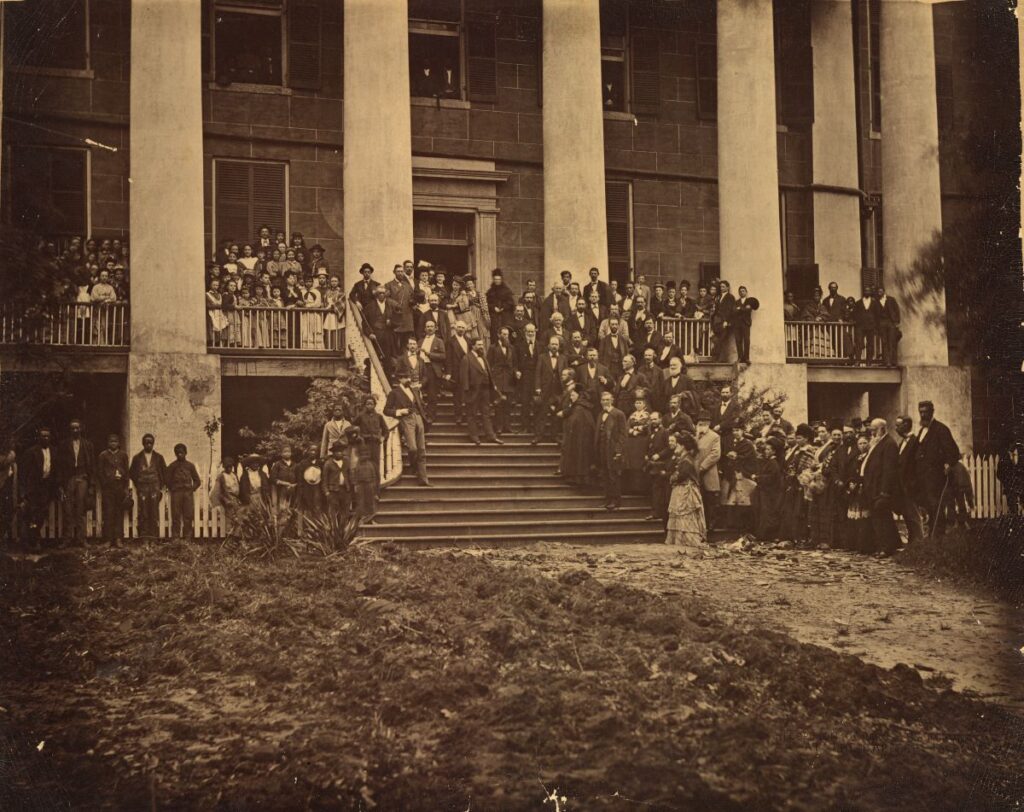
Stowe meets Florida’s Governor, Print Collection, Florida Memory collection.

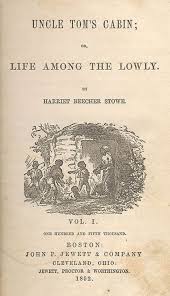
Uncle Tom’s Cabin, also called “Life Among the Lowly” , was written by Harriet Beecher Stowe in 1852.    It became a “runaway best-seller” selling 300,000 copies in the first year in America and millions abroad.  According to Google Search, “Stowe became a leading voice in the anti-slavery movement”. 

When Abraham Lincoln met Stowe in Washington, D.C. in 1852,  it is reported he said, “So you’re the little woman who wrote the book that made this Great War”. 

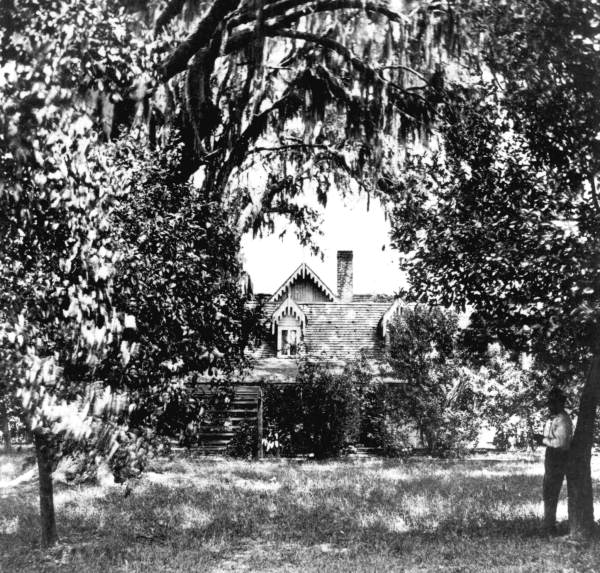
In  1874, Stowe met with Governor Marcellus L. Stearns at the capital in Tallahassee with a huge crowd and great fanfare.  Stowe had already published Palmetto Leaves in 1872 and this had added to the excitement around Mandarin,Fl where she lived in her “cottage”( see photo), along the St. Johns River.  People would pay shipmasters to ride in boats to see her sit on her porch along the Mandarin shoreline.  Stowe spent some 17 years wintering in Mandarin, Florida.

The last of her home was demolished in the 1960’s and there are no remnants from it save possibly the ones in the back roads of Mandarin.  It is said that the Black members of Mandarin loved her so that when her house was demolished, they saved the ginger bread trim from her house and used it on their own.

I continue to search among the small homes on the backroads of Mandarin dating to the 1850-1960’s to see if I can find any of those important artifacts. I’ll let you know if I do.

See you tomorrow

Nan

Sources: Florida Historical Society, Florida Memory, Person visit to the Mandarin area.

This information including Ramey photos may be used with credit to Ramey Collection. Photos may be 3rd party for which may be secured by copyrighted owner.

If you believe you are a copyright owner or can help with information regarding this article, including to clarify rights or information issues, please contact me. We are willing to remove any item from public view if there is any concern regarding ownership. 
April 15

Mandarin’s Miss Aggie Award

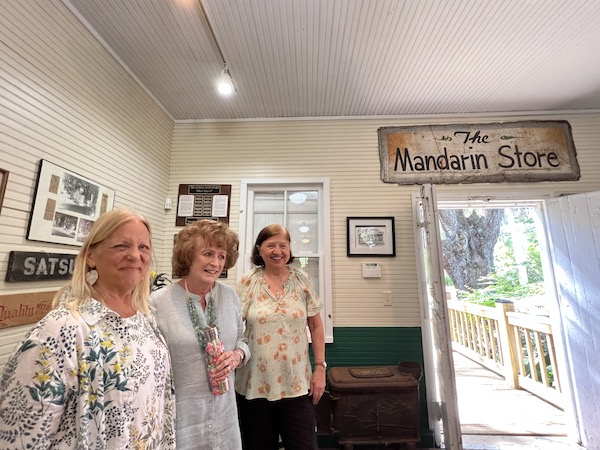
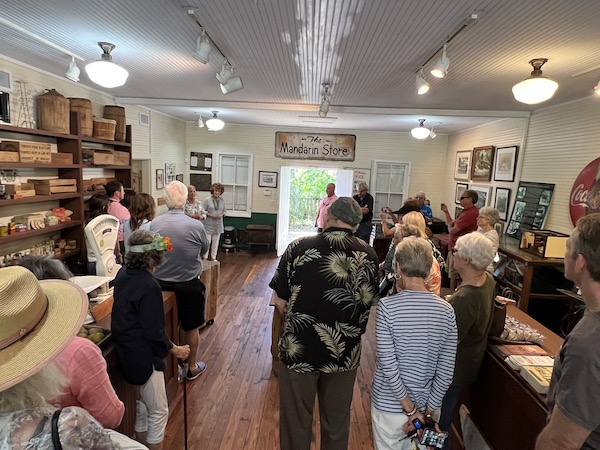
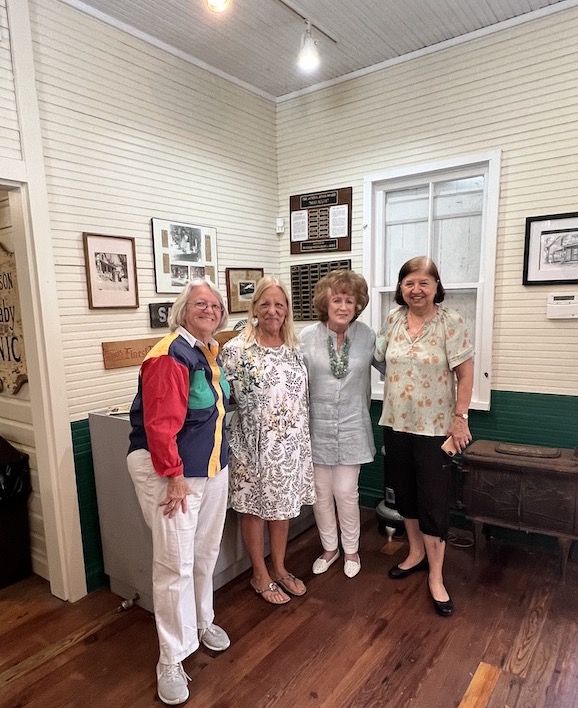
Today at the Mandarin post office, a group with the annual Miss Aggie Day event celebrated the life of Susan Ford, one of the Mandarin Historical Society members and lover of all things Mandarin.

Karen Roumillat, Susan Ford, Sandy Arpen

Agnes Jones was the postmistress in Mandarin for many years (1928-1963). She was known to give of herself to many in Mandarin, those with need and those who simply needed a kind word. An award was set up which is given every year in May. Susan Ford was honoured.

Susan has recently published, with the cooperation of the Historical Society a book called “Images of America: Mandarin which is a photolog of many facets of Mandarin, Florida.

Once, Mandarin was a sleepy, country area made up of hard working people living the wooded, life.  Today, it  is growing in leaps and bounds such that many in the community are saying “enough!”.

Susan Ford has loved Mandarin for many years and said that putting this book together was simply a “labor of love”.  

Karen Roumillat, Susan Ford, Sandy Arpen

I was able to catch up with Susan for the first time in many years. Pleasure.

See you tomorrow,

Nan

Sources: Mandarin Newsline, Sandy Arpen, Mandarin Historical Society Facebook. Personal visit to the Mandarin Post Office. 

This information including Ramey photos may be used with credit to Ramey Collection. Photos may be 3rd party for which may be secured by copyrighted owner.

If you believe you are a copyright owner or can help with information regarding this article, including to clarify rights or information issues, please contact me. We are willing to remove any item from public view if there is any concern regarding ownership. 
April 14

Robert J. Bateman of the Titanic

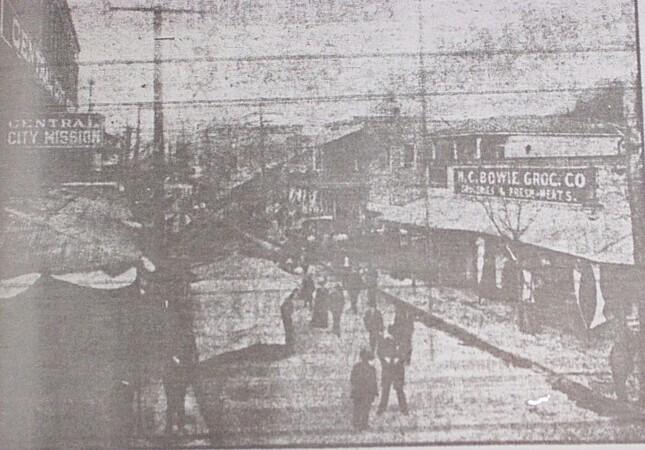
Robert James Bateman was born in Bristol, England. He met and married Emily Hall Bateman in Britton on February 9, 1880. It is said he was returning to Jacksonville, Florida where he was the founder of the Central City Mission.

Mission- Jacksonville, Florida (Cowart Collection)

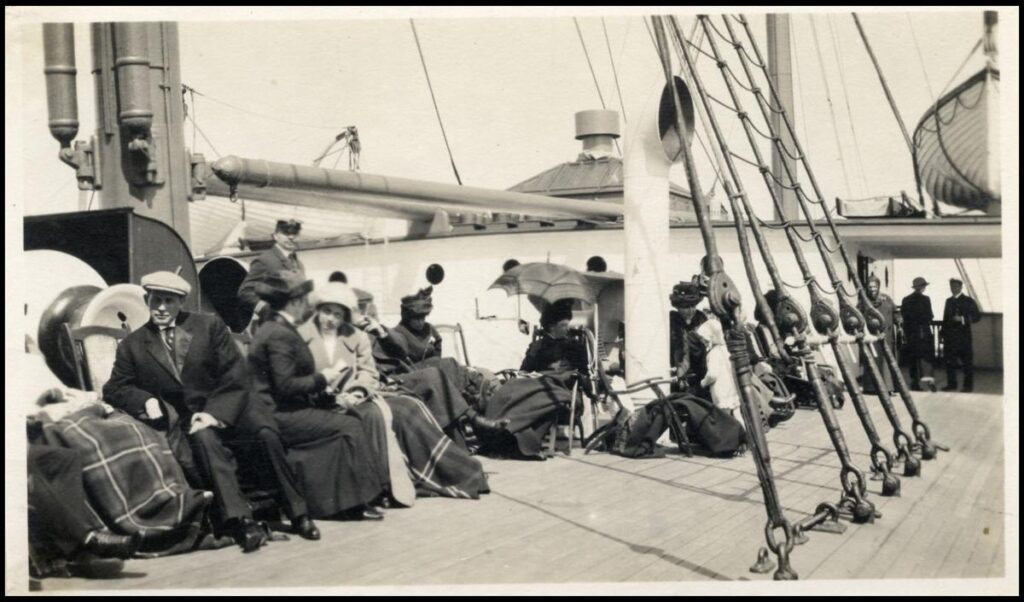
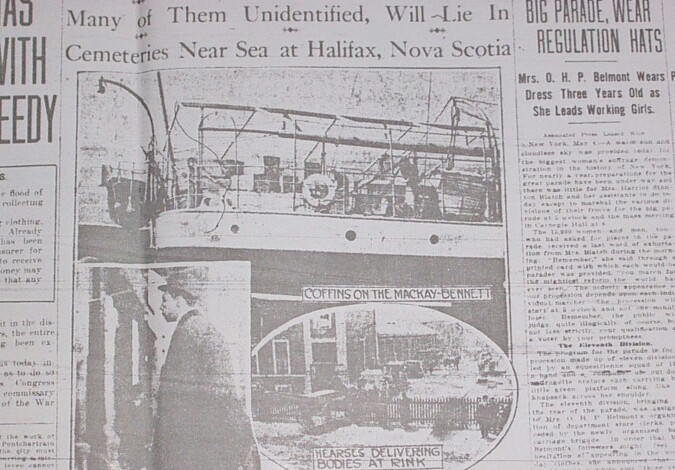
Bateman was returning from England when the Titanic Ship hit an iceberg and sunk on April 14,1912.  People were relegated to getting on life boats to save their lives.  Because the ship was deemed “unsinkable”, the White Star Line did not put enough life boats on the ship. Bateman is said to have stayed behind, lead the band in the song “Nearer My God to Thee” as the ship went down. 1,523 people lost their lives on that fateful night in the North Atlantic Ocean.

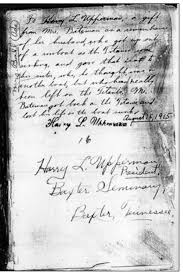
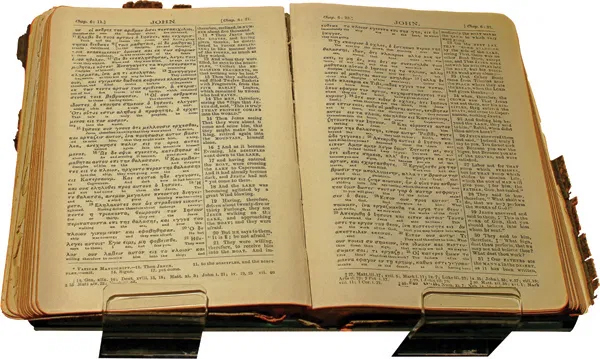
There is evidence that he gave his Bible to Aida Balls, his sister-in-law. His Bible was put on display in the Baxter Seminary Library in the 1940’s and later is said to have been put on display at the Titanic Museum in Tennessee. It is now at the Museum of the Bible in Washington, DC.

Titanic Museum Display

Bateman’s lifeless body was returned to his wife in Jacksonville. His service was held at the First Baptist Church of Jacksonville, Florida  on May 12, 1912.   Bateman( 1860-1912) is buried at Evergreen Cemetery off of Main Street in Jacksonville, Florida.  There are five memorials tied to the Titanic at Evergreen Cemetery.

Bateman found by the Mackay-Bennett group

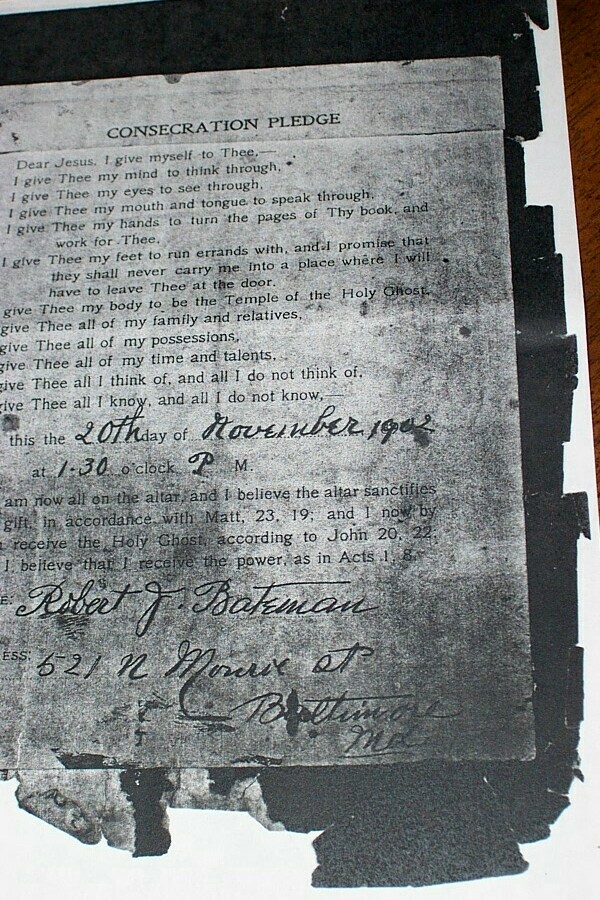
Bateman was known as a true Christian with many articles quoting his love of Christ and desire that people be saved.

Notes in Bateman’s Bible (J. Cowart collection)

See you tomorrow,

Nan

Sources:  Florida Baptist Historical Society, Voice of the Martyrs, Cowart, Old newspapers in public domain, Scottishrite.org, Evergreen Cemetery, Personal visit to Evergreen.

This information including Ramey photos may be used with credit to Ramey Collection. Photos may be 3rd party for which may be secured by copyrighted owner.

If you believe you are a copyright owner or can help with information regarding this article, including to clarify rights or information issues, please contact me. We are willing to remove any item from public view if there is any concern regarding ownership. 
April 12

J. Allen Axson Public School # 8

1226 E. 16th Street/Franklin Street

Moved to: 4763 Sutton Park Court 32224

1910

To be repurposed

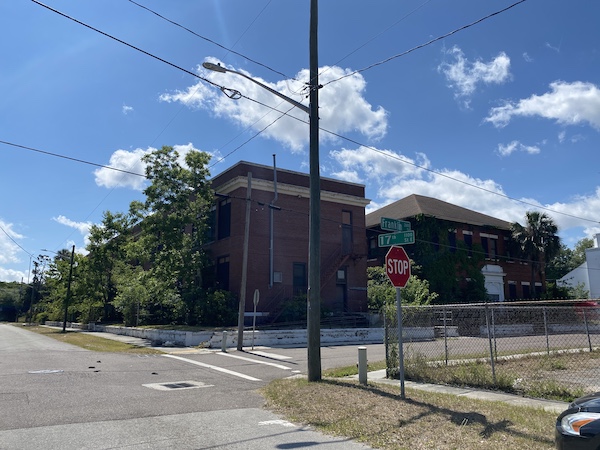
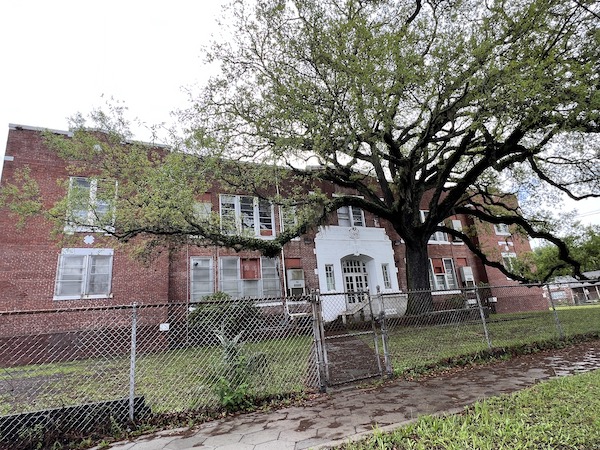
Originally called Graded Springfield School, and East Springfield Elementary school, its name was changed in honor of J. Allen Axson,  the former principal of the school.  The school is number 8 in the public school listing and sits on 2.7 acres of land in east Springfield.  The school was built in  1912  In his younger years, Axson became a farmer, worked as a carpenter. Later, he worked as an educator.

J. Allen Axson # 8. (Ramey Collection).

The school was designed by Richard Lewis Brown, Jacksonville’s first Black architect.  It was built in 1910 following the out-growth after the Great Jacksonville Fire of 1901. Several students who attended this school were Frank R. Williams, Eric Leonard Jenkins and Clayton Emory Smith.  Employees at the school were many including Mrs. Edie Garrett and Maury O’Cane.  The area itself was known as the “Phoenix Avenue”, had begun n 1904 and with the growing area was in need of a school for children thus the Phoenix was rising,  symbolic of “growing out and above a catastrophe”.

Things in that area grew steadily until the Haines Street Expressway was built east of the school. Traffic, transportation and true crime plagued the area. The school closed in 2005. It reopened as a Montessori school in 1991. After the school closed, vandals broke windows, and painted graffiti on walls. It was boarded up but vandals found a way in and a fire damaged its interior in 2021. 

In 2023, there has been hope to repurpose the building. 

See you tomorrow,

Nan

Sources: Duval Public Schools, Personal visit.

This information including Ramey photos may be used with credit to Ramey Collection. Photos may be 3rd party for which may be secured by copyrighted owner.

If you believe you are a copyright owner or can help with information regarding this article, including to clarify rights or information issues, please contact me. We are willing to remove any item from public view if there is any concern regarding ownership. 
April 11

Fairfield Elementary # 9

1910

515 Victoria Street

Originally called East Jacksonville Grammar School the school was built in 1910.  It is located at 515 Victoria Street at the west end of the Matthews Bridge.  The architects, Mark and Sheftall  took on this school as their first project l and would build as many as 50 schools in Florida.   

Fairfield Elementary School # 9 ( Ramey Collection)

The school closed in 1971 and reopened as Fairfield Correctional Institute. At some point it was used by the Urban League where a Head Start program was enacted.  School number 9 was purchased by a private owner in 2015.  

In 2018 it was used for parking cars.In 2020 there was a post on the Fairfield School Facebook page offeringFl-Ga parking:  “Plenty of room. Perfect for RVs. Private lot”. Tailgating welcome?”

IF you visit today, it appears closed and has Sheriff’s signs in the windows.

See you tomorrow,

Nan 

If you believe you are a copyright owner or can help with information regarding this article, including to clarify rights or information issues, please contact me. We are willing to remove any item from public view if there is any concern regarding ownership

April 10

Southside Grammar School # 7

1916

1450 Flagler Avenue

Southside Grammar School Photo: The Lofts

On the 15th day of April, 2004, the South Jacksonville Grammar School was placed on the National Register of Historic Places.  Architects, Victor Earl Mark and Leroy Sheftall designed the school and it was built in 1916.  The school closed in 1971. It was used by the Duval County School board for administrative offices for a time. The building was sold in 2001 to  a San Marco=based company owned by Barbara Cesery and her brother Bill Cesery, developers in Jacksonville, Florida.  The school was developed into 38 loft units for family living.

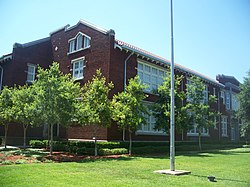
Southside Grammar School. (Photo: Wikipedia)

With new growth in the San Marco area and it being just south of Jacksonville , the historic former Southside Grammar has outlived many other former schools in the county.

See you tomorrow,

Nan

Sources:  The Lofts San Marco, Wikipedia.

I

This information including Ramey photos may be used with credit to Ramey Collection. Photos may be 3rd party for which may be secured by copyrighted owner.

If you believe you are a copyright owner or can help with information regarding this article, including to clarify rights or information issues, please contact me. We are willing to remove any item from public view if there is any concern regarding ownership. 
April 9

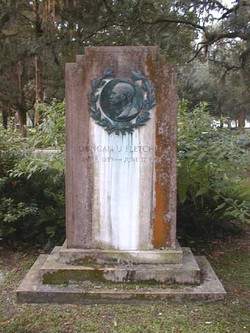
Duncan Upshaw Fletcher # 223 ( 1859-1936)

700 Seagate Ave, Neptune Beach, FL

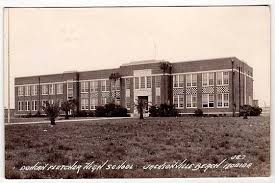
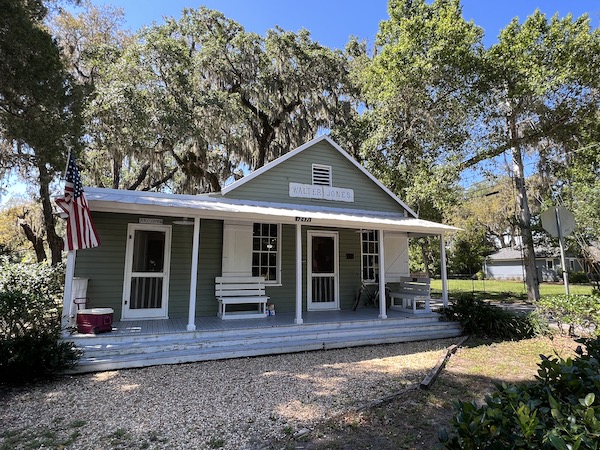
Duncan U. Fletcher High School was founded 1937.  It sits on 20.5 acres and located at the beaches.

Beaches Museum Photo

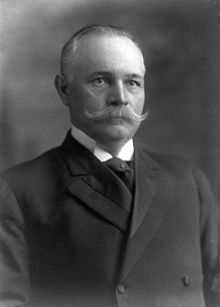
The school was named in honor of Duncan U. Fletcher.  Fletcher was born in Georgia, graduated from Vanderbilt University and  after 1880 moved to Jacksonville, Fl working as a lawyer.  He became mayor of Jacksonville from 1893-1895.  After the Great fire of jacksonville, Fletcher was instrumental in getting the city back on a positive path. Fletcher served as a member of the Florida Senate for some 30 years.   By his pen, the Everglades National Park was introduced and signed into law in 1934 by President FDR.

Duncan U. Fletcher. Photo- Public Domain

He was chairman of the Board of Public Instruction from 1900-1907 and for many years was a trustee of John B. Stetson University and the St. Luke’s Hospital .  (Wikipedia).

 Fletcher died in Washington D. C in 1936. He is buried in Evergreen Cemetery in Jacksonville, Florida.

Memorial Evergreen Cemetery, Jacksonville- Photo-Find a Grave.

See you tomorrow

Nan

Sources: Wikipedia, Stetson University, Duval County, Personal visit to Evergreen and the school.

This information including Ramey photos may be used with credit to Ramey Collection. Photos may be 3rd party for which may be secured by copyrighted owner.

If you believe you are a copyright owner or can help with information regarding this article, including to clarify rights or information issues, please contact me. We are willing to remove any item from public view if there is any concern regarding ownership. 
April 8

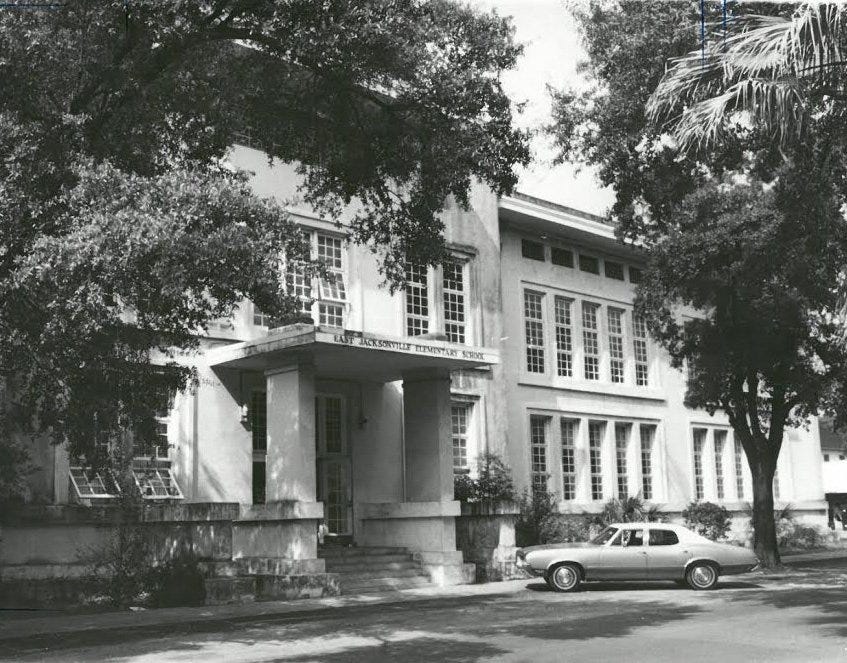
East Jacksonville School # 3

1917

Demolished- Formerly located at Ashley and Van Buren Streets

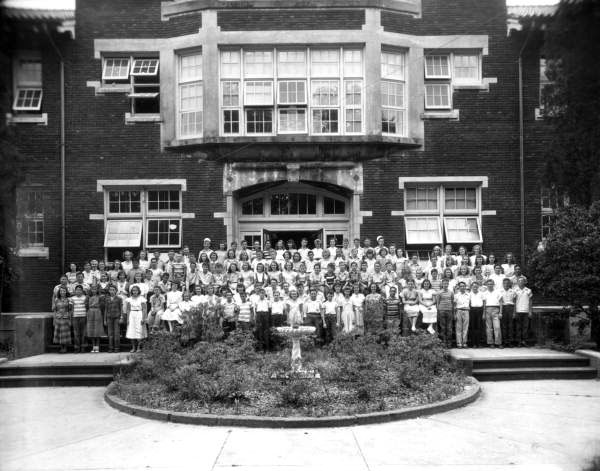
East Jacksonville Public School # 3. (Photo: U of Fl Digital Collections)

East Jacksonville Elementary School, Photo: (U of Fl Digital)

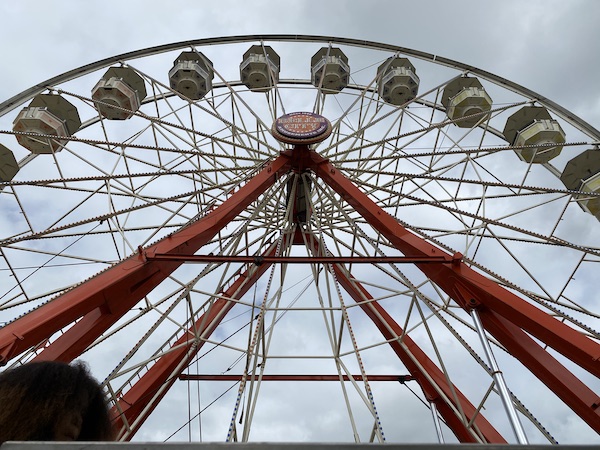
At this writing, school children and their families park at the Jacksonville Fairgrounds where Public School # 3 once housed children for education. The Fair has been in operation since 1955 as written in its history online.  The school was built in 1917, long before the Fair was on those grounds. 

The school was demolished in 1981.  At one time, it was a large,  fine and stately building existing for over sixty years. It was one of Henry K. Klutho’s designs and opened in 1917.

See you tomorrow,

Nan

Sources: Florida Memory, Fairfield School # 9 Facebook page, Historic Preservation @ UF,Photo: U of Fl Digital Collections

If you believe you are a copyright owner or can help with information regarding this article, including to clarify rights or information issues, please contact me. We are willing to remove any item from public view if there is any concern regarding ownership. 
April 7

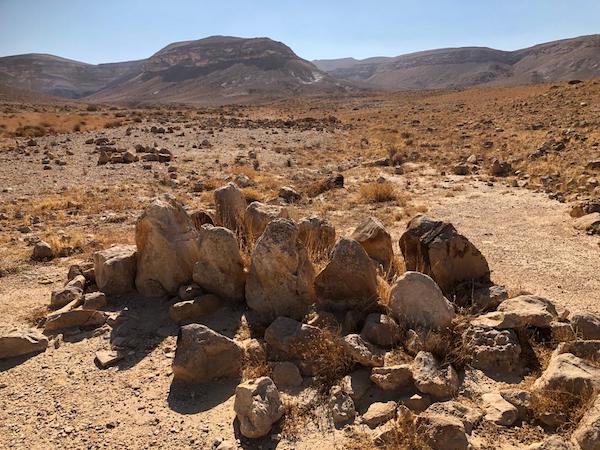
12 Stones of Crystal Springs

Symbolism… ” The idea that things represent other things”. In Israel, the twelve stones represented the remembrance of “God’s faithfulness, providence and love every time they would look at the stones”. There were twelve tribes of Israel so each stone represented each tribe.

The scripture says, “Joshua set up the twelve stones that had been in the middle of the Jordan at the spot where the priests who carried the ark of the covenant had stood. And they are there to this day.” Joshua 4:9. That event occurred when Israel passed over the Jordan river to enter the Promised Land. Each stone was for each Tribe of Israel, such as one stone was for the Tribe of Reuben, Simeon, Levi, Judah, Dan, Naphtali, Gad, Asher, Issachar, Zebulun, Joseph, and Benjamin.

Our family has been so blessed and so this Easter time, twelve stones were placed at the entrance of our chapel area at Vaughan’s Homestead in remembrance of God’s faithfulness and providence.

These stones; bricks were those that were put on this property when our home was being built in 1960. Our stones are named: Alec, Geneva, Ronnie, Nan, Daniel, Katie, Ramey, Vaughan, Sargent, Derrick, Kristie and one for the extended family as a whole.

May we all be found faithful and when we look upon the stones, realize that God is our fortress and strength.

See you tomorrow,

Nan