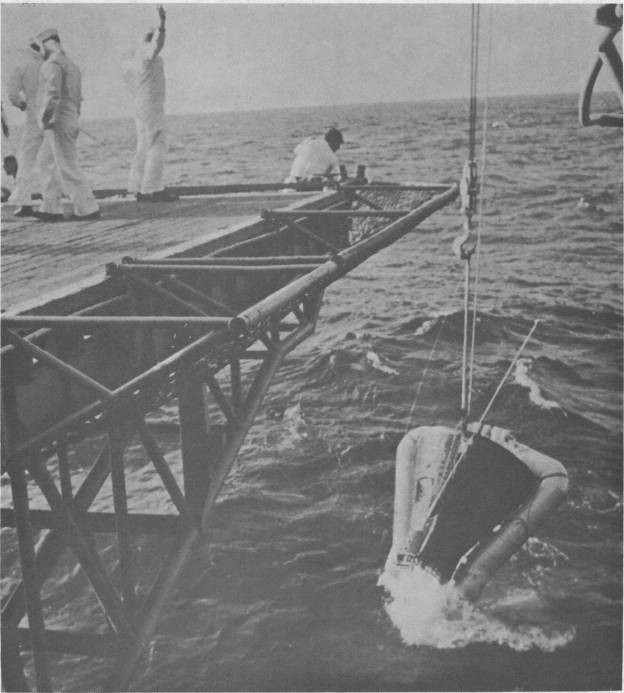
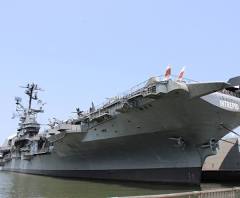
USS Intrepid with Gemini III at recovery, 1965-Atlantic Ocean (NASA)
The USS intrepid ( CV-11) had visited Mayport on several occasions in the 1950’s and 1960s. It was a “renowned Essex-class aircraft carried commissioned in 1964”. It served in WWII, the Cold War and the Vietnam War.The ship was chosen to gather up “Mollie Brown”, the Gemini space craft capsule and did so with a successful recovery on March 25, 1965.
Intrepid ship
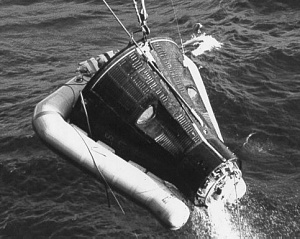
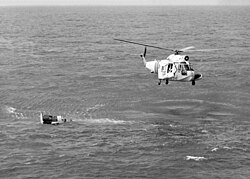
The ship was used to recover the capsule flown by Virgil “Gus” Grissom and John W. Young. It was the first mission where the crew would maneuvre the space craft and considered a “human spaceflight”. The mission lasted just short of fiver hours. The capsule landed in the Atlantic Ocean on March 3, 1965. It was brought to Mayport. The astronauts both became seasick and were picked up by helicopter and taken to the Intrepid for a complete physical check. They were found in “good condition”.
Capsule, Gemini III.(NASA. gov)
The ship was decommissioned in 1974 and since 1982 has been berthed in New York City as an air and space museum. In 1986 it was designated as a National Historic Landmark. As one of the headings on the museum website, if you visit you can “Let your imagination soar”. On the flight deck are propeller planes used in WWII, fighter jets used in Vietnam, and helicopters “that recovered NASA astronauts in 1964 right here on Jacksonville’s coast at Mayport.
Crew flown by helicopter to Intrepid (NASA)
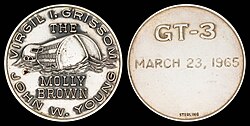
To commemorate this important mission, the United States Mint designed gold-plated, sterling silver 1-inch medallions of which the crew carried into space to later give friends and family members.
Medallions by U. S. Mint (U.S. Mint)
At the museum there are educational resources, exhibitions, collections, a space shuttle pavilion, and many other historic preservations of importance.
Grissom and Young (NASA)
The Gemini III capsule is now at the Grissom Memorial State Park near Mitchell, Indiana which is Grissom’s hometown.
See you tomorrow,
Sources: Google AI Overview, U. S. Carriers . Net, Intrepid Museum, U. S Naval Institute, NASA.gov, Wikipedia, USCG, Vaughan Publishing, Nannette V. Ramey.
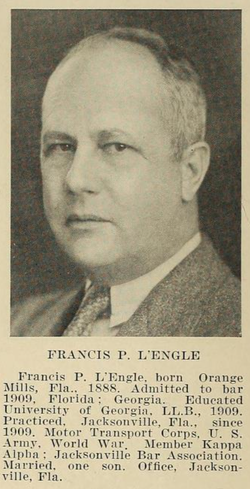
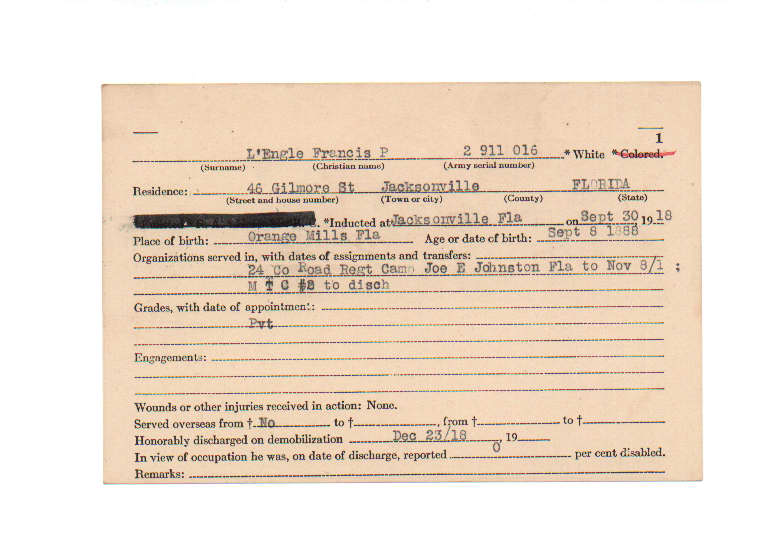
LaVilla began as a small settlement in Jacksonville, Florida by Francis F. L’Engle, a plantation owner who divided up land for freedmen and women following the Civil War. With the Emancipation Proclamation in 1863, Black’s now had freedom. However, it would take time for the results of the Civil War to take hold.
LaVilla was incorporated in 1869 and later annexed by the city of Jacksonville in 1887 according to The Jaxson. L’Engle would serve as the first mayor. Visit Jacksonville indicates it was the “Harlem of the South”; an epicentre for Black culture. Following the Civil War there was a “Reconstruction” era and the LaVilla area became an epicentre for Black people.
Information about Francis L’Engle.
The 1901 Great Fire of Jacksonville destroyed much of downtown leaving homes, families and businesses in total devastation and distress. The loss of over 140 city blocks, 2,300 buildings, and the displacement of some 10,000 residents called for a total rebuild. Governor William Jennings declared Martial Law and for more than a decade there was serious building efforts.
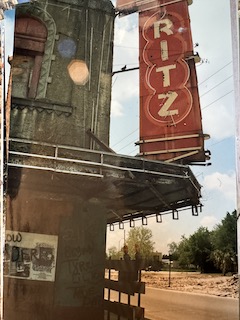
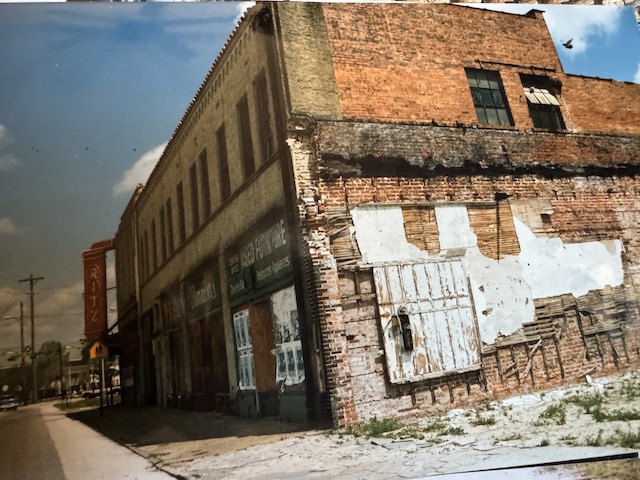
In 1929 the Ritz Theatre was designed by Jefferson Powell. It opened to a new generation of families and served as a place to host some of the greatest of all time musicians and orators. For years, the doors would open to events, and programs serve the community with music and song.
The Ritz Theatre in the 1990’s. Ramey Collection
Just as many other businesses in the LaVilla area, the Ritz could not keep up with the revitalization taking place in other parts of Jacksonville so it closed in 1972. From 1972 to 1999, it was boarded up and began great decay over the years.
Late 1980’s. (Ramey Collection)
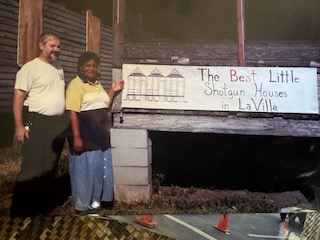
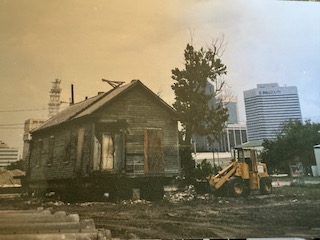
In the early 1990’s there was a lot of debris and brick pilings indicating a demolishing event going on downtown. I began taking random photos of what was happening and knowing it was a part of the “River City Renaissance plan”, a program to rebuild that part of downtown Jacksonville thought there would be a quick revitalization. It has taken years to improve the area and there are still vacant lots. Much of the old town of LaVilla is no longer there except for a few icon places such as The Ritz Theatre, Clara White Mission, the Richmond Hotel and more.
late 1980slate 1980s
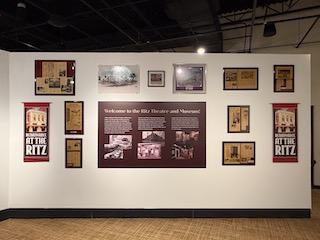
In 1999, the Ritz reopened with a vision and focus to revitalise the past great events and expand its program being now called The Ritz Theatre and Museum.
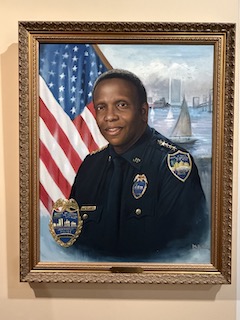
Visiting the museum, there are photographs of many of the greats that once performed there. There are also photos of some of the greats who have helped shape the city of Jacksonville since such as Winona Alexander, Adam Herbert, Norma White, Arnott Girardeau, Rayfeld Alfred, Nathaniel Glover, Earl Kitchings, Bob Hayes, and others.
Nathaniel Glover
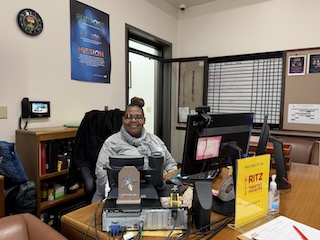
Take time for a visit and say hello to Ms. Bernadett.
It won’t disappoint.
See you tomorrow,
Sources: The Jaxson, Ennis Davis, Florida Memory, Google AI Overview, Visit Jacksonville, Find a Grave, Wikipedia, Vaughan Publishing, Nannette V. Ramey
On a recent hunt, I tried to find any remnants of the “Old Jacksonville Racetrack” of Duval County, also known as the Jacksonville Speedway. I was told it had been located near the intersection of Lenox Avenue and Plymouth Street on the westside of the city. At one time, it was “the” place to race an automobile.
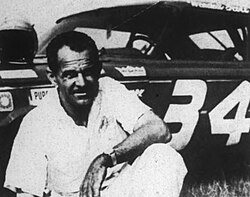
All that was there though, was a huge conglomerate of apartments named Madelyn Oaks formerly Lenox Court Apartments. 5710 Lenox Avenue was gated but not a racer to be seen, so I traveled the road to talk with anyone who might know. At Pugh Automotive, I got some answers. Lee, an office worker said the track was indeed where the apartments now sit and he spoke a great deal about what had once been a busy and fun place. He noted that Wendell Scott, the first Black person to win at racing had made his mark there, along with many others.
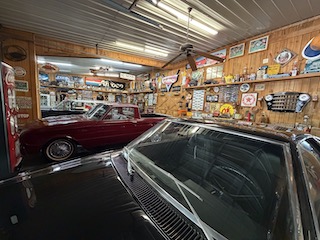
Being in the automotive business, he was obviously familiar with the racing industry and on the Pugh property were various cars dating back to the days the track was just yards away. I asked if he had a race car on the property. He said “no,” but there then he took me inside the shop to show me a framed race car photo from the days of the busy track. Also he noted for me to look at the vintage autos all around. They were beautiful along with the memorabilia and collectibles around the room and on the walls.
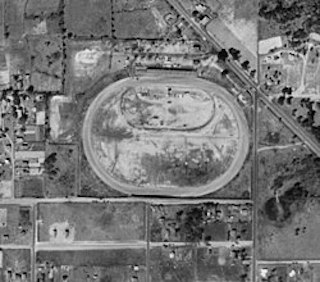
Wikipedia has a 1952 aerial photograph of “Speedway Park” which opened in 1947. It closed in 1972. The track was a 0.5 oval dirt tract which was used for auto races including NASCAR Grand National Series.
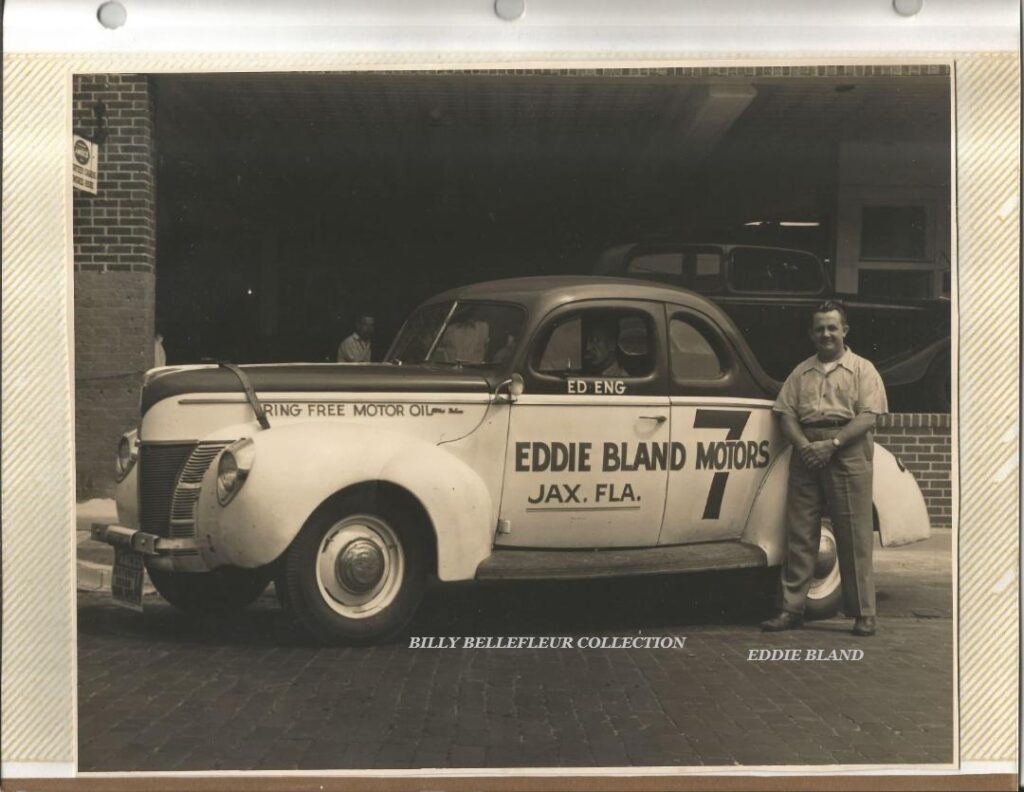
Eddie Bland (1904-1968) built the racetrack on family farm land in 1946. He had been an avid race car driver winning 3 Florida State championships. His 1934 cars were # 11 and # 8. After WWII, he built the 1/2 mile speedway and in March of 1947 the track had its first stock race. It became known as “the fastest 1/2 mile dirt track in the world” according to Forumation. com. Bland is considered one of the “true pioneers in the southeastern world of stock car racing.” He was inducted into the Jacksonville Stock Car Racing Hall of Fame in 1998.
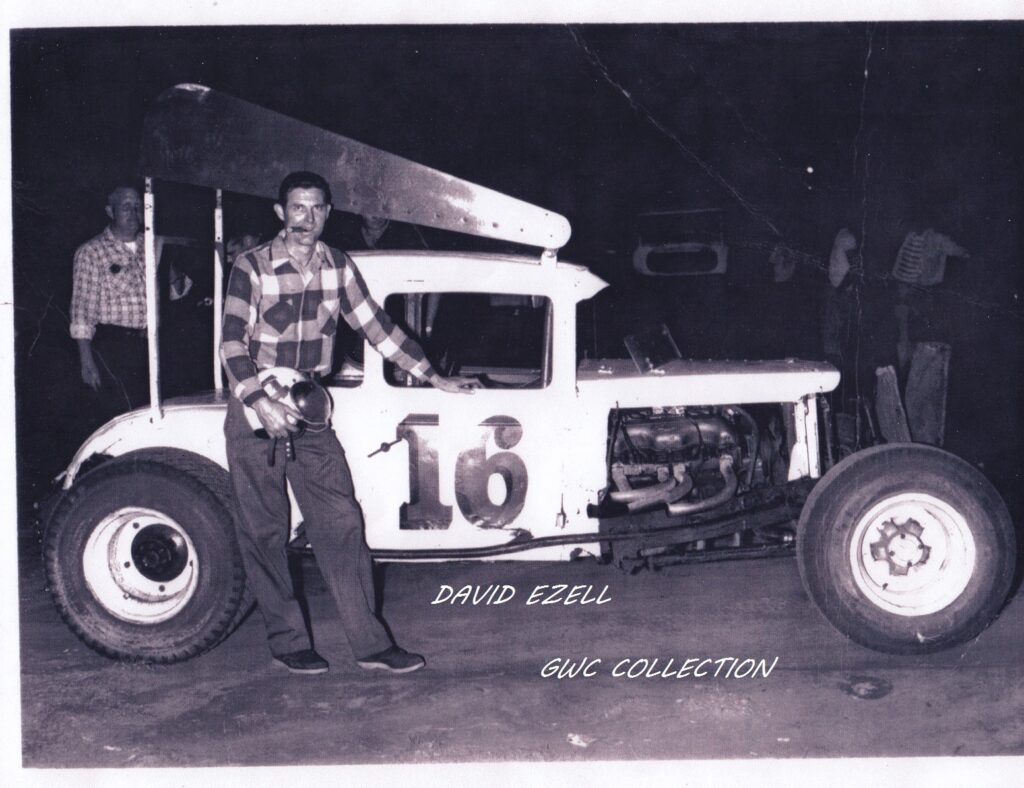
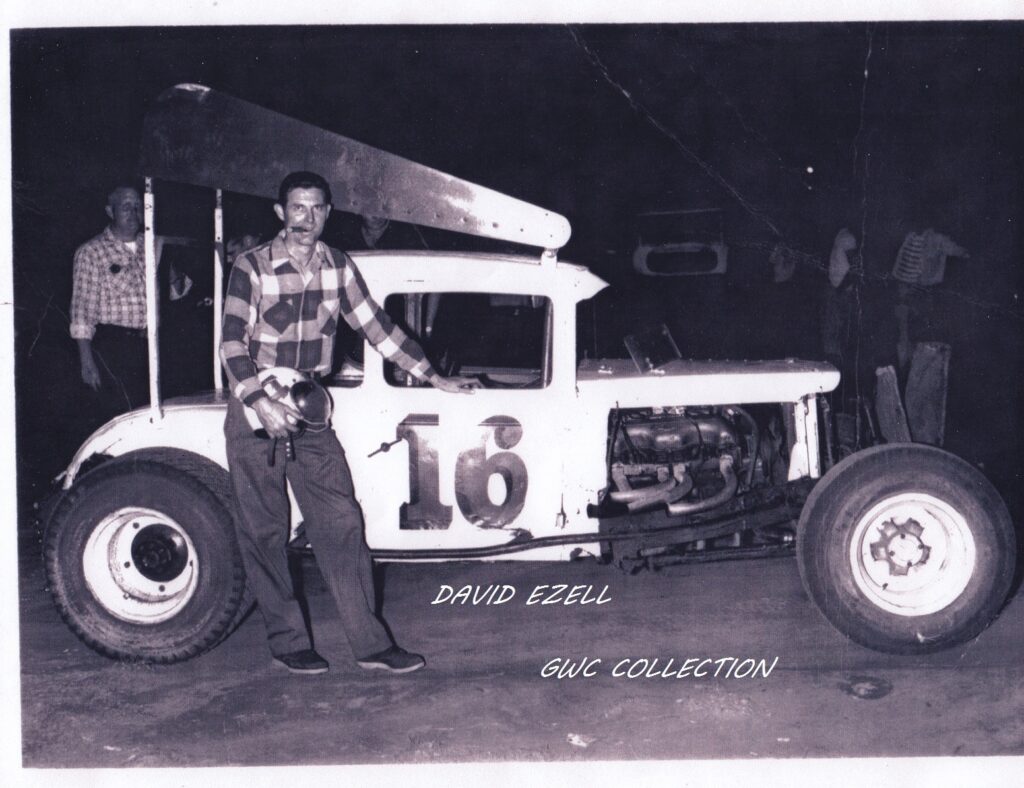
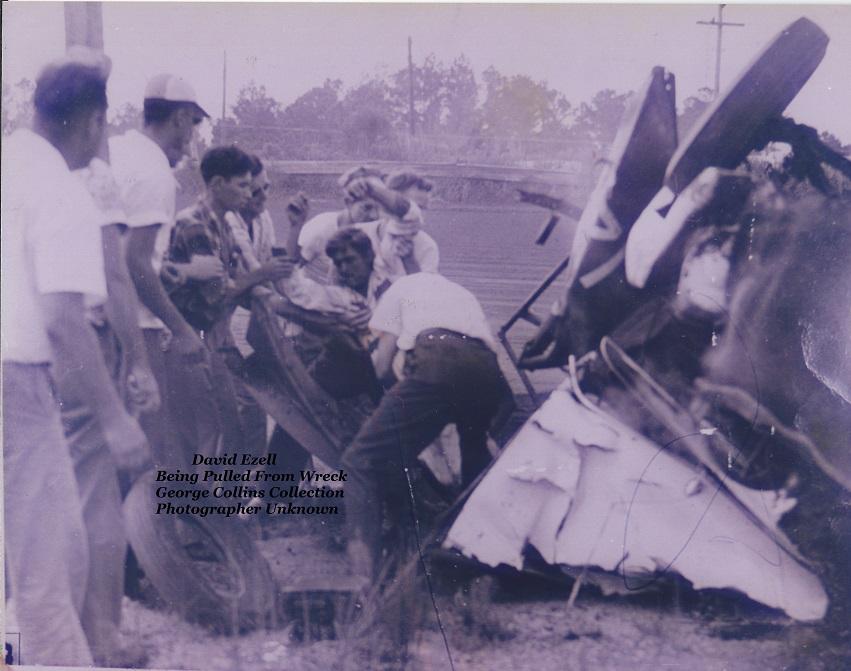
In talking to a high school friend, Wayne Ezell, he tells about the life of a stock car driver being “all in or nothing” and says that his father, David was “all in”. David Ezell (1928-2013) had been a Navy veteran and well known stock car driver. His son, who had also raced on the track, tells that his family of 5; his Dad, Mom, an older sister, younger sister and self lived the lives of a racing family. David was inducted into the Jacksonville Stock Car Racing Hall of Fame in 1991.
In scanning the Facebook Speedway site, Bob Robert-Hoden wrote of Ezell, “That man could drive good. He was the Earnhardt of the 50’s and 60’s”. Frank Ridden wrote, “ That was my man back then”. Wayne Davis wrote, “David Ezell was my absolute favorite driver at the old Jacksonville Speedway part he always took time to come speak to me when I was a little feller when I was at the fence, separating the pits in the infield, and I’ve never forgot that and hopefully I never will. I always tried to emulate that in my racing career.”
Of David Ezell, George Collins, an Admin for the Jacksonville Speedway Facebook page wrote:
“Too little is said about David Ezell, probably the most under-rated driver evere to turn a wheel at the old speedway. David probably won more races accidently than many could brag about on purpose. If truth be known, he most likely wore out more cars than he wrecked. This one he didn’t get to wear out, although he drove it two seasons or three. This was his first race car, a 39 Ford deluxe coupe. I just noticed it has 1938 standard fenders.”
The Jacksonville Speedway opened in 1947. Iy would host NASCAR Grand National Series in 1951, 1952, 1954, 1955, 1961, and 1964. It would also host the race for Wendell Scott, the first Black to win. NASCAR top series.
Following the NASCAR Grand National East Series, the track was closed in 1973 and today a housing development fills the property.
See you tomorrow,
Sources: David Wayne Ezell, Pugh Automotive, “ Lee”, Jacksonville Stock Car Racing Hall of Fame, Wikipedia, Forumotion .com, Photos: George Collins, Hazel W., Facebook, Wikipedia, Vaughan Publishing, Nannette V. Ramey
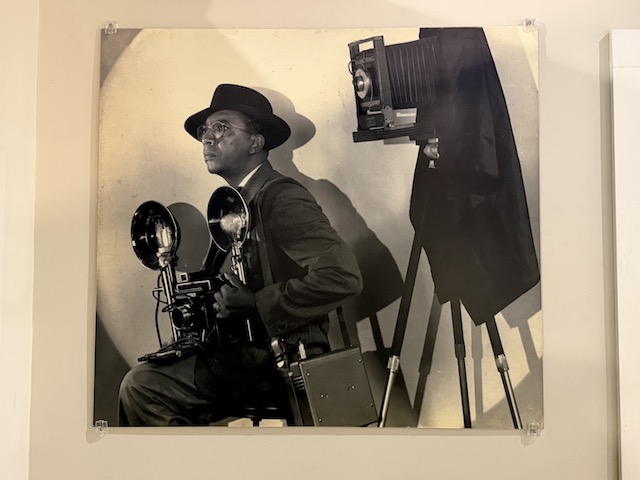
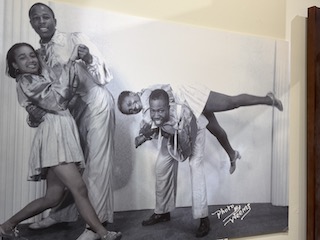
For over 50 years, Ellie Lee Weems (1901-1983) photographed and documented life in a segregated Jacksonville. He was born in McDonough, George and moved to Duval County in 1929. His home and business was located at 434 W. Beaver Street. From weddings, social events, graduations, parties, to just normal life, he captured it on film. The Ritz Theatre and Museum on Davis Street has a whole exhibit with photographs and information about the life of Weems.
E. L. Weems, Photographer (Ritz Theatre and Museum).
According to the Florida Times Union, he studied at Tuskegee Institute under Cornelius Marion Battey, “prominent photographer and instructor”. Weems died at the age of 82 and is buried in South-View Cemetery, Atlanta, Georgia.
Weems Photo (Ritz Theatre and Museum)
Many of Weem’s photographs can be seen at the Auburn Avenue Research Library, Ritz Theatre and Museum, and the University of North Florida. The exhibit at the Ritz Theatre and Museum highlights many of his important and historical photographs also showing his camera equipment type, and more.
Entrance to Ritz Theatre ( Ramey collection).
See you tomorrow.
Sources, Henry County, Institute, 193, Jacksonville.gov, Florida Times Union, Saunders Murray, Ritz Theatre and Museum, Find a Grave, Atlanta Constitution, Vaughan Publishing, Nannette V. Ramey.
Category: Art, Business, People | Comments Off on E. L. Weems, Black Photographer
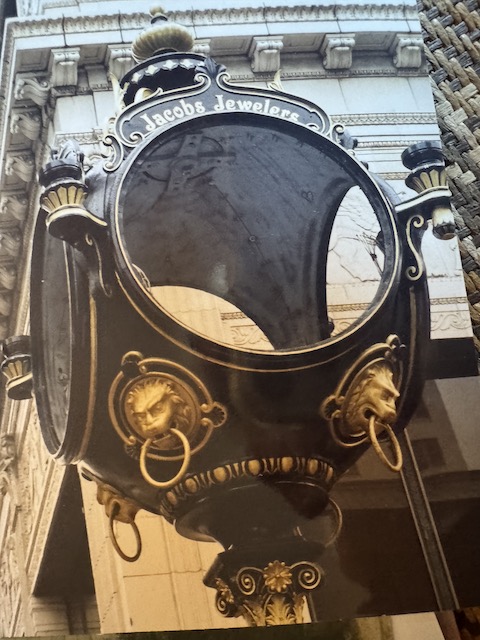
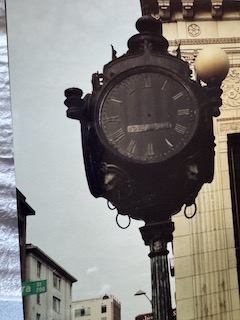
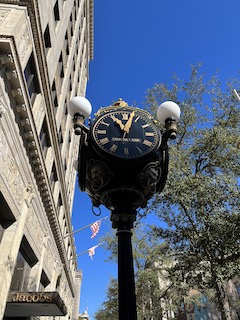
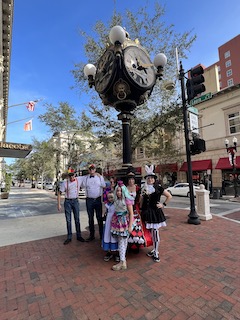
The Jacksonville Jacobs Clock is a four-faced time piece that currently sits at the corner of Adams and Laura streets in downtown. It was originally purchased for $1,200, called the Greenleaf & Crosby clock and placed outside of the Greenleaf & Crosby building at 41 West Bay Street in August 1901, after the Great Fire of Jacksonville.
Clock Repair to come -2011-(Ramey Collection)
The 15-foot-tall clock was built by the Seth Thomas Clock Company which began in 1813 and known for their “durability and wide variety” of clocks.The clock was moved to its current location at 208 N. Laura in 1927 in keeping with the Greenleaf Crosby jewelry store. There were some 100 clocks manufactured with this design and less than a dozen remaining.
Late 1980s (Ramey Collection)
Roy and Delorise Thomas purchased the jewellery store in the late 1960’s.and had the clock moved. Through the years it has had to have repairs and adjustments. The most extensive was in 1973 when it was almost destroyed by a city bus, in the mid 1990’s and 2011 when it was completely removed for roadway improvements. It was returned in working order in 2013. In 1995, the Thomas family donated the clock to the city of Jacksonville.
The Thomas’, owners of the clock retired in August of 2023 as the clock continued to tick on.
See you tomorrow,
Sources: Google AI Overview, The Business Journal, Jax Daily Record, Vaughan Publishing, Nannette V. Ramey
Category: Business, History | Comments Off on Jacksonville Jacobs Clock Lives Beyond Retirement
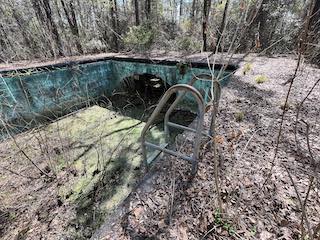
My father, Alec P. Vaughan, Jr. worked as an administrator in the housing division of NAS Cecil Field for at least three decades beginning in the 1950’s until retiring. While he did not work across the street in the heavily guarded and quite secretive Yellow Water Weapons Storage area, he had occasion to get clearance to see their needs for furniture. As the area was being dismantled and it was a known fact that it was no longer to be used for weapons storage, he was able to talk about it freely. It was then and only then that he spoke of about interesting tales concerning his short visits. He told of the train he rode to various bunkers, talked about hearing soldiers shooting on a practice range, swimming in a huge pool, explained the heavily guarded bunkers, offices, gated entries, and shared information that only one who had seen it would know. It was so interesting to hear about a secretive site right there in our backyard on the westside of Jacksonville. All of those years he knew of it and not a word until it was being phased out and decommissioned in 1999.
It was George H. W. Bush administration that signed the paper work confirming the Cold War ending, and the very last remaining weapons at Yellow Water were taken by truck to Pantex Plant in Texas. The last of the nuclear weapons were removed from the Yellow Water Weapons storage area in Jacksonville, Florida in October of 1993.
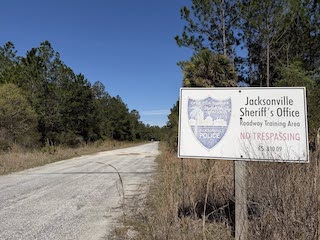
Fast forward to the summer of 2022. The desire to see the bunkers and photograph the once important Yellow Water Storage facility was on my mind so I traveled to the area and seeing a Sheriff’s “No Trespassing” sign I turned away in disappointment. Over the next weeks, I asked a police officer friend if he knew anything about the site and surprisingly, he told me that he actually knew the man in charge and would reach out to him. From that, I met this person who set up a time in June of that year for my daughter and me to ride the land without hindrance. To make it easy, we all rode in the front seat of his truck. The ride took us to see a firing range, swimming pool, huge cinder block buildings, warehouses, left-over logs and rails from a once railroad detail and more. While most of the area was open by this time, this person had the key to every site on the land. It was just great.
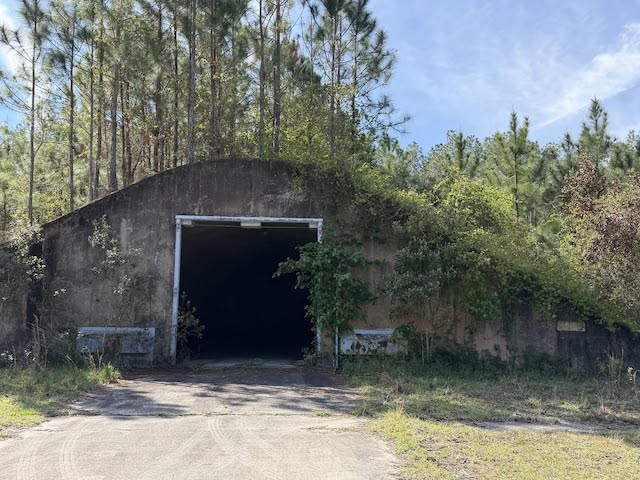
I had seen online an area that I really wanted to see and photograph and that was the area where I thought was used to “launch missiles”. ( There was never such a place, by the way!). The driver told us that no missiles were ever launched from there nor set up for that purpose as it was strictly to “store” missiles. With that comment, I showed him on my phone what I was talking about having downloaded it from the Internet. He laughed and said he would take us to that very site and did.
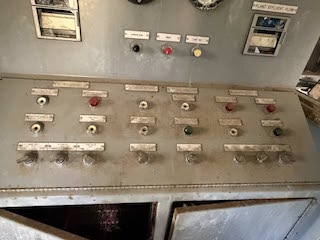
Before taking us inside the building, he took us around back to a huge round cistern with an iron ladder. He encouraged us to climb up and look in. We did. It was a waterproof and sealed tank prepared to collect and store water. The reservoir was huge and still holding to the top. When we came down he took us inside the front area that had metal electric boxes, a couple of small rooms and panels with dozens of buttons, dials, pressure gauges, lamp tabs, and an actual red reset button. I thought we had gotten to see the launcher only to find out that it only launched water. It was the panel used to indicate water pressure, level, and water plant flow. One button could be pushed to send water in one direction while another button could divert the water elsewhere, close it off or keep it stable. We all have a good laugh.
Now, fast forward to 2026 when I posted on the Facebook Yellow Water site these photos only to read this from a contributor (Bob) that said he knew someone who patrolled the site and….
“came across a woman in this area one day who swore to him that this is where they launched the nuclear weapons. He said, “she was dead serious!” I confirmed to Bob that woman was me.
I now know, this was actually just the water treatment plant. launching water.
See you tomorrow,
Sources: Google AI Overview, The Florida Times Union, Facebook, Yellow Water Nuclear Weapons Facility at Cecil Field, Vaughan Publishing, Nannette V. Ramey
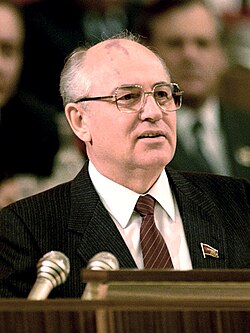
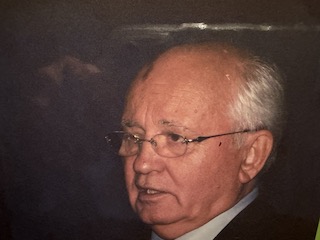
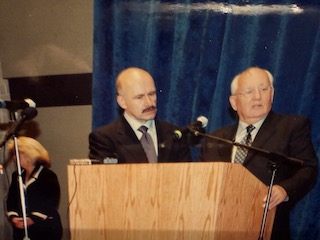
So,I heard that Mikhail Gorbachev would be interviewed in Jacksonville, by Ronald Reagan’s son, Michael at the University of North Florida on October 2, 2003. This was historic and my hope was to go and photograph this important event.
Mikhail Gorbachev (Wikipedia)
Mikhail Gorbachev was the former President of Russia, a Soviet politician who lead the Soviet Union from 1985 until the country dissolved in 1991. He was head of state in 1988 and “adhered to Marxism-Leninism” but because of President Ronald Reagan, Gorbachev began leaning more towards restructuring, cooperation, trust and a shared sense of commitment on the world stage.
Gorbachev joined the son of Ronald Reagan in Duval County for this event. Michael who had a conservative talk program, “The Mike Reagan Talk Show” set up a meeting with the former Russian President at the University of North Florida here in Jacksonville. The focus was about the changing world and titled, “A New Time, A New Beginning: An Interview with Mikhail Gorbachev. It was sponsored by the Ponte Vedra Federation of Republican Women’s Club and the International Foreign Institute.
Gorbachev had been awarded a Nobel Peace Prize in 1990 for his role in helping to the end the Cold War. He was known for working with Ronald Reagan for better Soviet relations with the U.S. during his term. According to many, he focussed on finding solutions for peace in the international arena.
While Ronald Reagan was no-nonsense about his relationship with this Soviet leader, he lead the way to make positive changes. Reagan was about moving from “confrontation to collaboration.” The Reagan’s even hosted the USSR leader at their ranch in California in 1992.
The President of the United States of America indicated that early on there was a “wariness about the two being able to work together but it was something that needed to be considered.” Reagan once said to reports in Moscow, though “I think, frankly, (that) President Gorbachev and I discovered a sort of a bond, a friendship between us that we thought could become such a bond between all people.”
Being at this incredible event at UNF was a highlight. It was obvious that the presence of many international powerhouses would be there and involved but to see and witness it….
We met in the Lazzara Performance Hall, at the Fine Arts Center at the University of North Florida. The camera used for me was a heavy 35 mm film camera with a battery pack and a professional flash. We entered all together as a group of media and photographers. Behind Gorbechev and other dignitaries, there was a man with a huge video camera on his shoulder. He was videoing everything from behind them and facing the audience and media group.
Those heading up the event allowed the media to photograph as things were getting started. The thing I remember most about this event was that the floors were wooden and I lost a handle on my heavy Nikon D-100 camera. It went crashing to the floor. The sound was deafening. It sounded like a shot! I must have turned 10 shades of red as I bent down to pick up the camera. It was quite a fracas. When I looked up everyone on stage and in the audience were staring at me. Gasp! The videographer had gotten quite close too. I’m just glad he didn’t have a gun!
I looked online to see if there was a video and if they edited out the camera drop. The link went no where.
See you tomorrow,
Sources: University of North Florida, Ponte Vedra Federation of Republican Women’s Club and the International Foreign Institute. Ponte Vedra Women’s Club, Photo-Wikipedia, Google Search, Vaughan Publishing, Nannette V. Ramey.
Category: Government, History, People | Comments Off on Russian President, Gorbachev in Jacksonville
Harriet Beecher Stowe wrote, “Florida, like a piece of embroidery, has two sides to it,- one side all tag-rag and thrums, without order or position; and the other side showing flowers and arabesques and brilliant coloring.”
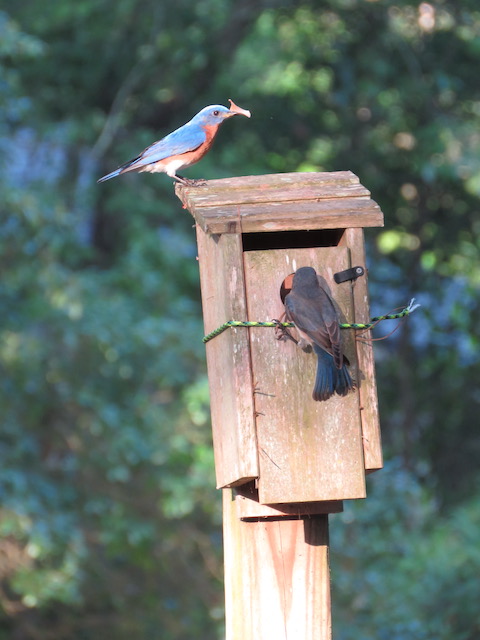
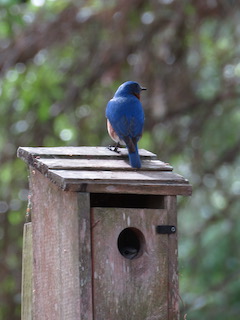
Living in the back woods of Mandarin, Fl, there are a great many birds. The dirt and gravel road area where I live is heavily wooded and as a result, there is a good amount of wildlife nearby. Among the many birds are the small, beautiful thrushes called bluebirds. If you provide a home for them, especially one made of cedar, they will come and raise their family. They will return every year.
It begins sometimes the very day you put up the box. From what I see, the male and female fly around the box, sit on it’s top, fly away, return and do it all again. It’s as if they are casing the neighborhood. Then one will enter and check it out. The other stands watch and then they change places such that both have had a look-see. (Notice, you can see her inside in the pic below.)
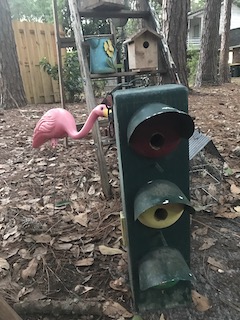
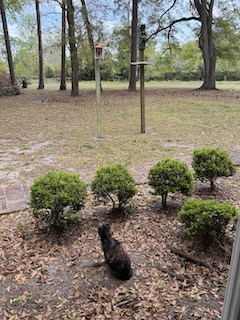
Some months ago I bought a red light-looking bird house at a garage sale. It has 3 holes on the front and 3 holes on the back such that there could be 6 families in the complex. I put it out front so when I’m standing in the kitchen I can see the activity of the home. Since it was put on a post, different type birds come and go, sit and look, but I’ve yet to see a family move in until this month.
Having cats, most of the bird houses have a guard on the post to protect the birds from crawling visitors. One was not put one on this post as it seemed the holes were so far up, a predator’s paws would be out of reach. How wrong to think that!!! Gasp!
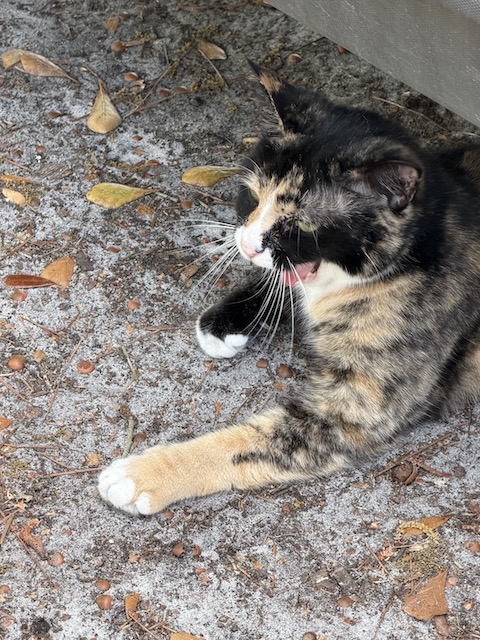
This morning, I was simply taking a walk out front and while talking to my grandson on the phone, I saw Callie, the calico kitty, climb to the top of the post as pretty as you please. As she got to the top two small blue birds flew out with Callie catching the last one with her paw, placing the bird in her mouth, jumping down with full speed began to run away. I screamed, “NOOOOO Callie”, and “I’ll call you back” to the grandson. Before I could say Scatt!, Callie was off and running with bird in her mouth as I frantically ran after her screaming, “Let it go!” “Let it go!” In a scandal of an event, she opened her jaws and the bird flew away and landed on the bottom limb of the nearby tree.
Immediately, I went to the garage and got a baffle and put it under the bird house. Those birds were just “saved from an untimely death” so I didn’t want that to happen again! They may not be so fortunate. Callie has not left the area, by the way!
I though have faith in the baffle. The birds are safe.
One day, there will be an account for every person and all that has been done. So, this saga is not over.
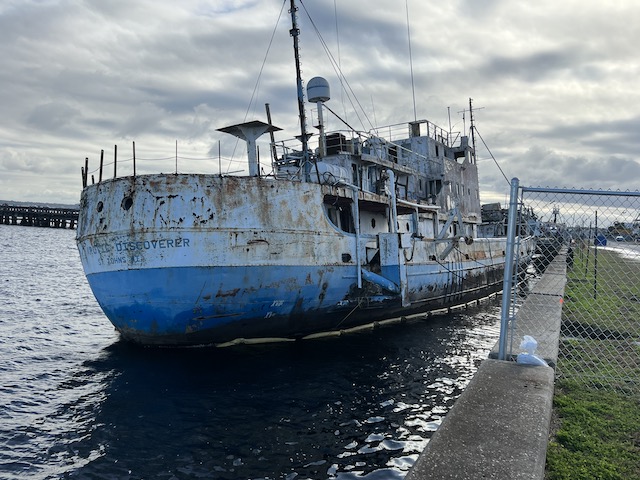
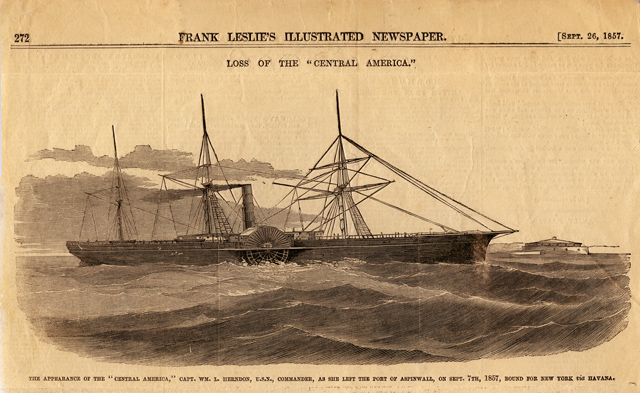
In 1998, the Arctic Discoverer ship was used by lead treasurer-hunter Tommy Thompson to find the sunken ship S. S. Central America. The Discoverer had originally been named The Cameron, a Canadian ship in 1958. Then went on to take the name, the Arctic Ranger and when sold again in 1988 became the Arctic Discoverer which would be used to explore, and find with success, the sunken S. S. Central America.
The S. S Central America was launched with great fanfare and success in October of 1852 but met its fate with most of the crew and passengers on board, on September 12, 1857. In category 2 storm off of the coast of the Carolinas the ship took on water and while the inverted distress flag was hailed, no one came until the following day. Only about one hundred passengers were transferred to life boats onto other ships. The storm of over 100 mile an hour winds eventually sent the S. S. Central America to the bottom of the ocean with most of the remaining passengers and what has been valued as over $8,000,000 in gold and artefacts. The remaining passengers who survived hung on to pieces left in the water from the ship going down.They were rescued by a Norwegian sailing vessel and as far out as 8 days later the last 3 were rescued. The total loss of life from the tragedy was 425 people including the Caption of the ship.
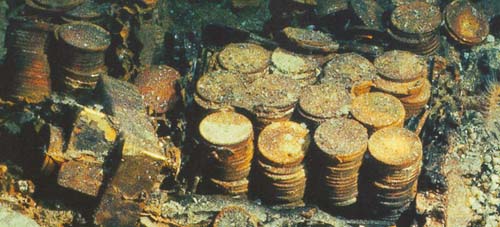
The California gold rush was in full swing during this time with its peak about 1852. The S. S. Central America was carrying literally tons of freshly minted gold including heavy gold bars and hundreds of ingots and coins. All went to the oceans bottom.
One hundred and thirty one years later, Thomas Gregory Thompson ( Tommy) and his crew would discover the sunken ship which was by then called, “ The Ship of Gold”. Thompson, a “former scientist turned American treasure-hunter “ would lead a team using the Arctic Discoverer ship to find the S. S. Central in September of 1998.
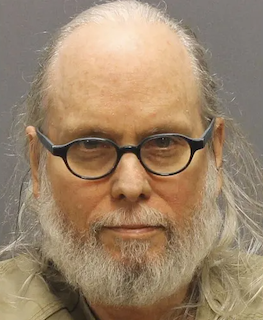
The story goes that in 2000 Thompson had investors who financed the ship’s exploration. When Thompson sold the recovered gold found at the bottom of the ocean for some $52 million investors claim they never received their return on that investment. They accused Thompson of hiding the money and not being willing to account for the 500 gold coins. It was said by many that he had offshore bank accounts.
In 2013 a district court in Ohio issued an arrest for Thompson for his failure to appear in court. Thompson would be a fugitive until he and a girl friend were found in a Florida hotel and arrested in 2015. By 2018, Thompson agreed to return the missing 500 gold coins from the wreck but said he did not have access to them. He also agreed to answer question about the location of the coins but never did. With the on-going law suit, the investors were awarded over $19 million. In December of 2015 Thompson was jailed and remained there until March 4, 2026 when a judge released him because he “no longer is convinced that further incarceration is likely to coerce compliance”. Thompson served more than 10 years.
At this writing, the Arctic Discoverer is docked on a pier in the St. Johns River near Jacksonville. It is clinging at a shipyard in Green Cove Springs. To look at it heavily leaning, it has obviously taken on water on one side in the St. Johns River. This ship’s crew found the most valuable shipwreck in history now is” bedraggled and forlorn” on the banks of the St. Johns River near Jacksonville.
This story lives on. There is a reconning for all of us one day as God is in the details, so stay tuned for the rest of the story.
See you tomorrow,
Sources: Google AI, Wikipedia, Clay Clerk, Vishi Garig, Ship of Gold, Central America (ship, 1852) at Wiki Commons, Photo-Frank Leslie’s Illustrated Newspaper, 1857, Capt. Joule Haanstra, Mariners Museum, Vaughan Publishing, Nannette V. Ramey.
Category: People, Ships | Comments Off on Ship of Gold’s Arctic Discoverer on St. Johns River
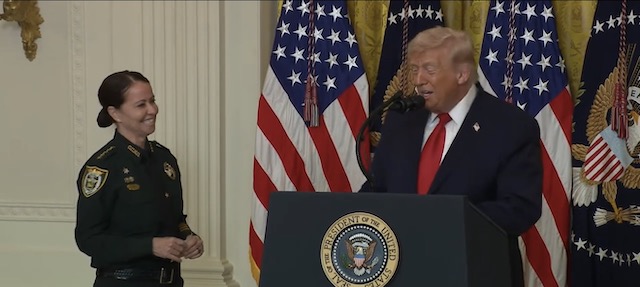
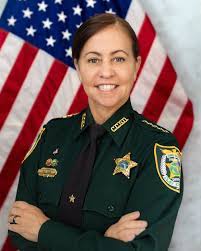
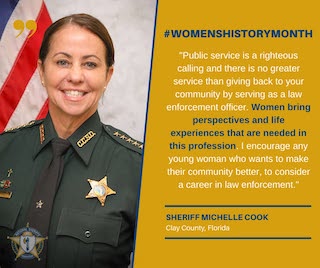
Michelle Cook’s father was a Navy veteran and stationed at Jacksonville’s Cecil Field Naval Air Station in the 1980’s. She began her career in the Jacksonville Sheriff’s office being a part of the force until retiring as a 3-star Director. As Director of Patrol and Enforcement she worked with first responders, community relations, special events, collective bargaining, promoting laws and managing personnel.
The White House
In 2017, she went on to be the Chief of Police for the Atlantic Beach department handling a 6-million budget and lead to improve the crime rate as well and community morale.
In 2020, Sheriff Cook began a campaign for becoming the Clay County Sheriff and was sworn in on September 1 of that year. Her bio from the Clay County department states: “Sheriff Cook has built a reputation of being a firm, yet compassionate law enforcement leader whose integrity and genuine management style bring respect not only from her work family but also the community she serves.”
The 2006 theme for National Women’s History this year was “Leading the Change: Women Shaping a Sustainable Future”. Sheriff Cook has obviously done this and for her resilience, President Trump and the First Lady, Melania honored her along with others at The White House for their achievements.
When speaking at the White House and with a glance at President Trump, she said: “When you have a President (in the White House) saying that we will have law and order in our nation. That sets the tone. That sets the expectation.”
Sheriff Cook went on to say: “ It is an honor to serve my community with you (President Trump) at the top, sir”. In closing, she said: “God bless our first responders, God bless bless our military, God bless our President and God bless the United States of America”. Chants followed from the crowd.
It was a good day for Duval and Clay County, Florida,
See you tomorrow,
Sources: The White House, Claysheriff .com, National Sheriff’s Association, You Tube, Vaughan Publishing, Nannette V. Ramey.