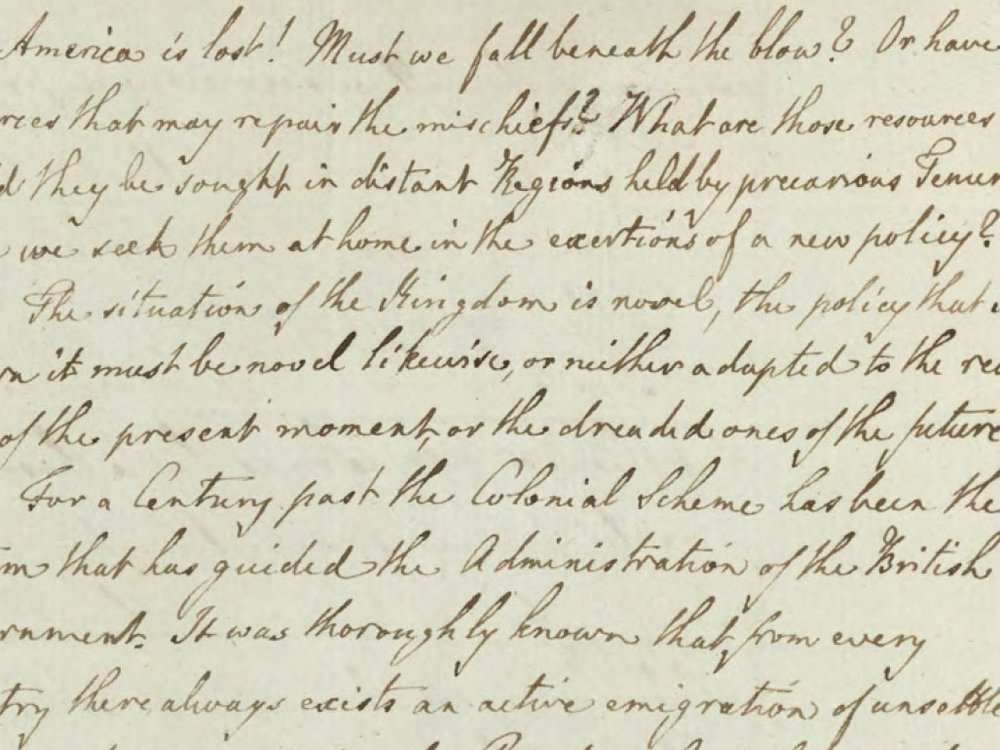
The Royal Family information notes that King George III(1738-1820) was the eldest son of Frederick, Prince of Wales, and Prince Augusta. He was the longest ruling monarch before Queen Victoria and Queen Elizabeth II according to History. Com. He reigned for some 59 years and was the king who was during the loss of the American Revolution. In his papers is a writing that says “America is lost”. It is noted by PBS that the Revolutionary War lasted some eighty years because King George would not surrender.
“America is Lost!” (United States Government papers).
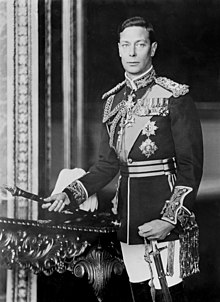
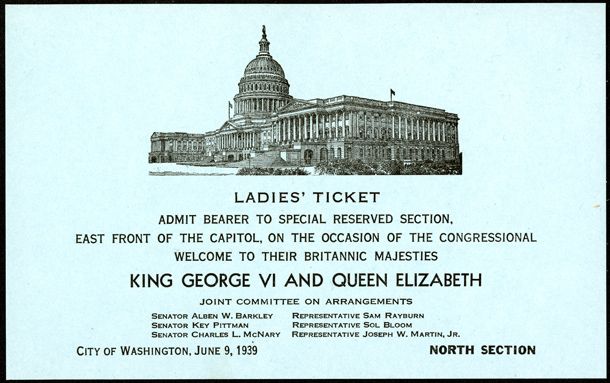
While some indicate King George III had a vision of coming the the United States, the actual first king to come to America was in 1939 when King George VI, according to Senate. Gov.
King George VI, (Public Domain, portrait by Walter Stoneman, 1938).
Ticket to see King George. (Government documents).
Queen Elizabeth II visited America the first time in October of 1951 according to congressional information. Present Harry Truman met “the future Queen” on the Washington National Airport tarmac. Other viists according to the White House Historical Association include “four State visits, five State dinners and two unofficial visits during her reign”.
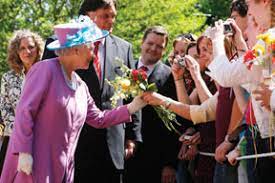
Queen Elizabeth, William and Mary College. ( Ramey)
I was able to see the Queen when she visited William and Mary college in 2007. That was a memorable occasion. After she left, I walked on stage and sat in her seat, just for the fun of it.
See you tomorrow.
Nan
Sources: Senate. gov, Congressional papers, Wiki commons.
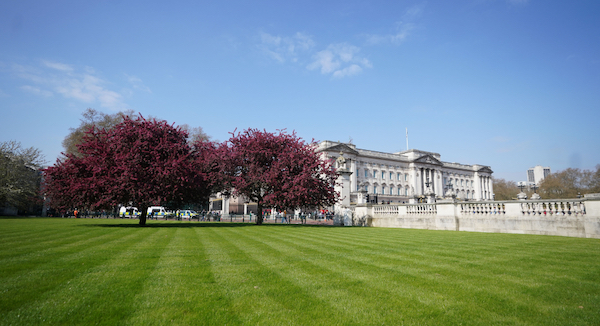
According to the Royal. Uk website, Buckingham Palace has “served as the official London residence of the UK’s sovereigns since 1837”. It was built in our around 1703 but has served the Royals for many years as the “Queen’s House” where she and dignitaries from all over the world meet. I guess this year, it may become the “King’s House” as King Charles III will be crowned.
Buckingham Palace, Royal Photo
In the late 1800’s in the Jacksonville, Florida area, Osceola, the Seminole Indian leader was captured near St. Augustine and taken to the Fort. Also happening in and around 1837 was the formation of the First Baptist Church of Jacksonville, also known as Bethel.
Just above Jacksonville, on Amelia at that time the lighthouse, Florida’s oldest began guiding ships along the shoreline. State Supreme Court Justice Jamie Grosshans spoke at the River Club in 2021 and explained that those forming our state were putting together the Florida Constitution was written and adopted by 1838.
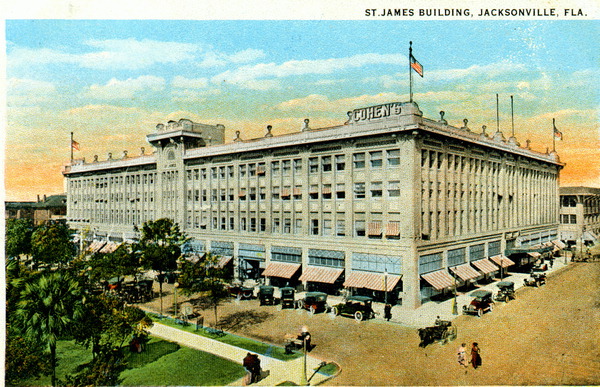
There are no buildings in and around Jacksonville that compare to the massive Buckingham Palace with its 775 rooms and yet we have our own great administrative building such as the St. James. It began as the St. James hotel in 1869 and was burned in the Great Fire of Jacksonville in 1901. It was rebuilt after the fire and reopened in 1912. It was one of the largest buildings at that time. According to Wikipedia, the St. James hotel could lodge some 500 guests and had a laundry area, barbershop, telegraph desk and place for concerts.
St James Hotel turned Jacksonville City Hall(Photo- Fl Memory)
The 117 West Duval Street place was purchased by the City of Jacksonville, Florida in 1993, remodelled it and reopened in1997. Today it serves as the Jacksonville City Hall.
There are no coronations there and yet this month in our city, we will elect a Mayor whose office will use our St. James Building. This month in London there will be a coronation of the King of England where he will continue to use Buckingham Palace as a residence and place to bring together leaders of the world.
I’ll take some pics while I’m there during this event and share them when I return.
See you tomorrow,
Nan
Sources: Jaxdailyrecord . Com, Wikipedia, Personal visit to the both sites.
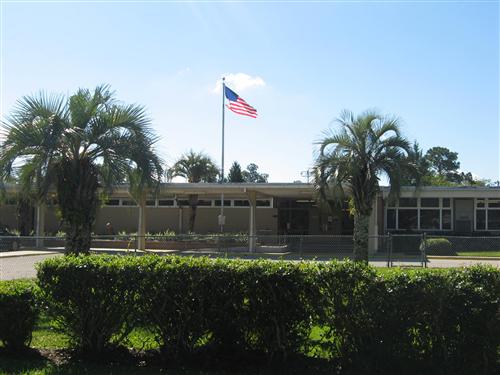
Brookview Elementary School was opening in the fall of 1962. The first principal of the school was Nannie Paul Thomas. She served from 1862 until 1968 followed by Mary S. Button(1968-1969), Kenneth Wing( 1969-1976), Mae Belle Braddock(1976-1978), Doretha Haynes (1979-1986), Estelle McKissick (1986-1989), Mark Cashen(1989-) and others. The current principal is Tracey Kendrick.
Duval Public school online photo of Brookview School.
According to the school history, the faculty desegregated in January of 1970 “due to a court order”. In 1972, the student body desegregated using the bussing of students. According to this record, “ to further achieve racial balance, black student in grades one through five , were bussed to Brookview from Susie Tolbert and R. V. Daniels. Meanwhile, Sith graders from Brookview were transported to Susie Tolbert.”
In 1972, according to the record fifth grade students from Brookview were “moved to Arlington Annex”. Exception Education classes were added in 1973 and “a self -contained class for emotionally disturbed children was a part of the program until 1975. Kindergarten classes began in 1974 and in 1989 preschool classes were added with “preschool handicapped begin added in 1991. Title I reading and Chapter I teacher were added in1976 and 1982 with a computer lab added in 1984.
The school history includes information of the major construction in 1989 and grounds improvements in 1994.
Over the years, the school has won awards such as the Little Red Schoolhouse award in 1985 and the School of Distinction award in 1990.
See you tomorrow,
Nan
Sources: While some school histories are non-existent, others are simple and with basic information. This school history was very detailed and comprehensive. This history was from the Brookview school: The Duval County Schools, Jacksonville, Fl. No author’s name was on the document.
This information including “Ramey photos” may be used with credit to Ramey Collection. Photos may be 3rd party for which may be secured by copyrighted owner.
If you believe you are a copyright owner or can help with information regarding this article, including to clarify rights or information issues, please contact me. We are willing to remove any item from public view if there is any concern regarding ownership.
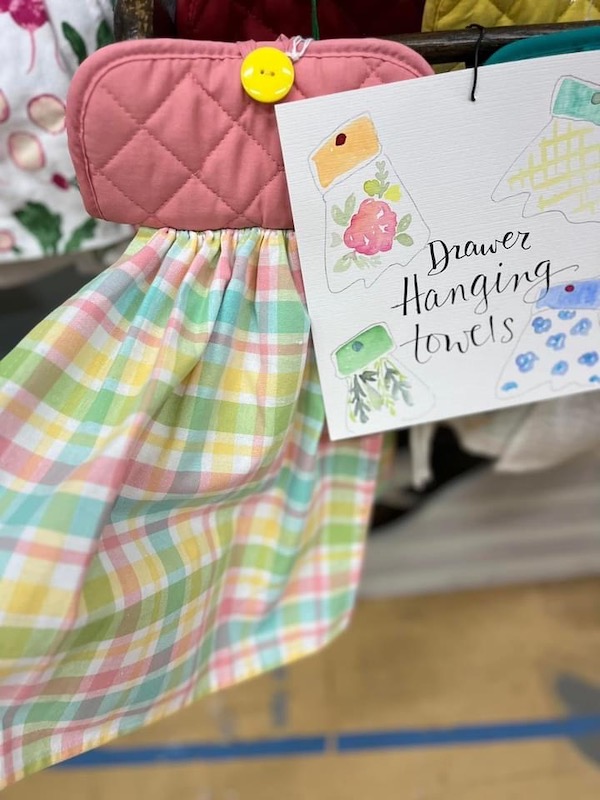
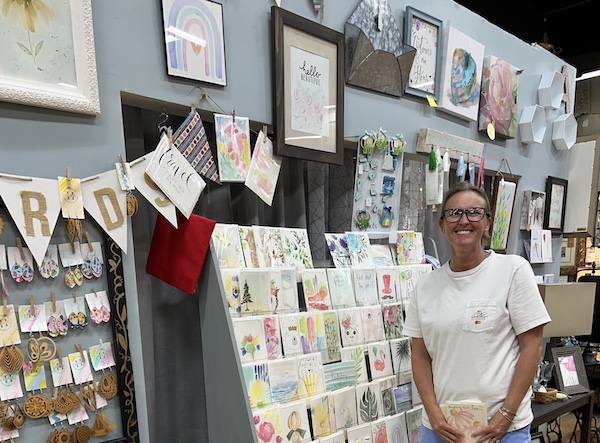
You MUST visit the Great AmericanAntique Mall at 9365 Philips Highway Suite 114 to see in person the handmade items in Heather Hills space in the store. She actually has at least two separate areas in the store where you can view and select her artwork(watercolors and kitchen cloths) to find the exact gift for your loved one or treat yourself.
Photo from Great American Antique Store
Originally from Ohio, Heather has shops there and in several other shops in the United States. In Jacksonville, she has at least three areas where her work can be found plus her online Facebook page. She began her business Hill and Co. back when she began helping her young five year-old, now a young adult to watercolor. She said, “It all came back to me” and she’s been producing art work since. She needed an outlet to share all of her pieces and now it’s a thriving work of art in several shop locally and elsewhere.
You can also check her out on the Great American Antique Store Facbook page. If you go and see her, tell her I sent you.
Don’t miss out on checking our her work. It will not disappoint.
As you know, Mother’s Day is up and coming but you can use these items for many occasions.
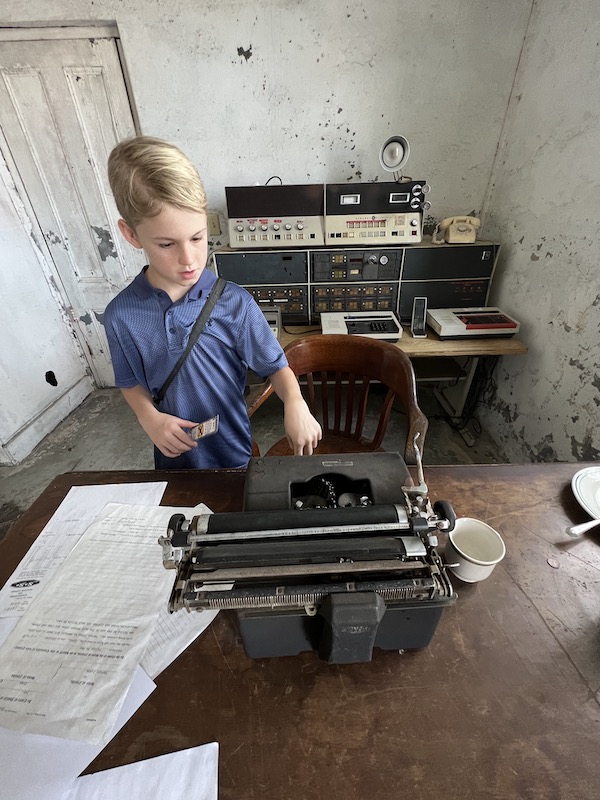
Basically, everything you see in the photograph here is obsolete. We’ve all seen it happen even in our own lifetime. Some things we used to use are now unusable and… we’re shocked by it.( You can go see this room at the Greencove Springs jail. They won’t lock you in.)
Ramey is 9 and trying to get a grip on the Remington typewriter…
Here is a short list of things that are no longer, for the most part, used in our world today.
Cameras that point and shoot– The cell phone has made the point and shoot camera obsolete. In fact, you’re hard pressed to even find a point and shoot and if you do, it’s a relic and collector item and very expensive to buy.
Fire Tools– Flint and rocks were once a fire tool. Now, we have the match and lighter and a liquid click-lighter at that. Buy a set of them at any Ace Hardware or Walmart in Jacksonville.
Floppy Disks- The floppy was once the way in which to store your information, letters, documents, etc. Now, they are also collector items and dust collectors in offices all over the planet. You can find old ones at the Flea Market on Blanding Blvd. if you wish to collect.
Newspaper Adds and Sales– While the newspaper is still in production, it is only a fraction the size of the newspapers of the 20th century. Revenue is down and while newspapers are still printing, they are struggling to gain their readership even online because of the alternate opportunities. Craigs List, Facebook, Twitter, Google and other online sources are siphoning off the newspaper’s business.
Opaque Projector– Online, you can buy a “Lucy” that is similar to the opaque projector but it is for use with making an item larger in order to draw it out. The opaque projector was once used in classrooms all over to places words, documents and items on the wall for a group to view. Film projectors are now used and the digital phone can set it all up for the viewer.
Phone Booths– The corner phone booth was once a “must-have”. Without a phone in hand, every person in the world needed a way in which to get in touch with someone when they were out-and-about or travelling. You’re hard-pressed to find even a corner stand-up pay phone now-a-days. If you do find one…. There is one off of Franklin Street in Jacksonville, Florida but it does not work.
Photo Labs– At one time, we would drop off our film to a one hour lab and return in 60 to get it. Now, we simply select, click and pay online.
Rotary Telephone– The rotary telephone was once a mainstay in every home in Jacksonville. Stick your finger in the round numbered rotary dial and go around…. Dial that number in the 1960’s was so easy… “Evergreen 81817” and say hello. Of course, there was also the switch board operator at the Southern Bell who could place that call for you….”Number Please”, she would say. Occasionally, when the female operator was out, you might…not often but might hear a male voice.
Time Piece-The hourglass was once the way in which time was told and now, we use a watch, clock and more useful, using digital numbers on our cellular phones.
Typewriter-At Evergreen Cemetery in Jacksonville, Florida, they still use the typewriter. I noticed an IBM Ball typewriter there in the spring of 2023. The manager of the office indicated that they need a quick card typed to place in specifically-sized space and the typewriter is faster and quick in that case. They type the information of the deceased on a small card to go in a vault and in the main drawer for keeping cemetery plot information. Otherwise, the typewriter has basically been replaced by the computer and printer.
VHS Tapes– The home movie of the past, beginning in 1977 when they went on the market, was delivered on a VHS tape placed in a recorder to show on the television. From Gone With the Wind to your favourite Disney movie, it could be all displayed and watched. Popcorn a choice….The DVD took over in1997 but VCR’s stopped its productions in 2016. (If you do want a VHS for history sake, go to the Goodwill. The walls are full!)
Quill-The pen, reed dip, fountain pen have been replaced by the ballpoint and refillable pen.
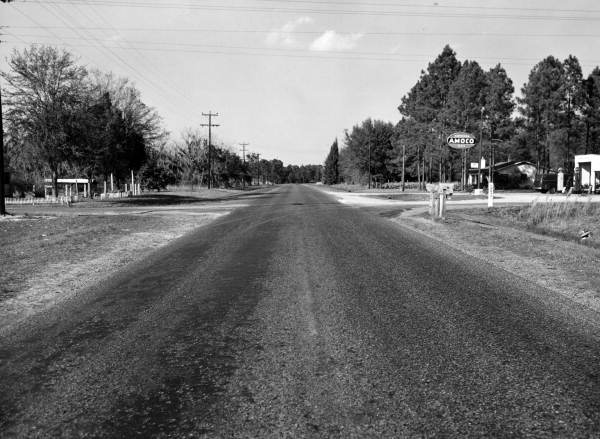
This old photo was taken in 1956 by the Department of Transportation.
The accompanying note is : Mandarin to Goodbye Lake. Looking north towards the intersection with Loretta Road in Mandarin .”
The days of barren roads and posted mailboxes are almost a thing of the past in Mandarin except for the back-woods, if you can find any. There are some but they are fading fast as development is eating up the county of this once sleepy but thriving community called St Anthony then San Antonio then Monroe and finally some paperwork did the trick with an 1830 paper naming the area Mandarin and finally in 1841, Mandarin became an incorporated town. Many writings indicate Calvin Read as the one responsible for using the Mandarin orange as a reason for its name.
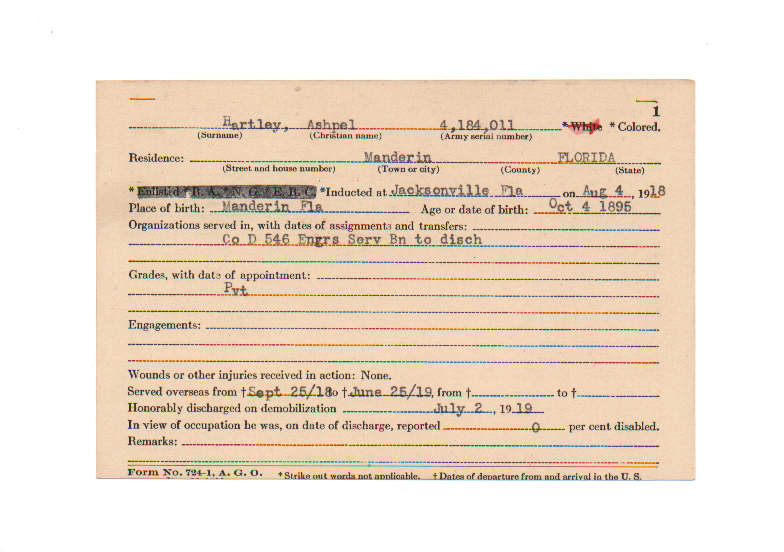
Florida Memory document of Ashpel Hartley indicating Mandarin, Fl
Here are some different things in the Mandarin area and where the names were derived.
Albert’s Field is located at the corner of Orange Picker and Brady Road ( 12073 Brady Road). According to the city of Jacksonville park information, the park opened about 1959 with the majority of the property donated by Bruno (1888-1970) and Ann(1896-1991) Albert. The Alberts were accomplished artists.
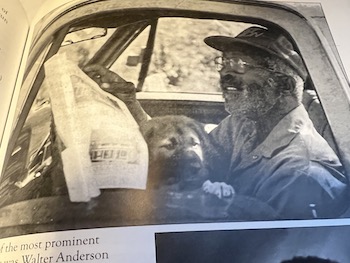
Walter Anderson Memorial Park– 2738 Orange Pickers Road. Located about a half of a mile west of San Jose Blvd., there is the park(formerly named Flynn Park) and renamed WAMP in honor of Mr. Anderson. According to Sam Burney, it was called “Colored Park” in the 1940’s and beyond. He said it was where Blacks gathered on May 20th folks to celebrate the Emancipation Declaration in Florida. This park was formerly known as Joe James Park and then Flynn Park and in 2019 renamed Walter Anderson Memorial Park. In 1995, Anderson donated four acres for “park purpose” for Black children to have a gathering place, according to the JaxParks website. Since that time, the park has expanded and is used by the community.
Walter Anderson, Photo- Ramey , 1995
Bethel Methodist Episcopal Church– Established in Mandarin in 1880, the church was mainly white and pastored by P. Y. Howard. Bethel is mentioned in the Bible as “House of God”.
Burney’s Homestead-Corner of Orange Picker and Brady Road. Samuel Rollin Burney was born in Mandarin on Feb. 27, 1931. He died in Mandarin Feb. 2, 2018 and is buried in Lofton Cemetery. He served in the Navy and bought land in Mandarin at the corner of Orange Picker Road and Brady.
Crane Home– Robert N. Dennis collection of stereoscopic views has a photograph of the C.J. Crane home of Mandarin, Florida listed in its collection at the New York Public Library.
Cousin- Philip R. AME– 3601 Orange Picker Road- The Philip R. Cousin AME church began in 1866 at the purchase of 3.25 acres. The deed was recorded on March 21, 1887. The reverend S. T. Tice was the first pastor. “Under the leadership of then presiding Bishop Phip R. Cousin, two congregations were merged”. Reverend E. E. Mosely was appointed pastor. The church was then named in honor of Bishop Cousin. The campus has expanded and in 2007 a new worship center was built.
Flynn Road-Flynn Road was named in honor of the Flynn family dating back to at least 1841 when Adeline Flynn was born to James Plummer who was born in Mandarin in 1795. Adeline was of the Plummer family. As time went along, James J. Flynn a long time Mandarin resident, opened a general store, plus seed and feed establishment in Mandarin. He also had a taxi service running in Duval and St. Johns County.His wife was a Hartley by name.
Hartley Road– The Hartley family have been in Mandarin for many years dating back to Anna Maria Hartley who was born 1795 and died on November 25 1863 in Mandarin. Private Gabriel Hartley was born in 1834 in Mandarin and died July 31, 1904. He is buried at St. Joseph’s Cemetery in Mandarin as are five of his children. The family legacy in Mandarin continued as the documented honourable discharge of Ashpel Hartley, which was his “Christian name” on the document lists his birthplace as, Mandarin October 1895. He died in Mandarin in 1975 and is buried in Mandarin.
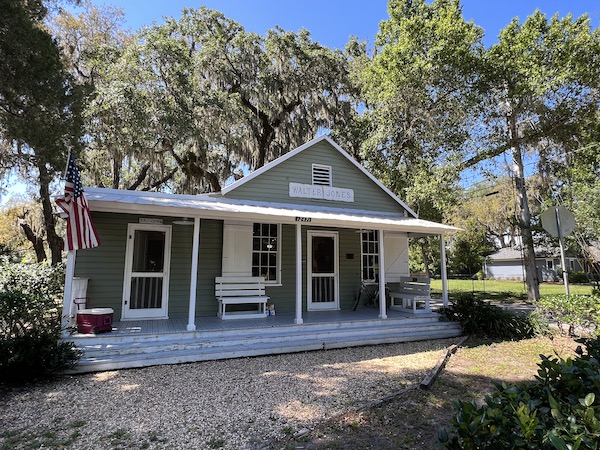
Walter Jones Historical Park– 11964 Mandarin Road. This park has out-buildings, houses, a Black school and a museum, all used by the community. It is situated along the St. Johns River and has trails and walkways.
Julington Creek-In 1767, Francis Levett, Sr. developed an area along the St. Johns River including many tributaries. Julington Creek comes from the St Johns River making beautiful land for building homes along the waterways. The area is called “Julington Creek” including the Julington Creek and of late an apartment complex called “The Julington”. The area, according to Ennis Davis was named by Levett for his wife, Julia.
Loretto Road has been thought to align with the name of the “Catholic Sisters of Loretto at the Foot of the Cross”. It was known to support a mission for refugees. That group was founded in 1812.
Mandarin Park– 14780 Mandarin Road- Named for the Mandarin area.
St Johns County– Mandarin was once called St. Johns County until the new districts were drawn up and it became Duval County. The name St. Johns County obviously is because of the prominance of the St. Johns River running north and south in the Mandarin , Duval and St. Johns County area.
Plummer Grant Road– Jacob James Plummer was born in Mandarin in 1795. The family history continues in the area with the Plummer family. The Harley and Flynn families are all a part of early Mandarin pioneer families.
Read House– Read came from New England. Since 1850 he was a farmer, citrus grower, postmaster and land owner. His grandson Calvin C. Built a two-story home on Mandarin Road. It was written about in Wayne Wood’s Jacksonville Architectural Heritage, published in 1989 and is a landmark for Mandarin.
Chuck Rogers Park(11950 San Jose Blvd). Chuck Rogers name in Duval County is synonymous with parks and recreation. He worked in the department for the county for over 41 years.
St. Joseph’s Mission– Named for Joseph the husband of Mary, Jesus Christ’s Mother. There was a mission located at what is often called “Catholic Corner”. White children attended the local school in 1868. After the Civil war in 1898, a schoolhouse was built for Black children. It was built by the Catholic Church in Mandarin.The one room schoolhouse was last used in 1943. In an effort to preserve history, it was moved from the Catholic property in 2016 to Mandarin and County Dock Roads where the Mandarin Museum is located.
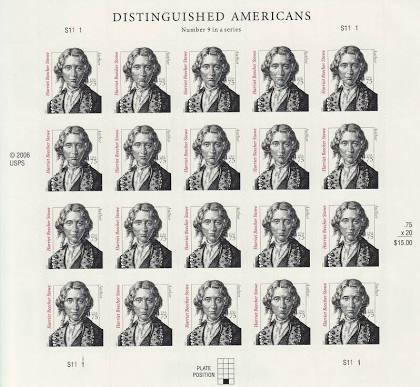
Stowe Community Center, Stowe Road- Harriet Beecher Stowe was a famed writer publishing Uncle Tom’s Cabin and owning land in Mandarin. She spent over 17 winter seasons in Mandarin along the St. Johns River on her family property.
Stamps created in 2007 of of H.B. Stowe
Orange Picker Road was once called “Wagon Road” according to an article written by Marks Woods for the Florida Times Union after a walk and talk with Burney who knew first- hand. It obviously was legal called Orange picker because of the orange groves all along the road long before Harriet Beecher Stowe’s crew picked them.
This will be updates over time.
See you tomorrow,
Nan
Sources: Brett Nolan, Florida Newsline, Mandarin Museum and Historical Society, Florida Times Union, Find a Grave, Personal visit to the locations.
This information including Ramey photos may be used with credit to Ramey Collection. Other photos may be 3rd party for which may be secured by copyrighted owner.
If you believe you are a copyright owner or can help with information regarding this article, including to clarify rights or information issues, please contact me. We are willing to remove any item from public view if there is any concern regarding ownership.
Category: Mandarin | Comments Off on Who’s Who in Mandarin, Florida
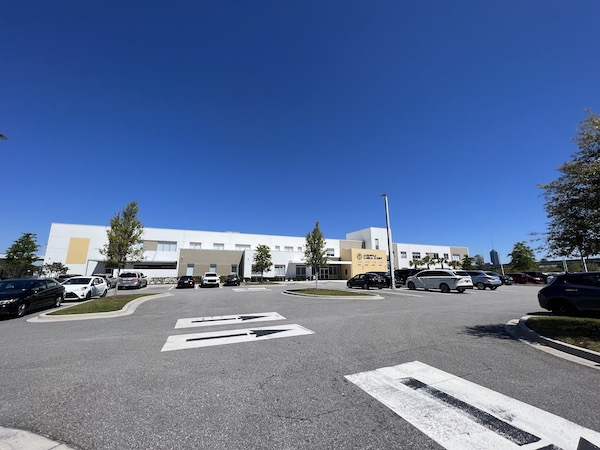
Formerly, Forest Park Elementary School # 104, Jacksonville Classical Academy is built on the same property as the former Forest Park which was abandoned in 2005 according to “Abandoned Florida”. (See page on Forest Park).
The mission on the new construction for Jacksonville Classical Academy website is, “to train the minds and improve the hearts of young people through a classical education in the liberal arts and sciences, with instruction in the principles of moral character and civic virtue.”
The “Our Story” information includes it being opened in 2020. The school is located near downtown Jacksonville. It is a tuition-free public charter school “based on the traditions of the liberal arts and sciences with instruction in the principles of moral character and civic virtue”.
See information on Forest Park Elementary # 104 listed under “Schools”.
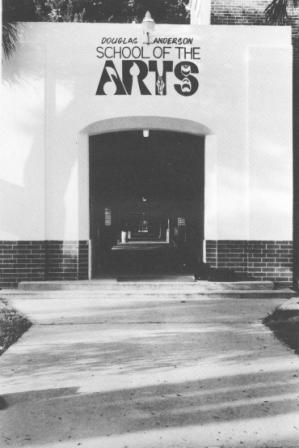
Douglas Anderson School # 107. Douglas Anderson School, once called South Jacksonville Grammar School opened in 1922. It provided education during a segregated period for Black students grades 1-9.
Douglas Anderson original entrance. Photo- Duval County Schools
The school was later named in honor of Douglas Anderson(1884-1936) for his service to the community. Douglas was born in Jacksonville and became a carpenter and businessman. His parents were Samuel and Charlotte Anderson. His father served in the Florida House of Representatives for South Jacksonville.
The young Anderson studied at Tuskegee Institute in Alabama. There he married Ethel Stevens. And the two had a daughter, Mary Gwendolyn. He retired to Jacksonville and as reported in the Florida Times Union “developed a farm on 22 acres on Old St. Augustine Road”. Anderson served as PTA president for a number of years and sometime after 1913, worked in an effort to get proper bussing for Black students. According to a You Tube video by Carla Michelle, Anderson was a bus driver and awarded the first bus contract to a Black person.
Anderson and Walter Thorpe were at least two who assisted in grants, funds and finances in securing the land that would become school # 107. It was renamed Douglas Anderson in his honor. ( Florida Times Union, Douglas Anderson’s Grandaughter, February 21, 2022).
See you tomorrow,
Nan
Sources: You Tube by Carla Michelle, Florida Times Union article, personal visit to the school.
This information including Ramey photos may be used with credit to Ramey Collection. Photos may be 3rd party for which may be secured by copyrighted owner.
If you believe you are a copyright owner or can help with information regarding this article, including to clarify rights or information issues, please contact me. We are willing to remove any item from public view if there is any concern regarding ownership.
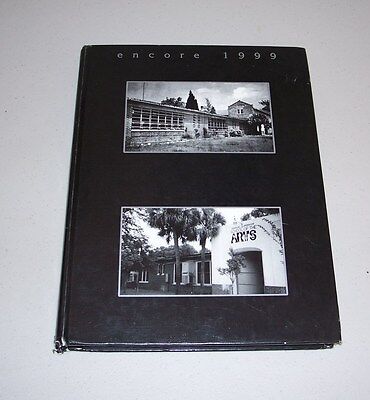
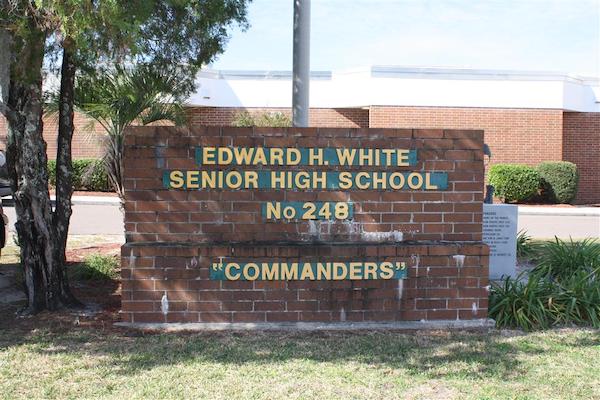
Edward White School opened in 1971 as Paxon High and Forest High school had an overflow of students. It served students 10-12th grade. According to the Duval County information, in 1991 there began changes in “junior high” status creating a four year pattern in schools then offering 9-12th grade.
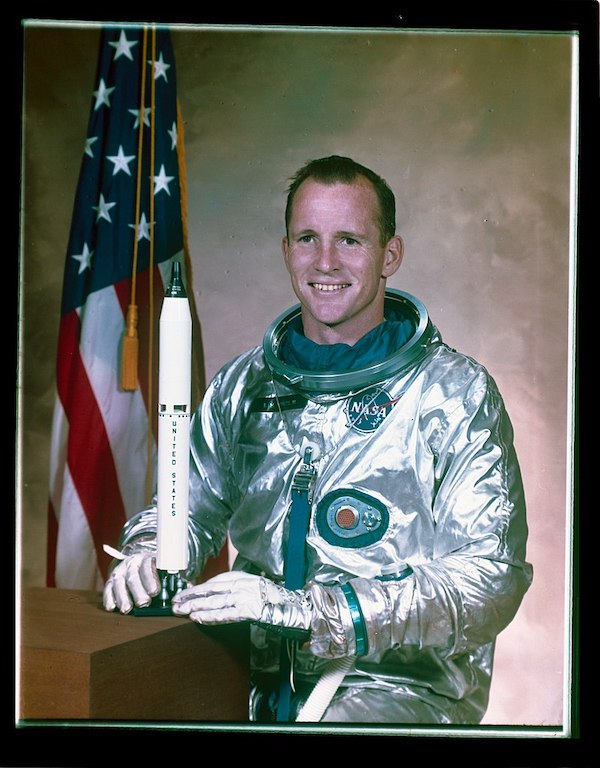
Photo: NASA
The Duval County history of Edward White indicates that this was one of the first schools to offer Naval Junior Reserve Officer Training Corpts (NJROTC).
Photo: Duval County Public Schools
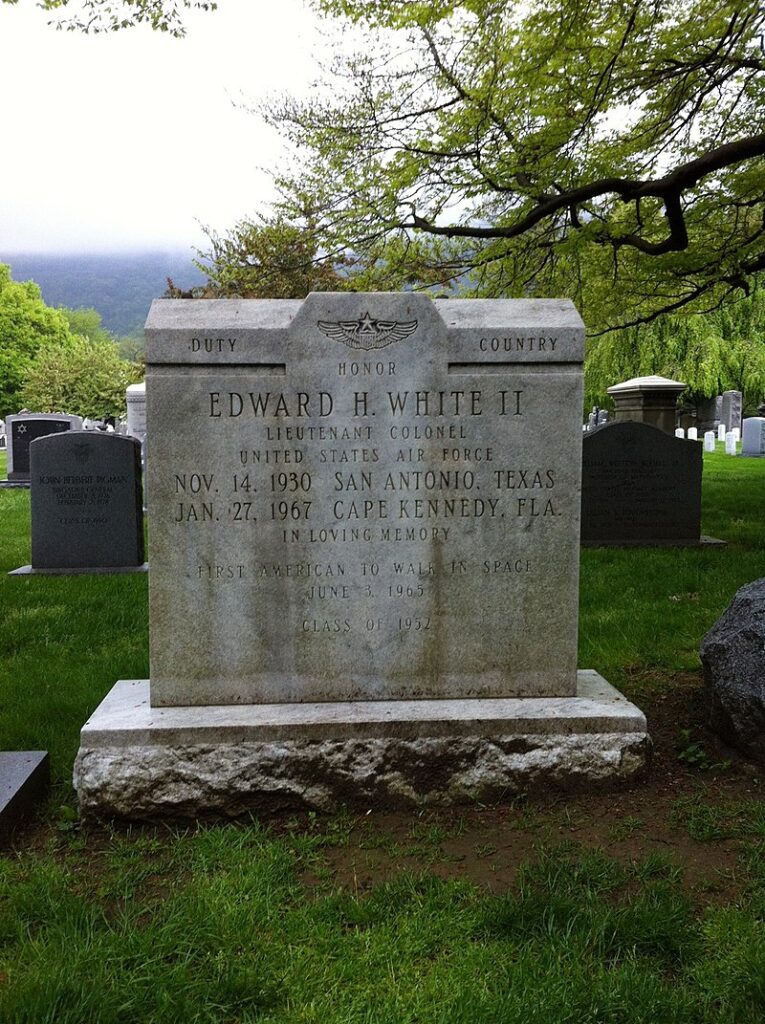
The school was named in honor of astronaut Edward White. Edward H. White II in June of 1965 was the first spacewalker. White was born November 14, 1930. He graduated from Western High School in Washington, D.C. and from United States Military Academy in 1952. He continued to further his experiences and education and in 1962 was selected as an astronaut walking in space in June of 1965. After earning a degree from the University of Michican he was given a honorary Doctorate in Astronautics from the University of Michican in 1965. In 1967, he died in a flash fire on Pad 34-A at Kennedy Space center and was buried with full military honors. He is buried at West Point.
Photo: WikiCommons Public Domain
See you tomorrow,
Nan
Sources: Duval County School Edward White, Wikipedia Commons, NASA, Google Search, personal visit to the school.
This information including Ramey photos may be used with credit to Ramey Collection. Photos may be 3rd party for which may be secured by copyrighted owner.
If you believe you are a copyright owner or can help with information regarding this article, including to clarify rights or information issues, please contact me. We are willing to remove any item from public view if there is any concern regarding ownership.
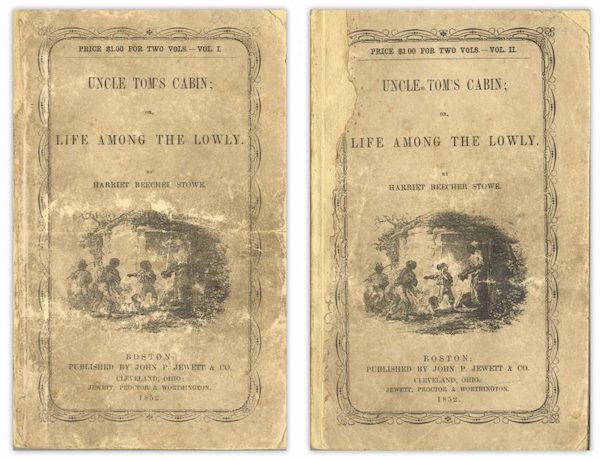
Harriet Beecher Stowe is said to have found her new life in Florida in 1883 when she visited Mandarin along the St. Johns looking for a possible place to invest in helping her alcoholic son. Frederick William Stowe was the fourth of seven children. According to the Harriet Beecher Stowe House writing, he was twelve when his mother published the famed Uncle Tom’s Cabin.
First Edition of Uncle Tom’s Cabin by Stowe
That article writer noted that Frederick had the “Burden of Fame”. There are many a parent who in today’s environment would send their child to a rehab center. Apparently, Frederick had that experience but it did not take. Stowe sent Frederick to Florida to manage a citrus farm very prominent in the Mandarin area at that time. It was believed that he could begin a new and get “healed” of this disease of alcoholism.
Harriet Beecher Stowe bought thirty acres along the St. Johns River of the Fairbanks Grant in Mandarin, Florida. They wintered in their cottage there from 1883-1884. The original intent was to give her son something to do while he fought his battles with alcoholism but upon her coming, she fell in love with the flora and fauna and purchased land. It is not known how Frederick did regarding his problems however, Stowe and her husband worked with local Black children with education.
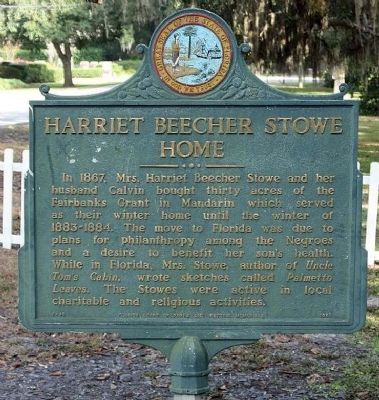
There is a marker at the Mandarin Community Club in the vicinity of the 30 acre grant. It reads the following:
In 1867, Mrs. Harriet Beecher Stowe and her husband Calvin bought thirty acres of the Fairbanks Grant in Mandarin which served as their winter home until the winter of 1883-1884. The move to Florida was due to plans for philanthropy among the Negroes and a desire to benefit her son’s health. While in Florida, Mrs. Stowe, author of “Uncle Tom’s Cabin”, wrote sketches called “Palmetto Leaves”. The Stowes were active in local charitable and religious activities.”
Stowe became a force in the area. It was a new life for not only her and her husband, but their son, and other children. They all gained new neighbors who benefited by her philanthropy as she wintered for some 17 years in Mandarin along the St. Johns River.
This information including Ramey photos may be used with credit to Ramey Collection. Photos may be 3rd party for which may be secured by copyrighted owner.
If you believe you are a copyright owner or can help with information regarding this article, including to clarify rights or information issues, please contact me. We are willing to remove any item from public view if there is any concern regarding ownership.