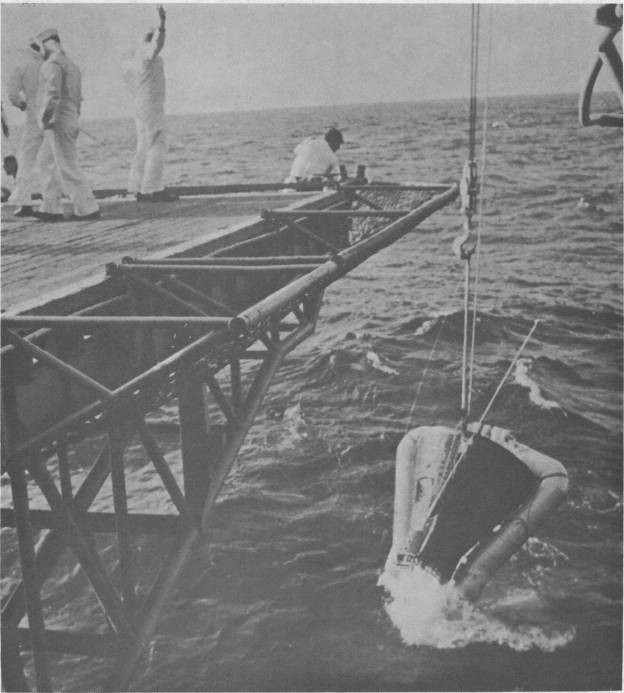
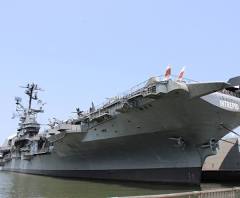
USS Intrepid with Gemini III at recovery, 1965-Atlantic Ocean (NASA)
The USS intrepid ( CV-11) had visited Mayport on several occasions in the 1950’s and 1960s. It was a “renowned Essex-class aircraft carried commissioned in 1964”. It served in WWII, the Cold War and the Vietnam War.The ship was chosen to gather up “Mollie Brown”, the Gemini space craft capsule and did so with a successful recovery on March 25, 1965.
Intrepid ship
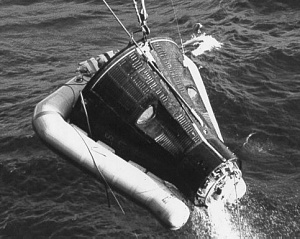
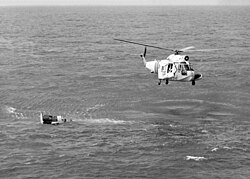
The ship was used to recover the capsule flown by Virgil “Gus” Grissom and John W. Young. It was the first mission where the crew would maneuvre the space craft and considered a “human spaceflight”. The mission lasted just short of fiver hours. The capsule landed in the Atlantic Ocean on March 3, 1965. It was brought to Mayport. The astronauts both became seasick and were picked up by helicopter and taken to the Intrepid for a complete physical check. They were found in “good condition”.
Capsule, Gemini III.(NASA. gov)
The ship was decommissioned in 1974 and since 1982 has been berthed in New York City as an air and space museum. In 1986 it was designated as a National Historic Landmark. As one of the headings on the museum website, if you visit you can “Let your imagination soar”. On the flight deck are propeller planes used in WWII, fighter jets used in Vietnam, and helicopters “that recovered NASA astronauts in 1964 right here on Jacksonville’s coast at Mayport.
Crew flown by helicopter to Intrepid (NASA)
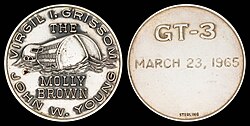
To commemorate this important mission, the United States Mint designed gold-plated, sterling silver 1-inch medallions of which the crew carried into space to later give friends and family members.
Medallions by U. S. Mint (U.S. Mint)
At the museum there are educational resources, exhibitions, collections, a space shuttle pavilion, and many other historic preservations of importance.
Grissom and Young (NASA)
The Gemini III capsule is now at the Grissom Memorial State Park near Mitchell, Indiana which is Grissom’s hometown.
See you tomorrow,
Sources: Google AI Overview, U. S. Carriers . Net, Intrepid Museum, U. S Naval Institute, NASA.gov, Wikipedia, USCG, Vaughan Publishing, Nannette V. Ramey.
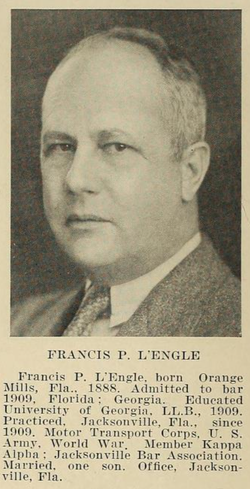
LaVilla began as a small settlement in Jacksonville, Florida by Francis F. L’Engle, a plantation owner who divided up land for freedmen and women following the Civil War. With the Emancipation Proclamation in 1863, Black’s now had freedom. However, it would take time for the results of the Civil War to take hold.
LaVilla was incorporated in 1869 and later annexed by the city of Jacksonville in 1887 according to The Jaxson. L’Engle would serve as the first mayor. Visit Jacksonville indicates it was the “Harlem of the South”; an epicentre for Black culture. Following the Civil War there was a “Reconstruction” era and the LaVilla area became an epicentre for Black people.
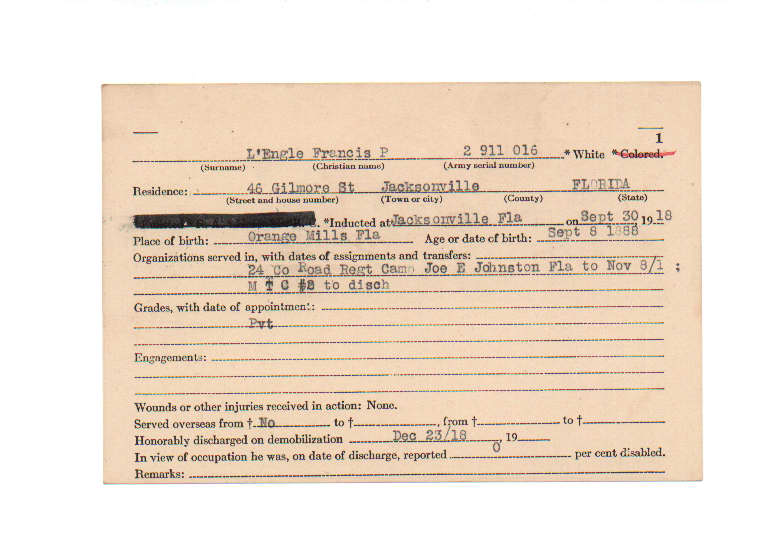
Information about Francis L’Engle.
The 1901 Great Fire of Jacksonville destroyed much of downtown leaving homes, families and businesses in total devastation and distress. The loss of over 140 city blocks, 2,300 buildings, and the displacement of some 10,000 residents called for a total rebuild. Governor William Jennings declared Martial Law and for more than a decade there was serious building efforts.
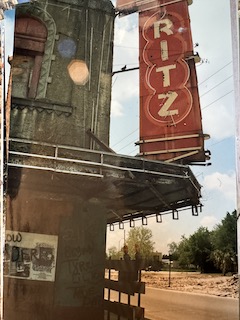
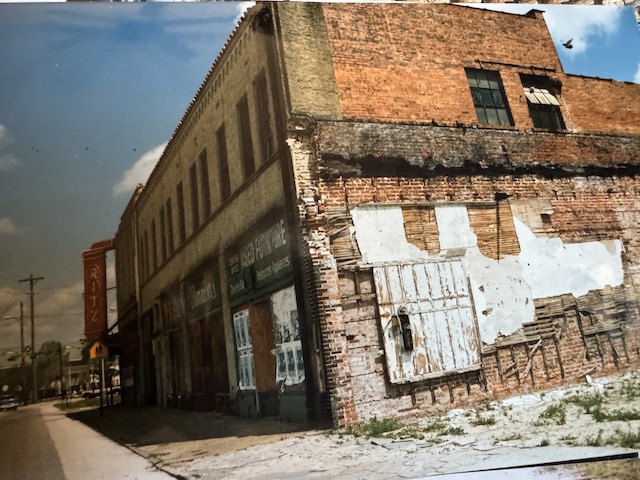
In 1929 the Ritz Theatre was designed by Jefferson Powell. It opened to a new generation of families and served as a place to host some of the greatest of all time musicians and orators. For years, the doors would open to events, and programs serve the community with music and song.
The Ritz Theatre in the 1990’s. Ramey Collection
Just as many other businesses in the LaVilla area, the Ritz could not keep up with the revitalization taking place in other parts of Jacksonville so it closed in 1972. From 1972 to 1999, it was boarded up and began great decay over the years.
Late 1980’s. (Ramey Collection)
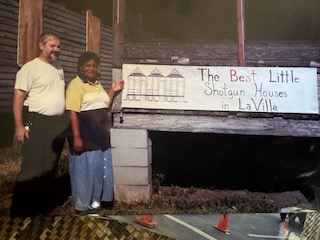
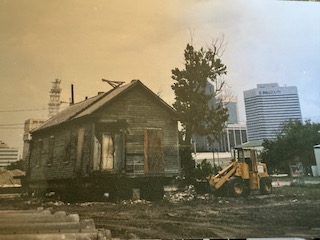
In the early 1990’s there was a lot of debris and brick pilings indicating a demolishing event going on downtown. I began taking random photos of what was happening and knowing it was a part of the “River City Renaissance plan”, a program to rebuild that part of downtown Jacksonville thought there would be a quick revitalization. It has taken years to improve the area and there are still vacant lots. Much of the old town of LaVilla is no longer there except for a few icon places such as The Ritz Theatre, Clara White Mission, the Richmond Hotel and more.
late 1980slate 1980s
In 1999, the Ritz reopened with a vision and focus to revitalise the past great events and expand its program being now called The Ritz Theatre and Museum.
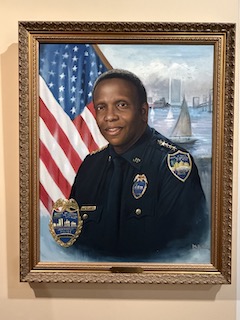
Visiting the museum, there are photographs of many of the greats that once performed there. There are also photos of some of the greats who have helped shape the city of Jacksonville since such as Winona Alexander, Adam Herbert, Norma White, Arnott Girardeau, Rayfeld Alfred, Nathaniel Glover, Earl Kitchings, Bob Hayes, and others.
Nathaniel Glover
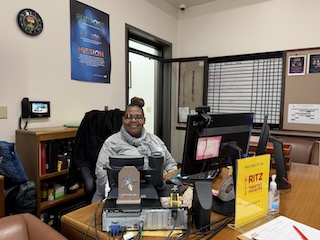
Take time for a visit and say hello to Ms. Bernadett.
It won’t disappoint.
See you tomorrow,
Sources: The Jaxson, Ennis Davis, Florida Memory, Google AI Overview, Visit Jacksonville, Find a Grave, Wikipedia, Vaughan Publishing, Nannette V. Ramey
On a recent hunt, I tried to find any remnants of the “Old Jacksonville Racetrack” of Duval County, also known as the Jacksonville Speedway. I was told it had been located near the intersection of Lenox Avenue and Plymouth Street on the westside of the city. At one time, it was “the” place to race an automobile.
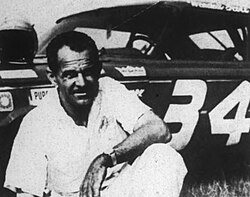
All that was there though, was a huge conglomerate of apartments named Madelyn Oaks formerly Lenox Court Apartments. 5710 Lenox Avenue was gated but not a racer to be seen, so I traveled the road to talk with anyone who might know. At Pugh Automotive, I got some answers. Lee, an office worker said the track was indeed where the apartments now sit and he spoke a great deal about what had once been a busy and fun place. He noted that Wendell Scott, the first Black person to win at racing had made his mark there, along with many others.
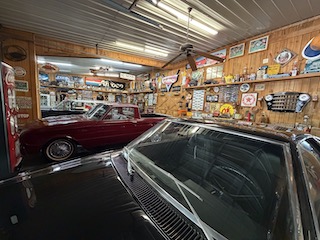
Being in the automotive business, he was obviously familiar with the racing industry and on the Pugh property were various cars dating back to the days the track was just yards away. I asked if he had a race car on the property. He said “no,” but there then he took me inside the shop to show me a framed race car photo from the days of the busy track. Also he noted for me to look at the vintage autos all around. They were beautiful along with the memorabilia and collectibles around the room and on the walls.
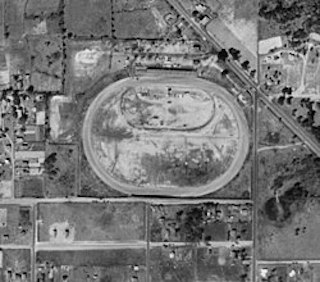
Wikipedia has a 1952 aerial photograph of “Speedway Park” which opened in 1947. It closed in 1972. The track was a 0.5 oval dirt tract which was used for auto races including NASCAR Grand National Series.
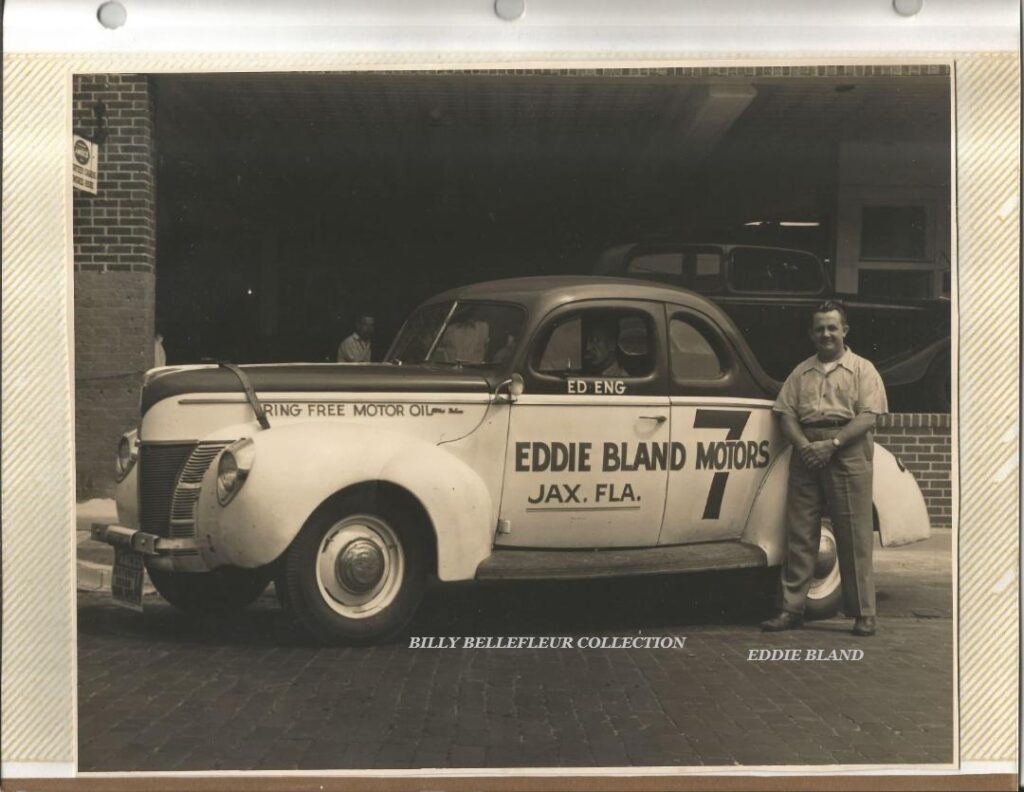
Eddie Bland (1904-1968) built the racetrack on family farm land in 1946. He had been an avid race car driver winning 3 Florida State championships. His 1934 cars were # 11 and # 8. After WWII, he built the 1/2 mile speedway and in March of 1947 the track had its first stock race. It became known as “the fastest 1/2 mile dirt track in the world” according to Forumation. com. Bland is considered one of the “true pioneers in the southeastern world of stock car racing.” He was inducted into the Jacksonville Stock Car Racing Hall of Fame in 1998.
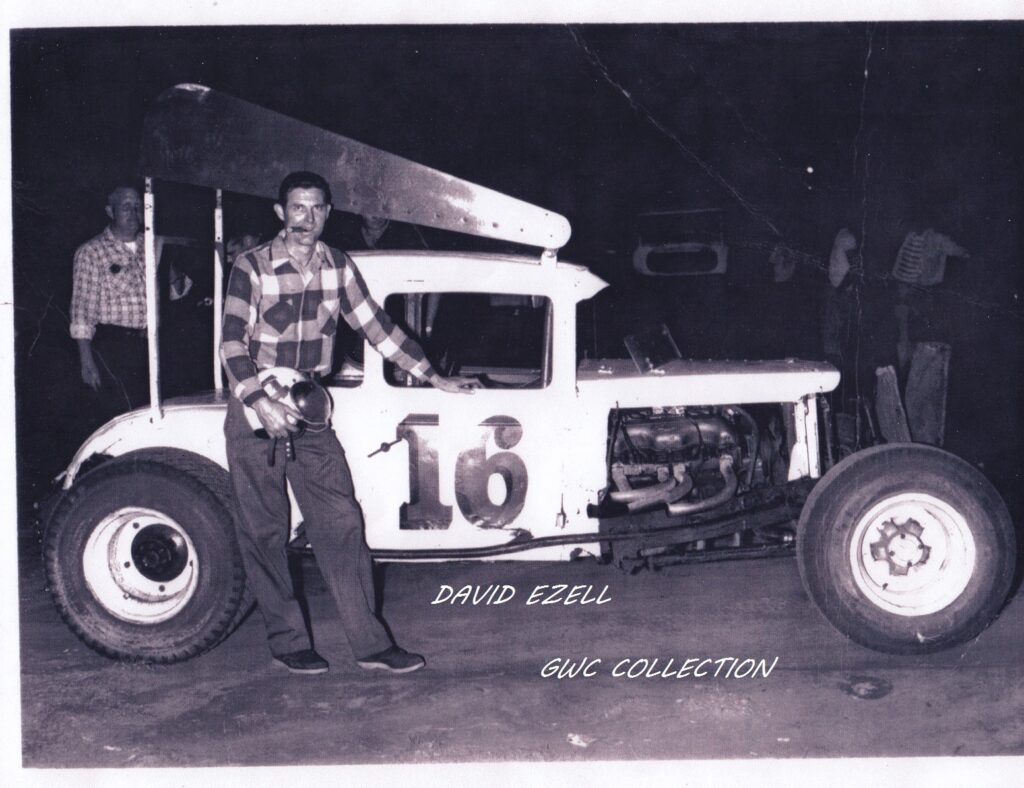
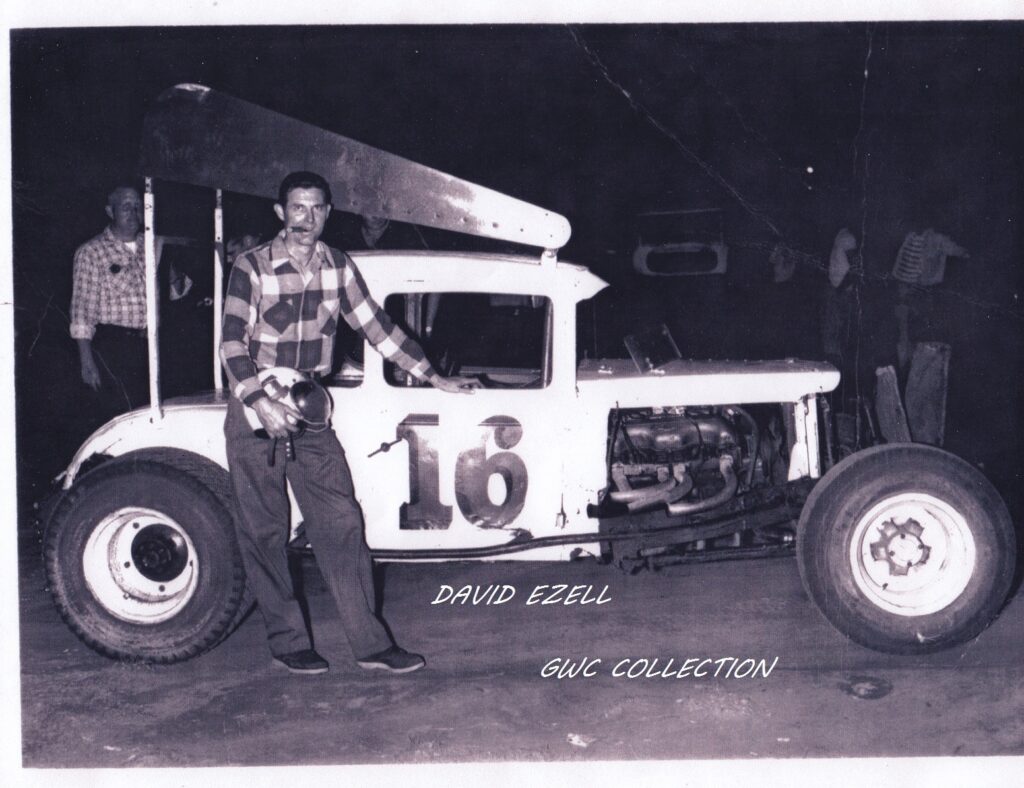
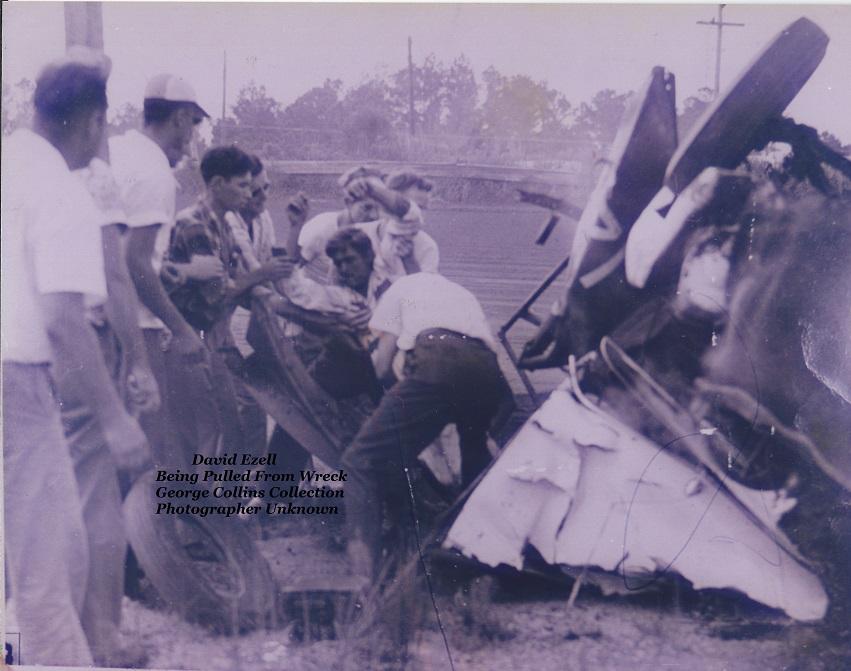
In talking to a high school friend, Wayne Ezell, he tells about the life of a stock car driver being “all in or nothing” and says that his father, David was “all in”. David Ezell (1928-2013) had been a Navy veteran and well known stock car driver. His son, who had also raced on the track, tells that his family of 5; his Dad, Mom, an older sister, younger sister and self lived the lives of a racing family. David was inducted into the Jacksonville Stock Car Racing Hall of Fame in 1991.
In scanning the Facebook Speedway site, Bob Robert-Hoden wrote of Ezell, “That man could drive good. He was the Earnhardt of the 50’s and 60’s”. Frank Ridden wrote, “ That was my man back then”. Wayne Davis wrote, “David Ezell was my absolute favorite driver at the old Jacksonville Speedway part he always took time to come speak to me when I was a little feller when I was at the fence, separating the pits in the infield, and I’ve never forgot that and hopefully I never will. I always tried to emulate that in my racing career.”
Of David Ezell, George Collins, an Admin for the Jacksonville Speedway Facebook page wrote:
“Too little is said about David Ezell, probably the most under-rated driver evere to turn a wheel at the old speedway. David probably won more races accidently than many could brag about on purpose. If truth be known, he most likely wore out more cars than he wrecked. This one he didn’t get to wear out, although he drove it two seasons or three. This was his first race car, a 39 Ford deluxe coupe. I just noticed it has 1938 standard fenders.”
The Jacksonville Speedway opened in 1947. Iy would host NASCAR Grand National Series in 1951, 1952, 1954, 1955, 1961, and 1964. It would also host the race for Wendell Scott, the first Black to win. NASCAR top series.
Following the NASCAR Grand National East Series, the track was closed in 1973 and today a housing development fills the property.
See you tomorrow,
Sources: David Wayne Ezell, Pugh Automotive, “ Lee”, Jacksonville Stock Car Racing Hall of Fame, Wikipedia, Forumotion .com, Photos: George Collins, Hazel W., Facebook, Wikipedia, Vaughan Publishing, Nannette V. Ramey
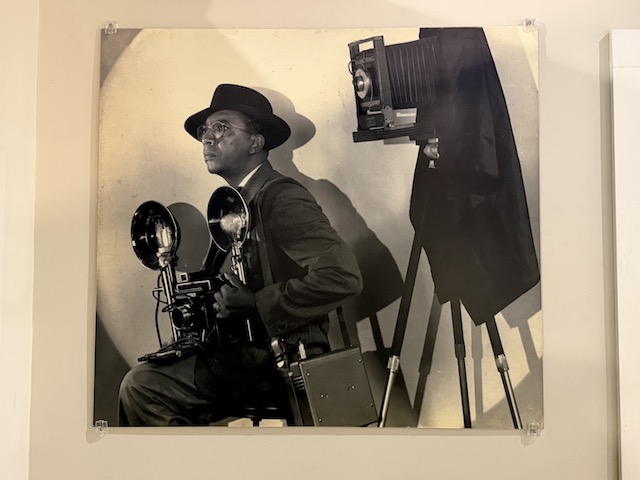
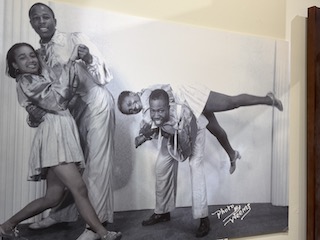
For over 50 years, Ellie Lee Weems (1901-1983) photographed and documented life in a segregated Jacksonville. He was born in McDonough, George and moved to Duval County in 1929. His home and business was located at 434 W. Beaver Street. From weddings, social events, graduations, parties, to just normal life, he captured it on film. The Ritz Theatre and Museum on Davis Street has a whole exhibit with photographs and information about the life of Weems.
E. L. Weems, Photographer (Ritz Theatre and Museum).
According to the Florida Times Union, he studied at Tuskegee Institute under Cornelius Marion Battey, “prominent photographer and instructor”. Weems died at the age of 82 and is buried in South-View Cemetery, Atlanta, Georgia.
Weems Photo (Ritz Theatre and Museum)
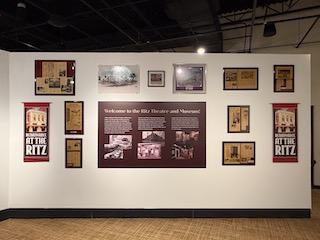
Many of Weem’s photographs can be seen at the Auburn Avenue Research Library, Ritz Theatre and Museum, and the University of North Florida. The exhibit at the Ritz Theatre and Museum highlights many of his important and historical photographs also showing his camera equipment type, and more.
Entrance to Ritz Theatre ( Ramey collection).
See you tomorrow.
Sources, Henry County, Institute, 193, Jacksonville.gov, Florida Times Union, Saunders Murray, Ritz Theatre and Museum, Find a Grave, Atlanta Constitution, Vaughan Publishing, Nannette V. Ramey.
Category: Art, Business, People | Comments Off on E. L. Weems, Black Photographer
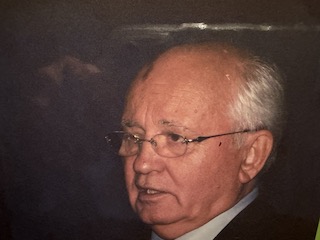
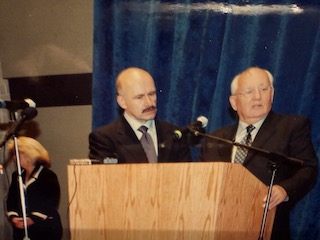
So,I heard that Mikhail Gorbachev would be interviewed in Jacksonville, by Ronald Reagan’s son, Michael at the University of North Florida on October 2, 2003. This was historic and my hope was to go and photograph this important event.
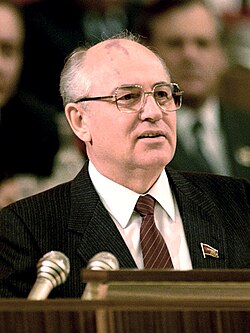
Mikhail Gorbachev (Wikipedia)
Mikhail Gorbachev was the former President of Russia, a Soviet politician who lead the Soviet Union from 1985 until the country dissolved in 1991. He was head of state in 1988 and “adhered to Marxism-Leninism” but because of President Ronald Reagan, Gorbachev began leaning more towards restructuring, cooperation, trust and a shared sense of commitment on the world stage.
Gorbachev joined the son of Ronald Reagan in Duval County for this event. Michael who had a conservative talk program, “The Mike Reagan Talk Show” set up a meeting with the former Russian President at the University of North Florida here in Jacksonville. The focus was about the changing world and titled, “A New Time, A New Beginning: An Interview with Mikhail Gorbachev. It was sponsored by the Ponte Vedra Federation of Republican Women’s Club and the International Foreign Institute.
Gorbachev had been awarded a Nobel Peace Prize in 1990 for his role in helping to the end the Cold War. He was known for working with Ronald Reagan for better Soviet relations with the U.S. during his term. According to many, he focussed on finding solutions for peace in the international arena.
While Ronald Reagan was no-nonsense about his relationship with this Soviet leader, he lead the way to make positive changes. Reagan was about moving from “confrontation to collaboration.” The Reagan’s even hosted the USSR leader at their ranch in California in 1992.
The President of the United States of America indicated that early on there was a “wariness about the two being able to work together but it was something that needed to be considered.” Reagan once said to reports in Moscow, though “I think, frankly, (that) President Gorbachev and I discovered a sort of a bond, a friendship between us that we thought could become such a bond between all people.”
Being at this incredible event at UNF was a highlight. It was obvious that the presence of many international powerhouses would be there and involved but to see and witness it….
We met in the Lazzara Performance Hall, at the Fine Arts Center at the University of North Florida. The camera used for me was a heavy 35 mm film camera with a battery pack and a professional flash. We entered all together as a group of media and photographers. Behind Gorbechev and other dignitaries, there was a man with a huge video camera on his shoulder. He was videoing everything from behind them and facing the audience and media group.
Those heading up the event allowed the media to photograph as things were getting started. The thing I remember most about this event was that the floors were wooden and I lost a handle on my heavy Nikon D-100 camera. It went crashing to the floor. The sound was deafening. It sounded like a shot! I must have turned 10 shades of red as I bent down to pick up the camera. It was quite a fracas. When I looked up everyone on stage and in the audience were staring at me. Gasp! The videographer had gotten quite close too. I’m just glad he didn’t have a gun!
I looked online to see if there was a video and if they edited out the camera drop. The link went no where.
See you tomorrow,
Sources: University of North Florida, Ponte Vedra Federation of Republican Women’s Club and the International Foreign Institute. Ponte Vedra Women’s Club, Photo-Wikipedia, Google Search, Vaughan Publishing, Nannette V. Ramey.
Category: Government, History, People | Comments Off on Russian President, Gorbachev in Jacksonville
One day, there will be an account for every person and all that has been done. So, this saga is not over.
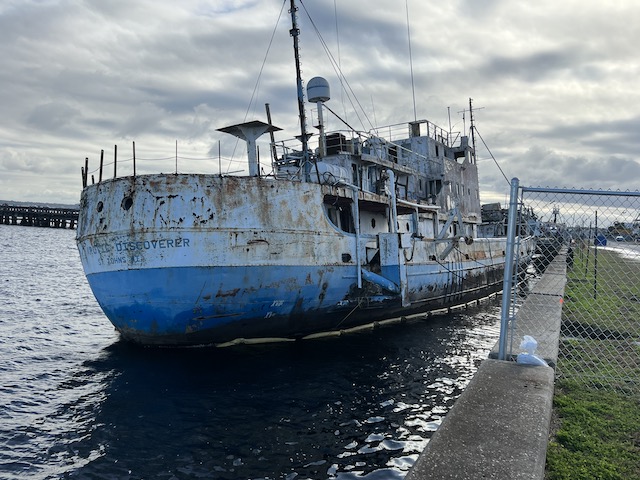
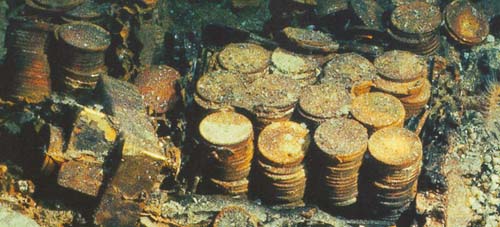
In 1998, the Arctic Discoverer ship was used by lead treasurer-hunter Tommy Thompson to find the sunken ship S. S. Central America. The Discoverer had originally been named The Cameron, a Canadian ship in 1958. Then went on to take the name, the Arctic Ranger and when sold again in 1988 became the Arctic Discoverer which would be used to explore, and find with success, the sunken S. S. Central America.
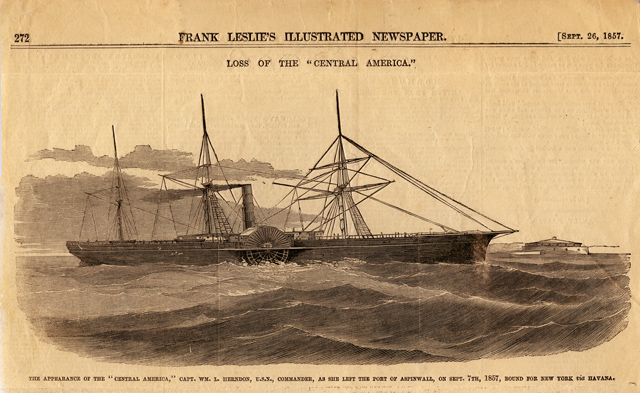
The S. S Central America was launched with great fanfare and success in October of 1852 but met its fate with most of the crew and passengers on board, on September 12, 1857. In category 2 storm off of the coast of the Carolinas the ship took on water and while the inverted distress flag was hailed, no one came until the following day. Only about one hundred passengers were transferred to life boats onto other ships. The storm of over 100 mile an hour winds eventually sent the S. S. Central America to the bottom of the ocean with most of the remaining passengers and what has been valued as over $8,000,000 in gold and artefacts. The remaining passengers who survived hung on to pieces left in the water from the ship going down.They were rescued by a Norwegian sailing vessel and as far out as 8 days later the last 3 were rescued. The total loss of life from the tragedy was 425 people including the Caption of the ship.
The California gold rush was in full swing during this time with its peak about 1852. The S. S. Central America was carrying literally tons of freshly minted gold including heavy gold bars and hundreds of ingots and coins. All went to the oceans bottom.
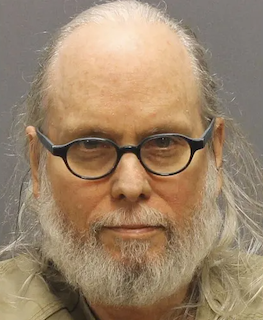
One hundred and thirty one years later, Thomas Gregory Thompson ( Tommy) and his crew would discover the sunken ship which was by then called, “ The Ship of Gold”. Thompson, a “former scientist turned American treasure-hunter “ would lead a team using the Arctic Discoverer ship to find the S. S. Central in September of 1998.
The story goes that in 2000 Thompson had investors who financed the ship’s exploration. When Thompson sold the recovered gold found at the bottom of the ocean for some $52 million investors claim they never received their return on that investment. They accused Thompson of hiding the money and not being willing to account for the 500 gold coins. It was said by many that he had offshore bank accounts.
In 2013 a district court in Ohio issued an arrest for Thompson for his failure to appear in court. Thompson would be a fugitive until he and a girl friend were found in a Florida hotel and arrested in 2015. By 2018, Thompson agreed to return the missing 500 gold coins from the wreck but said he did not have access to them. He also agreed to answer question about the location of the coins but never did. With the on-going law suit, the investors were awarded over $19 million. In December of 2015 Thompson was jailed and remained there until March 4, 2026 when a judge released him because he “no longer is convinced that further incarceration is likely to coerce compliance”. Thompson served more than 10 years.
At this writing, the Arctic Discoverer is docked on a pier in the St. Johns River near Jacksonville. It is clinging at a shipyard in Green Cove Springs. To look at it heavily leaning, it has obviously taken on water on one side in the St. Johns River. This ship’s crew found the most valuable shipwreck in history now is” bedraggled and forlorn” on the banks of the St. Johns River near Jacksonville.
This story lives on. There is a reconning for all of us one day as God is in the details, so stay tuned for the rest of the story.
See you tomorrow,
Sources: Google AI, Wikipedia, Clay Clerk, Vishi Garig, Ship of Gold, Central America (ship, 1852) at Wiki Commons, Photo-Frank Leslie’s Illustrated Newspaper, 1857, Capt. Joule Haanstra, Mariners Museum, Vaughan Publishing, Nannette V. Ramey.
Category: People, Ships | Comments Off on Ship of Gold’s Arctic Discoverer on St. Johns River
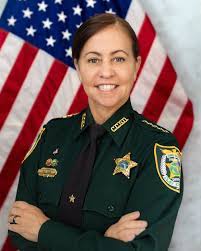
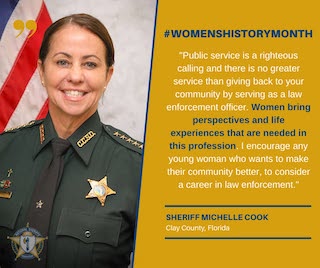
Michelle Cook’s father was a Navy veteran and stationed at Jacksonville’s Cecil Field Naval Air Station in the 1980’s. She began her career in the Jacksonville Sheriff’s office being a part of the force until retiring as a 3-star Director. As Director of Patrol and Enforcement she worked with first responders, community relations, special events, collective bargaining, promoting laws and managing personnel.
The White House
In 2017, she went on to be the Chief of Police for the Atlantic Beach department handling a 6-million budget and lead to improve the crime rate as well and community morale.
In 2020, Sheriff Cook began a campaign for becoming the Clay County Sheriff and was sworn in on September 1 of that year. Her bio from the Clay County department states: “Sheriff Cook has built a reputation of being a firm, yet compassionate law enforcement leader whose integrity and genuine management style bring respect not only from her work family but also the community she serves.”
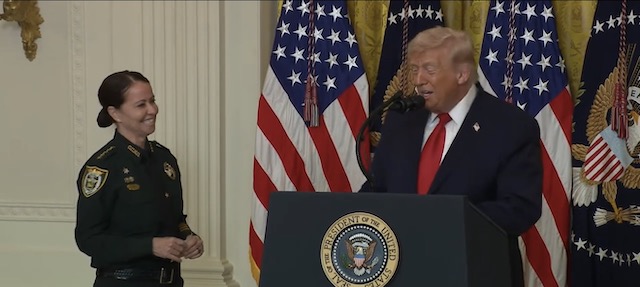
The 2006 theme for National Women’s History this year was “Leading the Change: Women Shaping a Sustainable Future”. Sheriff Cook has obviously done this and for her resilience, President Trump and the First Lady, Melania honored her along with others at The White House for their achievements.
When speaking at the White House and with a glance at President Trump, she said: “When you have a President (in the White House) saying that we will have law and order in our nation. That sets the tone. That sets the expectation.”
Sheriff Cook went on to say: “ It is an honor to serve my community with you (President Trump) at the top, sir”. In closing, she said: “God bless our first responders, God bless bless our military, God bless our President and God bless the United States of America”. Chants followed from the crowd.
It was a good day for Duval and Clay County, Florida,
See you tomorrow,
Sources: The White House, Claysheriff .com, National Sheriff’s Association, You Tube, Vaughan Publishing, Nannette V. Ramey.
[IMPORTANT- The homeless situation is tragic. There is no attempt to make fun or make light of anyone in this situation. While this is a true story, empathy and help is still offered.]
“Stranded- being left in a remote, inconvenient, or isolated place, unable to leave due to lack of transportation, money or other circumstances, such being marooned or stuck during a disaster. It often implies feeling of helplessness, abandonment, or being “cut off”” and can refer to people, animals or …”
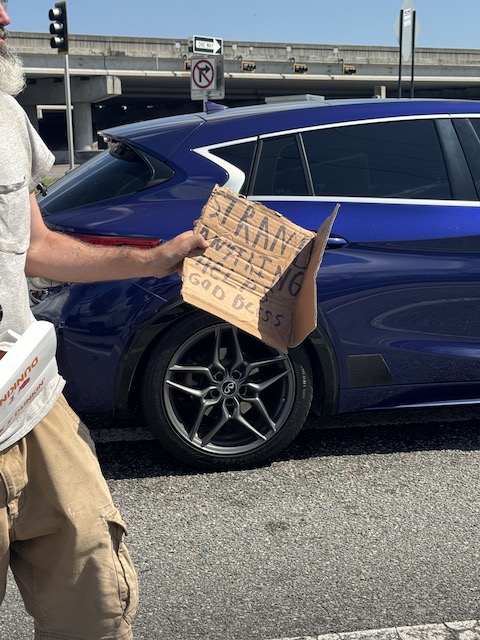
If ever there was a good representation for a homeless person, I’d say “stranded” is a perfect description. Yesterday during late after noon traffic, while getting off of Jacksonville’s I-295 near Orange Park, a man was walking the midway area between cars pandhandling. In February of 2023, Jacksonville’s city council passed a law “prohibiting soliciting, exchanging money or goods, and standing in medians for extended periods, carrying penalties of up to $100 fine and 10 days in jail”.
But, there was Tom. He’s probably in his 60,s, seemingly able-bodied, and… homeless. The traffic was really congested and at this time but looking good for him as he dodged the rows of automobiles going to one and then another. I even heard a passenger in a front car yell out to him and he went running gathering whatever tender hearts would give. He even landed some Dunkin’ Donuts which he immediately opened and began eating. No one seemed to get fined or arrested this time.
A local news report (still up on the internet) tells a tale that in 2024 the homeless population was a mere 290 people. I put a question mark here. ? Just in the 32254 area, I can count over 50 just in the small neighborhood so the homeless problem in our city is certainly greater than most people understand. There were approximately 1,009,833 people in Jacksonville in 2024. I would guess there were thousands of homeless in the city if you count every zip code. There are 54 zip codes.
Homeless people are truly stranded. They walk everywhere they go. Their area is, for the most part, limited to the neighborhood. Sometimes they get a bike but due to the elements and all that goes with homelessness, it does not generally last long and theft among thieves is very high. ( I’m not saying all homeless are thieves but desperation brings out the worst in people).
Again, I remind those who have Christ in them. Sharing the Gospel with a stranded person is the one and ONLY thing that can change them. Yes, give something if your heart desires to help, but most of all, say the name of Jesus to them. He is their one and only home.
We are all stranded without Christ.
See you tomorrow,
Nan
Sources: Jacksonville are news reporter, Google AI overview, Vaughan Publishing, Nannette V. Ramey.
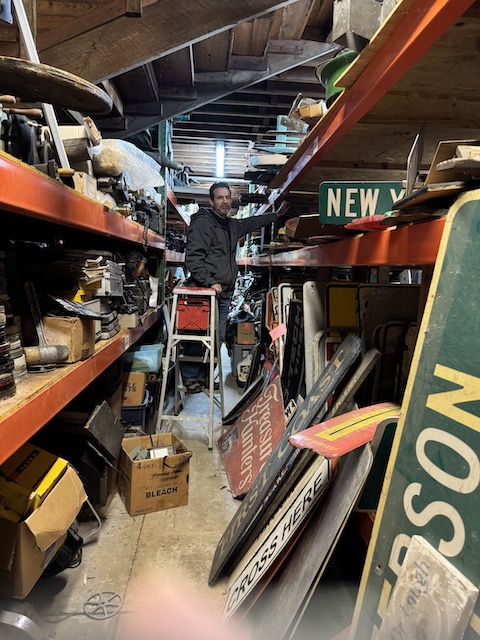
On February 20, Jason Wittkopp wrote on his “Jacksonville Florida History/Collecting” page, “You’ll never know what’s out there if you don’t go”. On Tuesday, February 24, 2026 my daughter and I were deep in the two story, 40,000 square foot , crammed with everything imaginable warehouse off of 18th and Myrtle when a guy was high on a ladder pulling and pushing different metal signs. He offered to get down so we could pass but there was no reason as we could simple go the next aisle. Knowing I was going to write about the warehouse, I asked him if I could take a photo.
Jason Wittkopp, collector
Then I asked him his first name and if he worked there . As soon as he said his name and turned to answer “My name is Jason. No,I don’t work here. I’m a Jacksonville collector”. I said “Whittkopp?”, “Jason Wittkopp”.. I knew exactly who he was. How fun! I happen to be a member of his collectibles site.
Jason was born in Portsmith, Va and moved to Jacksonville when he was 5. He says he’s been collecting since he was young but began a serious go of it in his 40’s. He’s now 51 and even while working a full time job he takes at least a one day a week and in addition online time, collects treasures. I was interested to know where he kept all of his findings and he said “Unfortunately for my wife, at my home”, although he said he did have another place as well. He said that while she was not a collector she understood about his love to collect and keep his finds.
One thing that I love that he got was a very large Greenleaf and Crosby(now Jacobs Jewelers) mantle clock. Greenleaf and Crosby was founded in 1868 in Jacksonville by Damon Greenleaf and J. H. Crosby, Jr. They are recognised as the oldest jeweller in the city. They operated as a family-owned business for over 40 years. In 1901 a Seth Thomas clock was located at the corner of Bay Street and later moved to the corner of Laura and Adams where it now stands. It is often called the Jacobs Jewelers clock. In 1930, V.E. Jacobs acquired the business and it was renamed Jacobs Jewellers. The store closed in 2023 and the building will now house residents.
With over 9,000 members to his Jacksonville Florida History/collecting Facebook site, he has a lot to offer. Other finds that Jacob share with his followers are those such as baseball ticket stubs, signs, bottles, phonebooks, luggage tags, jugs, mugs, ceramic souvenir items, photographs and more. Check his site out. It won’t disappoint. He also offers items on eBay so there’s that.
Oh, and I’ll be out and about soon because as Jason says, “You’ll never know what’s out there if you don’t go”
See you tomorrow,
Nan
Sources: Facebook, Jacksonville Florida History/Collecting, Google Search, Vaughan Publishing, Nannette V. Ramey.
On February 25, 2026, the first of 40 U. S. Civil Rights Trail markers was unveiled at Mount Ararat Missionary Baptist Church on Myrtle Street in Jacksonville, Florida. With a nice crowd of people, Isaiah Mack, a Douglas Anderson student sung “Aint Gonna Let Nobody Turn Me ‘Round” and the mayor of Jacksonville Donna Deegan spoke along with other prominent speakers.
It was March 19, 1961 that Martin Luther King, Jr. preached at Mt. Ararat Baptist church on Myrtle Avenue in Jacksonville, Florida, giving his “This is a Great Time to Be Alive” sermon. The event was sponsored by the Duval County Citizens Benefit Corporation along with the Interdenominational Ministerial Alliance. King was president of the Christian Leadership Conference and was focused on growing the civil rights movement. His words resounded with resistance but in a non-violent context.
King would return to Jacksonville in 1964 when he met Rev. Andrew Young and his wife at the Jacksonville Imeson Airport on the way to St. Augustine. There had been marches and demonstrations in downtown St. Augustine, near the old slave market and sit-ins at restaurants along with church pray-ins and the like since 1963. Florida Jacksonville’s Times-Union writer, Jessie-Lynne Kerr was a 26-year old reporter of only three months when she was assigned to this story. With demonstrations in St. Augustine a hearing was set to stop the groups and King came with his what he called “nonviolent army” to bring justice.
In St. Augustine, Martin Luther King, Jr. went to the Manson Motor Lodge restaurant asking to be served. When refused, he along with 17 in his group were arrested for not leaving when asked. King was taken to jail. The next day, he was brought to the Duval county jail it is believed for safety reasons. He testified in federal court the following day. Kerr reported that King told the judge the Southern Conference League was “an organization devoted to the task of achieving citizenship rights of Negroes through methods of nonviolence.”
Seventeen days after this incident, the Civil Rights act of 1964 was signed into law by President Lyndon B. Johnson. Jacksonville’s history is significant to document the successes and struggles of the Civil Rights movement.