March 22

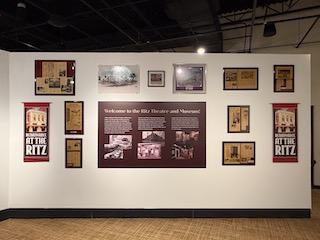
LaVilla and The Ritz Back-in-the-Day

LaVilla began as a small settlement in Jacksonville, Florida by Francis F. L’Engle, a plantation owner who divided up land for freedmen and women following the Civil War. With the Emancipation Proclamation in 1863, Black’s now had freedom. However, it would take time for the results of the Civil War to take hold.
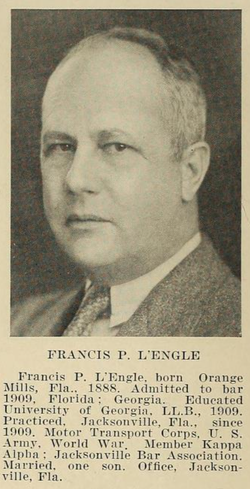
Francis Porcher L'Engle Sr.

LaVilla was incorporated in 1869 and later annexed by the city of Jacksonville in 1887 according to The Jaxson.  L’Engle would serve as the first mayor. Visit Jacksonville indicates it was the “Harlem of the South”; an epicentre for Black culture. Following the Civil War there was a “Reconstruction” era and the LaVilla area became an epicentre for Black people.  
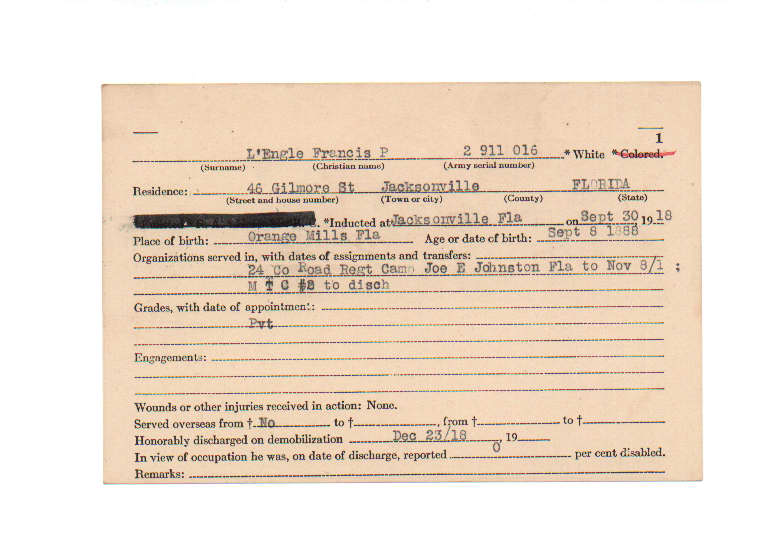
Information about Francis L’Engle.

The 1901 Great Fire of Jacksonville destroyed much of downtown leaving homes, families and businesses in total devastation and distress.  The loss of over 140 city blocks, 2,300 buildings, and the displacement of some 10,000 residents called for a total rebuild. Governor William Jennings declared Martial Law and for more than a decade there was serious building efforts.

In 1929 the Ritz Theatre was designed by Jefferson Powell.  It opened to a new generation of families and served as a place to host some of the greatest of all time musicians and orators. For years, the doors would open to events, and programs serve the community with music and song.
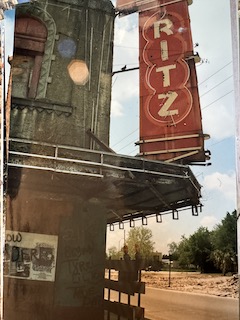
The Ritz Theatre in the 1990’s. Ramey Collection

Just as many other businesses in the LaVilla area, the Ritz could not keep up with the revitalization taking place in other parts of Jacksonville so it closed in 1972. From 1972 to 1999, it was boarded up and began great decay over the years.
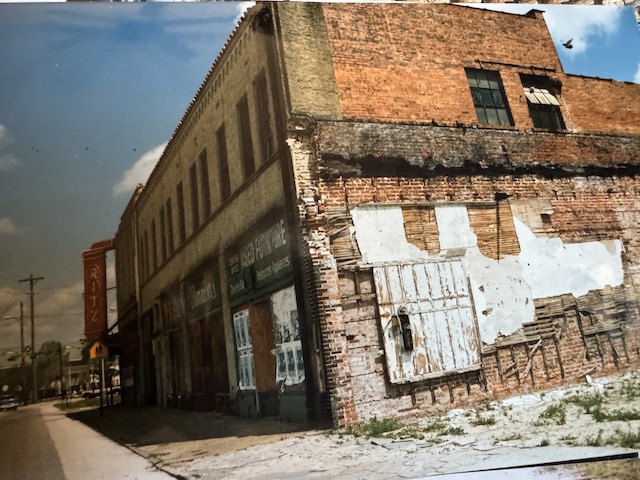
Late 1980’s. (Ramey Collection)

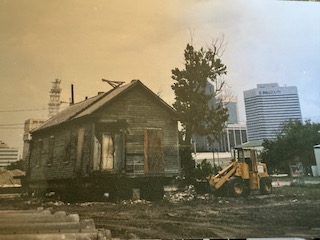
In the early 1990’s there was a lot of debris and brick pilings indicating a demolishing event going on downtown. I began taking random photos of what was happening and knowing it was a part of the “River City Renaissance plan”, a program to rebuild that part of downtown Jacksonville thought there would be a quick revitalization.  It has taken years to improve the area and there are still vacant lots.  Much of the  old town of LaVilla is no longer there except for a few icon places such as The Ritz Theatre, Clara White Mission, the Richmond Hotel and more.
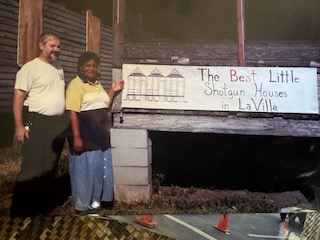
In 1999, the Ritz reopened with a vision and focus to revitalise the past great events and expand its program being now called The Ritz Theatre and Museum.

Visiting the museum,  there are photographs of many of the greats that once performed there.  There are also photos of some of the greats who have helped shape the city of Jacksonville since such as Winona Alexander, Adam Herbert, Norma White, Arnott Girardeau, Rayfeld Alfred, Nathaniel Glover, Earl Kitchings, Bob Hayes, and others.
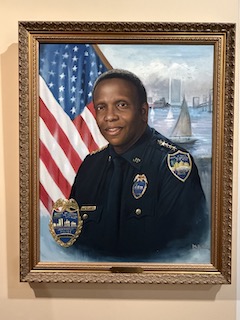
Nathaniel Glover

Take time for a visit and say hello to Ms. Bernadett.
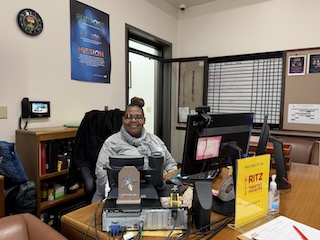
It won’t disappoint.

See you tomorrow,

Sources: The Jaxson, Ennis Davis, Florida Memory,  Google AI Overview, Visit Jacksonville, Find a Grave, Wikipedia, Vaughan Publishing, Nannette V. Ramey
Category: Buildings, History, Neighborhoods, People, Visit This | Comments Off on LaVilla and The Ritz Back-in-the-Day
March 20

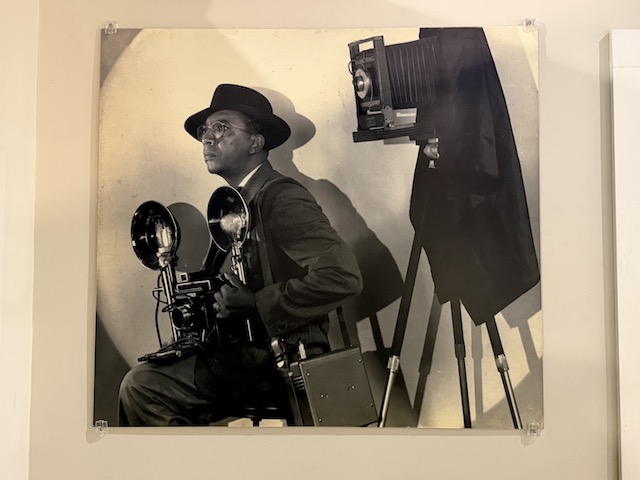
E. L. Weems, Black Photographer

For over 50 years, Ellie Lee Weems (1901-1983) photographed and documented life in a segregated Jacksonville. He was born in McDonough, George and moved to Duval County in 1929.  His home and business was located at 434 W. Beaver Street.  From weddings, social events, graduations, parties, to just normal life, he captured it on film.  The Ritz Theatre and Museum on Davis Street has a whole exhibit with photographs and information about the life of Weems.  

E. L. Weems, Photographer (Ritz Theatre and Museum).

According to the Florida Times Union, he studied at Tuskegee Institute under Cornelius Marion Battey, “prominent photographer and instructor”.  Weems died at the age of 82 and is buried in South-View Cemetery, Atlanta, Georgia. 

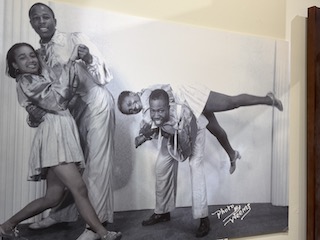
Weems Photo (Ritz Theatre and Museum)

Many of Weem’s photographs can be seen at the Auburn Avenue Research Library, Ritz Theatre and Museum, and the University of North Florida.  The exhibit at the Ritz Theatre and Museum highlights many of his important and historical photographs also showing his camera equipment type, and more.

Entrance to Ritz Theatre ( Ramey collection).

See you tomorrow.

Sources, Henry County, Institute, 193, Jacksonville.gov, Florida Times Union, Saunders Murray, Ritz Theatre and Museum, Find a Grave, Atlanta Constitution, Vaughan Publishing, Nannette V. Ramey.

March 7

The First of 40 Civil Rights Markers

On February 25, 2026, the first of 40 U. S. Civil Rights Trail markers was unveiled at Mount Ararat Missionary Baptist Church on Myrtle Street in Jacksonville, Florida. With a nice crowd of people, Isaiah Mack, a Douglas Anderson student sung “Aint Gonna Let Nobody Turn Me ‘Round” and the mayor of Jacksonville Donna Deegan spoke along with other prominent  speakers. 

It was March 19, 1961 that Martin Luther King, Jr. preached at Mt. Ararat Baptist church  on Myrtle Avenue in Jacksonville, Florida, giving his “This is a Great Time to Be Alive” sermon. The event was sponsored by the Duval County Citizens Benefit Corporation along with the Interdenominational Ministerial Alliance.  King was president of the Christian Leadership Conference and was focused on growing the civil rights movement. His words resounded with resistance but in a non-violent context.

 King would return to Jacksonville in 1964 when he met Rev. Andrew Young and his wife at the Jacksonville Imeson Airport on the way to St. Augustine.  There had been marches and demonstrations in downtown St. Augustine, near the old slave market and sit-ins at restaurants along with church pray-ins and the like  since 1963. Florida Jacksonville’s Times-Union writer, Jessie-Lynne Kerr was a 26-year old reporter of only three months when she was assigned to this story.  With demonstrations in St. Augustine a hearing was set to stop the groups and King came with his what he called “nonviolent army” to bring justice.

In St. Augustine, Martin Luther King, Jr. went to the Manson Motor Lodge restaurant asking to be served.  When refused, he  along with 17 in his group were arrested for not leaving when asked.  King was  taken to jail.  The next day, he was brought to the Duval county jail it is believed for safety reasons.  He testified in federal court the following day.   Kerr reported that King told the judge the Southern Conference League was “an organization devoted to the task of achieving citizenship rights of Negroes through methods of nonviolence.”

Seventeen days after this incident, the  Civil Rights act of 1964 was signed into law by President Lyndon B. Johnson. Jacksonville’s history is significant to document the successes and struggles of the Civil Rights movement.

Sources: Wikipedia,  Associated Press, Florida Times-Union, Jessie-Lynn Kerr, Vaughan Publishing, Nannette V. Ramey.

Category: Churches, Faith, History, People | Comments Off on The First of 40 Civil Rights Markers