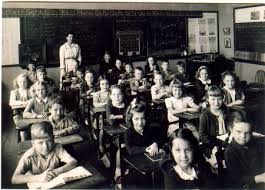
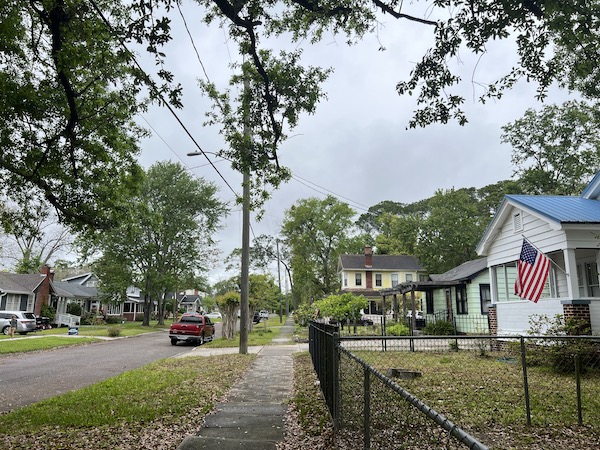
The location of this school is unsure…Wesconnett School # 57 is not the same as Wesconnett School # 116
Wesconnett Elementary # 116 for Black Children- 1955
Wesconnett Elementary School # 116
The location of this school is unsure…Wesconnett School # 57 is not the same as Wesconnett School # 116. The original school # 116 was built in 1933. In 1955 the school had 261 students.
According to the Jacksonville Public Library, “In the 1950s segregated African American schools in Duval County ran a “Duval County Recreation Program” at “Negro Centers” during the summer break. The area coordinators were Eugene J. Butler and Charles D. Brooks.”
Those with specific duties are listed on the scrap book page.(See photos).Eugene J. Butler was the principal of the Franklin Street Public School, later called Matthew Gilbert.
Photograph: Charles D.Brooks, principal of Stanton High School. On back: “Prof. [Charles] Brooks. No date given. A2-455 (Unknown Source).
Charles D. Brooks was the first principal of the new Stanton school. He was one of the program directors for the Wesconnett # 116 summer school program.
Wesconnett Elementary School # 116 was a part of this event. The Eugene Butler Middle school donated three scrapbooks, each with wooden covers. They are stored in the Special Collections area of the Jacksonville (Fl) main library.
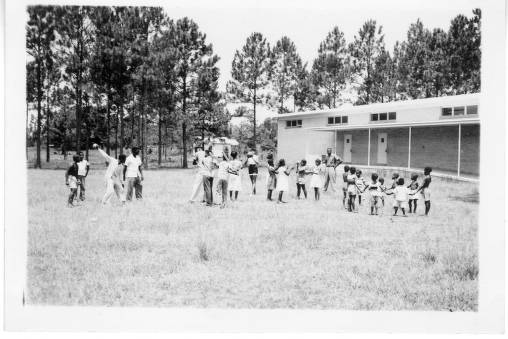
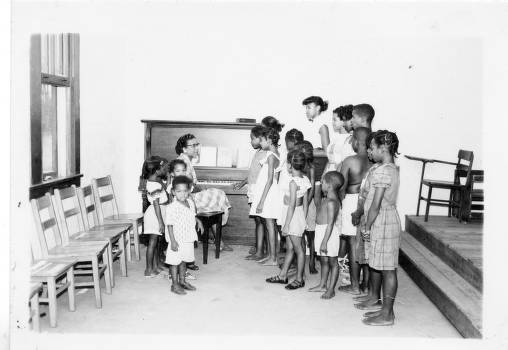
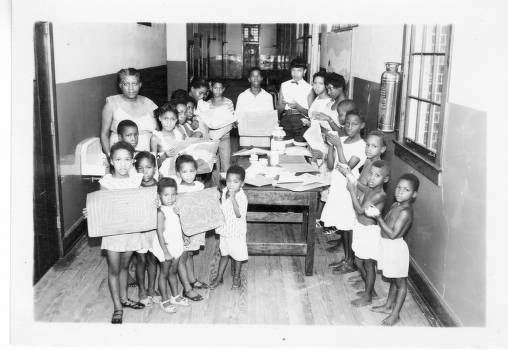
Duval Public Library Special Collections(Courtesy of the Jacksonville (Fla.) Public Library)Duval Public Library Special Collections(Courtesy of the Jacksonville (Fla.) Public Library)Playground # 116-Duval Public Library Special Collections(Courtesy of the Jacksonville (Fla.) Public Library)Music # 116-Duval Public Library Special Collections(Courtesy of the Jacksonville (Fla.) Public Library)Arts and crafts # 116-Duval Public Library Special Collections(Courtesy of the Jacksonville (Fla.) Public Library)
Jasper Wayne King was born September 10, 1933. He attended Wesconnett Elementary School # 116 along with his brother and sisters: Charles King, Charlie King Jr., Gable Armitage, Thomas Armitage, Jane King-Kierce and Pearl King. He was a long time member of a neighboring church, Greater Zion Grove Baptist Church on 118th Street in what was called Wesconnett, Florida.
Photographs from those scrapbooks are some of the rare images from the Wesconnett # 116 school.
See you tomorrow,
Nan
School photos, Courtesy of the Jacksonville (Fla.) Public Library, Smathers Library Special Collections, Personal visit to the area.
Sources: George Smathers Libraries(List of Black Schools in Duval County), Duval Public Library Special Collections(Courtesy of the Jacksonville (Fla.) Public Library). Bernice White, Olga Balderas, Complex Legacy of School Desegregation in Duval County.
Copyright Notice:
If you believe you are a copyright owner or can help with information regarding this article, might clarify rights issues, please contact me. We are willing to remove any item from public view if there is any concern regarding ownership.
“He said to them, “Go into all the world and preach the gospel to all creation.” Mark 16:15
“Philip R. Cousin AME Church is a community of believers in Jesus Christ, following the commands of God, growing in faith with inspired preaching, biblical teaching, and community evangelism”
First Mt. Zion African Methodist Church of Mandarin, 1887
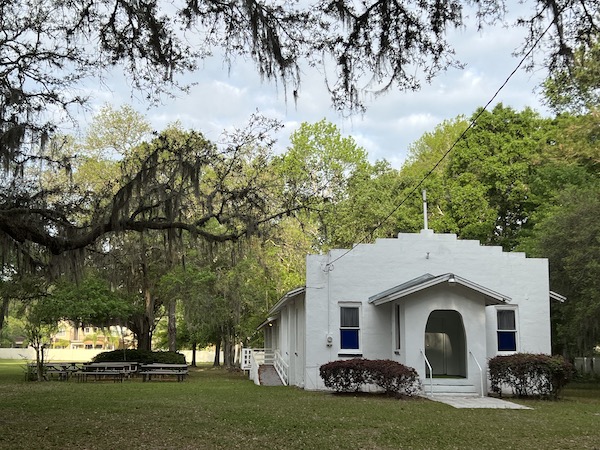
The Philip R. Cousin AME church sits on 3.25 acres of land which was bought in 1886. The cost for the land was eight-fie dollars and purchased in the name of the African Methodist Episcopal Church of Mandarin. The deeds were record in March of 1887. A wooden church was built and the church was named Mr. Zion African Methodist Episcopal Church of Mandarin. The pastor was The Reverend S. T Time serving until 1890. Through the years the church had various pastors and over time the Fruit Cove AME fellowship under the leadership of Philip R. Cousin “formed a more excellent body of God’s Church”. The pastor then became Eugene E. Moseley, Jr. With the vote of the people, the church was renamed and called Philip R. Cousin African Methodist Episcopal Church in honor of the former beloved pastor.
Mr. Zion/Philip R Cousin (Ramey Collection)
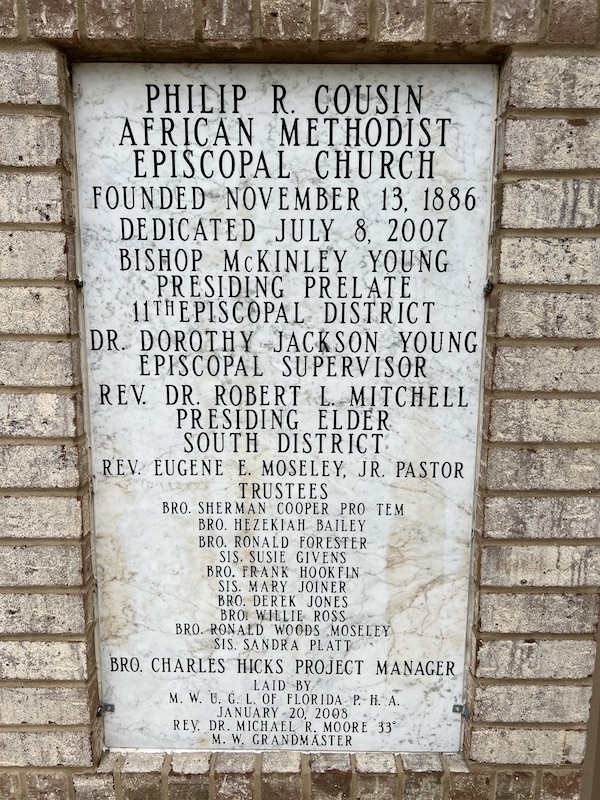
About 1991, the church was able to own 7.64 acres belonging to the Catholic Diocese of St. Augustine where a beautiful and new worship center was built. In 2002, the Bayard New Allen Chapel joined with the Orange Picker Road fellowship and in 2007 the new Worship Center was dedicated to “the glory of God”.
Corner Stone for Philip R. Cousin. (Ramey Collection)
There is more to come with this history. We’re looking for a photo of Philip Cousin, where he was born and where he is buried. If you know, please contact me. Stay tuned.
See you tomorrow,
Nan
Sources: Philip R. Cousin AME church, Google Search, Personal visit.
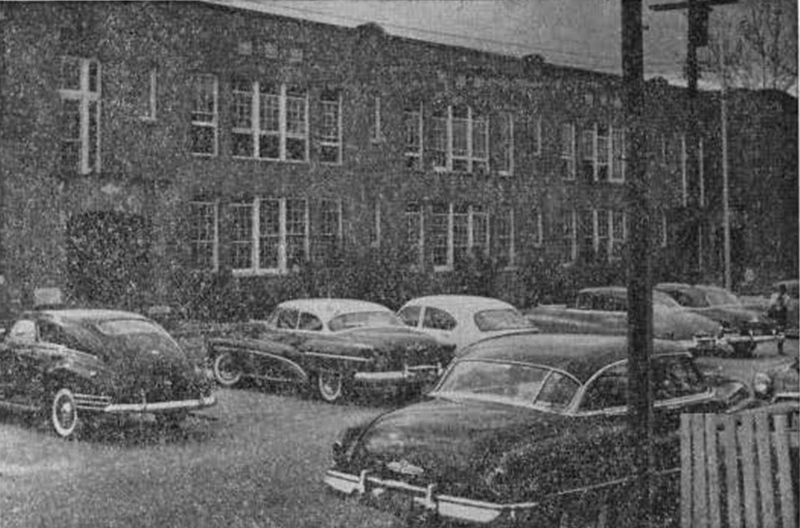
Oakland Elementary School # 102 was located on an acre of land and constructed in 1920. The school was had 24 classrooms and housed approximately 850 Black children with 27 staff members. Two of the buildings were temporary frame structures. In 1953 a concrete cafeteria was built. The date of the school demolition is unknown at this time.
The first principal was Mrs. Tillis. Sadie T. Tillis was an elementary and middle school teacher with a passion for helping her students. We continue to search information about her life and service to her school, community and students.
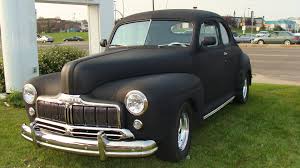
The automobile depicted here appears to be similar those of the 1940’s Oakland School parking lot photo.
1940 Mercury created by Edsel Ford-Wikimedia Commons
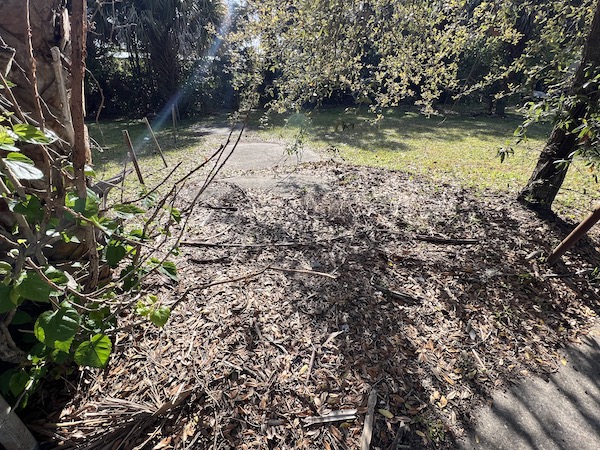
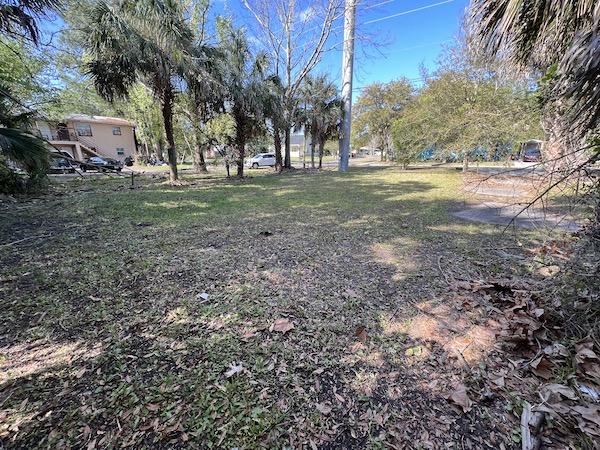
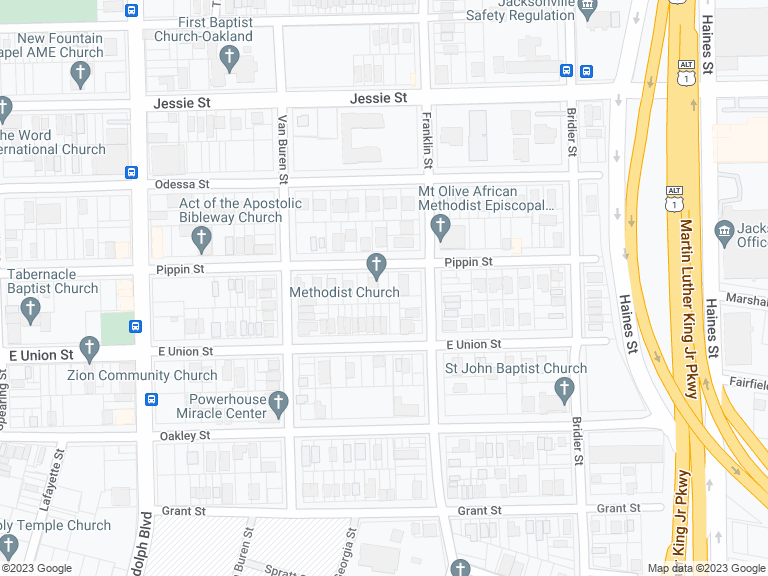
If you visit the area where the school was once placed, there are only fence posts and a cement pad. The woods nearby are thick and the Haines Street expressway runs behind Pippin Street. The Haines Street expressway opened in 1962 following the opening of the Matthews Bridge in 1953.
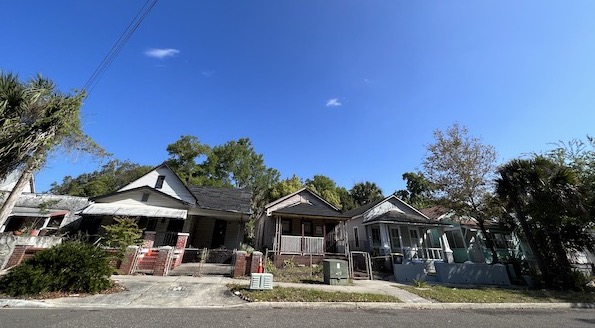
Oakland School of 1920 area. (Ramey Collection)Old Oakland School area looking SW towards the city of Jacksonville( Ramey Collection)Homes in the Oakland School area.(Ramey Collection)Google map
See you tomorrow,
Nan
Message me if you have additional information about Mrs. Sadie Tillis.
If you believe you are a copyright owner or can help with information regarding this article, including to clarify rights or information issues, please contact me. We are willing to remove any item from public view if there is any concern regarding ownership. In addition, if you have facts to help, please contact me.
Source: Negro Schools of Duval County 1955-1956, FAMU Collections, Google Map, a personal visit to the area.
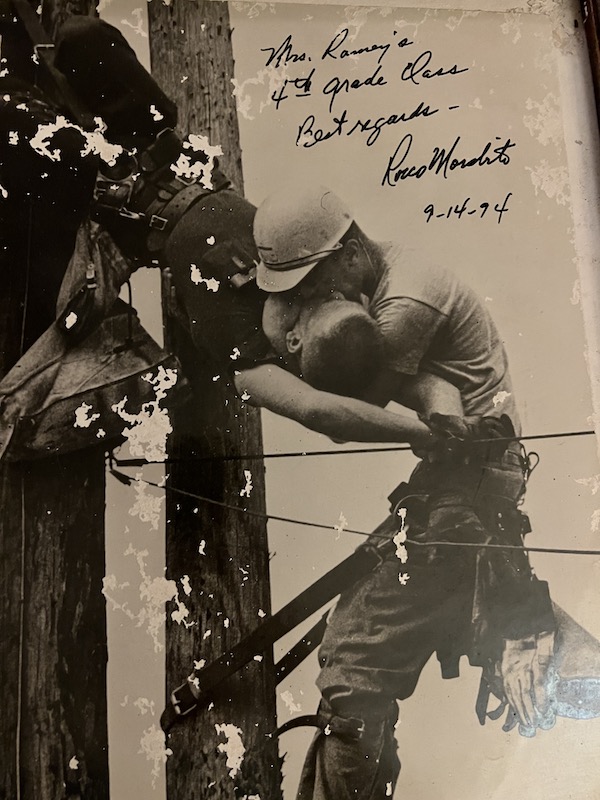
His famous photograph called the “Kiss of Life” was labeled “dramatic” and it was. Rocco Morabito was a Jacksonville Journal photographer for 42 years beginning in the late 1960’s. The Florida Times Union reported that his daughter said “he smelled of newsprint”. He was a “hawker”, selling newspapers before he was even a teen. When I met him he was still offering his gifts by sharing with my 4th grade class his Pulitzer Prize winning photograph. He brought with him newspapers, his Rollieflex camera, and his prize-winning photograph, “The Kiss of Life”. He lined a string of photos from that monumental day up on the chalkboard and explained the event moment by moment. It was truly dramatic.
Kiss of Life Photo- Given 1994 (Ramey Collection)
After 27 years, he was still willing to spend time with the community. On that Wednesday, he gave me an 11 x 14 sized photo and even signed it.(The photo was damaged by moisture in storage after retirement). All of the children celebrated this exciting event in the life of this man. He shared the event so real that we each felt as if we had been a part of it and in a sense, we had. Life lessons in real time.
Morabito had taken this famous photograph July 17, 1967 after leaving a photo shoot for the Journal and on his way back to the newsroom. He explained to the Greenland Pines Elementary students on September 14, 1994 that he was always looking for the next photo, the next story, the next opportunity to put into print some important event using his camera to preserve history. On that July day, he did just that. He not only preserved an iconic moment but he helped save the life of a JEA worker, Randall Champion by using his car radio to bring an ambulance to the scene. That event on that day forever changed the lives of at least three men, Champion, J.D. Thompson and Rocco Morabito.
On that day in 1967, Morabito was on West 26th Street in Jacksonville, Florida, when he saw a JEA linesmen high in the sky working an electricity pole. He explained that before he could hardly park and get out of his car one of the linesmen yelled at him regarding a dire situation with his co-worker who was dangling from the next pole. Morabito radioed a dispatcher who sent an ambulance.
Meantime, J. D Thompson gave mouth-to-mouth resuscitation to Randall Champion saving his life. Morobito took photographs of the event. In my view, God had something else for Champion to do. He lived for over 35 years past that day.
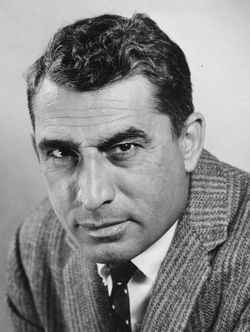
Rocco Morabito went to school in Jacksonville, graduating from Andrew Jackson in 1938. He served with the Army Air Corps in 1943 serving as a sergeant. He was a Jacksonville photographer for over four decades.
Rocco Morabito, Find a Grave Photo
Mr. Morabito won a Pulitzer Prize for his incredible photograph. It was called “The Kiss of Life”. This photo has been published and printed world-wide. It was on the wall of my classroom until I retired in 2012. He also won the hearts of the children with whom he shared his incredible story. I personally was touched and will forever be grateful for his time with us.
Rocco Morabito died on April 5, 2009 and is buried in Evergreen Cemetery, Jacksonville, Florida.
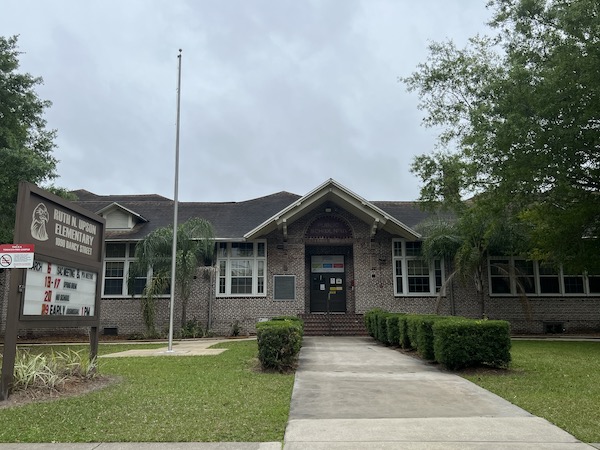
The Murray Hill neighborhood began its roots in 1906 as an outgrowth of the 1901 Great Jacksonville Fire. After the fire, the city began rebuilding and Murray Hill was one of those areas near to the downtown that was platted to welcome new homes, businesses and people. When the area had some growth about it, a new school was built in 1916 at 1090 Dancy Street. It would be called the Murray Hill School. Ruth Upson taught school in Duval County and became principal at this school. This westside neighborhood was about to boom and Ruth N. Upson was a part of that growth.
First Named Murray Hill School(Ramey Collection)
This school has served the Murray Hill area for over 100 years. The school opened in 1916 and in December of 2016 had a 100 year party to celebrate. People came from all around to be a a part of this event including former attendees. There were scrapbooks, newspaper articles and more shared on this exciting day. Resident News posted photographs of the event on their site which included many of the artefacts brought and former students.
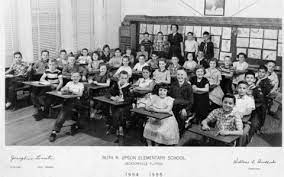
Former students of Ruth N. Upson School. Class photos.
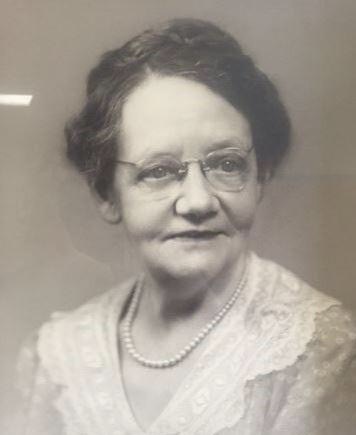
There were items that had the Murray Hill School name on it dating back to its founding. After Ms. Upson served as principal, a petition was sent around to rename the school in her honor. Ruth Newell Upson retired in 1949 after 32 years as the principal.
Ruth Newell Upson (Duval Public Schools)
Ms. Upson was born in Syracuse, New York on June 10, 1879. According to Evergreenjax, she moved to Jacksonville, Florida in 1885, attended St. Johns Church school and graduated from the University of Florida in 1903. She died on April 15 at the age of 88. On the school website, it says, she passed away” in 1968 but will forever be remembered as a heroine of our school.”
Ruth Newell Upson is buried in Evergreen Cemetery.
See you tomorrow,
Nan
Sources: Duval County Schools, Wikipedia, Evergreenjax, Facebook, personal visit.
I don’t remind myself enough that God’s Holy Word says, “The Wages of Sin is Death”. There are so many ways in which this is true. It is not only so that we would die physically because of poor choices but things in our lives that were living and thriving die because of the bad choices we make. That is why people go to court, to detention, to jail. That is why relationships die or thrive. That is why people have good or bad credit; a good name or a bad name. That is why people are trusted or not, hired or fired, honored or dissed; loved or hated. One way in which we live, we perpetuate life or because of poor choices, death.
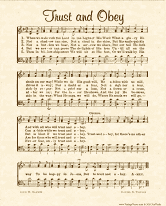
Sammis, 1887
John Sammis wrote in 1887 these words: When we walk with the Lord in the light of his Word, what a glory he sheds on our way! While we do his good will, he abides with us still, and with all who will trust and obey. Refrain: Trust and obey, for there’s no other way to be happy in Jesus, but to trust and obey. Not a burden we bear, not a sorrow we share, but our toil he doth richly repay; not a grief or a loss, not a frown or a cross, but is blest if we trust and obey. Trust and obey, for there’s no other way to be happy in Jesus, but to trust and obey.
Sammis-PUBLIC DOMAIN
We want the living in our lives. We must make the choices in our lives that the things of God thrive and live within our person and on our time on this earth. This will occur because we simply “trust and obey the living Christ”.
It is true in my own life that death came because of a poor choice I made here or there. Over the years, I look back at bad choices that I have made and behind them are the deaths of something as a result. This is my life and there is no reason to tell of my wrong-doing and there are too many instances, Lord forgive me but…this morning, I remember and will choose this day whom I will serve. It will not be the evil one. It will be the “I Am”, the Creator of all, the Lord God Almighty.
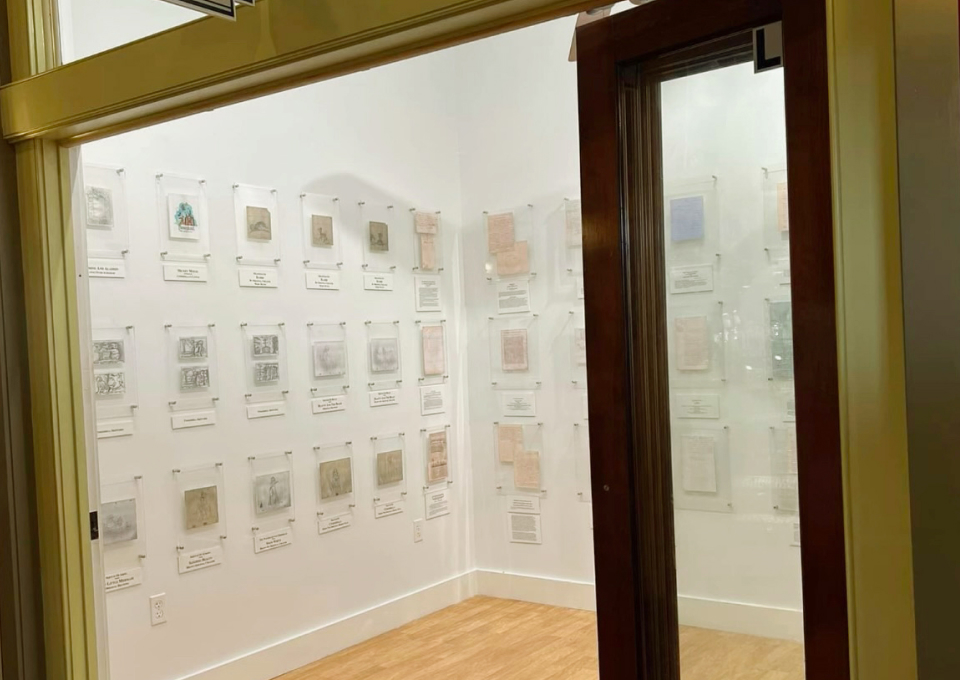
It has closed. After 30 years in Jacksonville, the Karpeles Manuscript Library Museum clicked the lock and will no longer service the Jacksonville area. Karpeles manuscript library was begun by David Karpeles’. He had a love for old documents and began a collection which ended up being placed in about a dozen libraries in the United States.
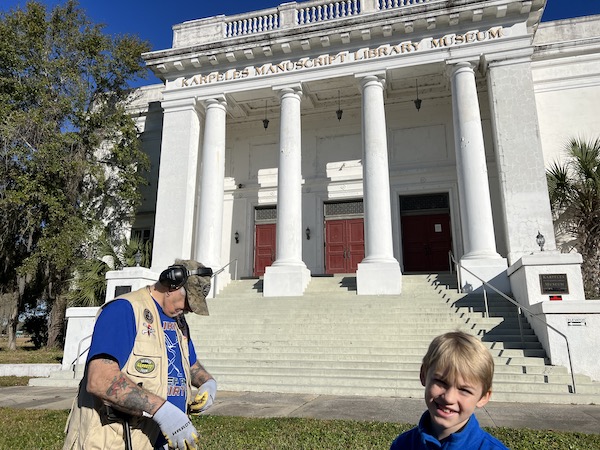
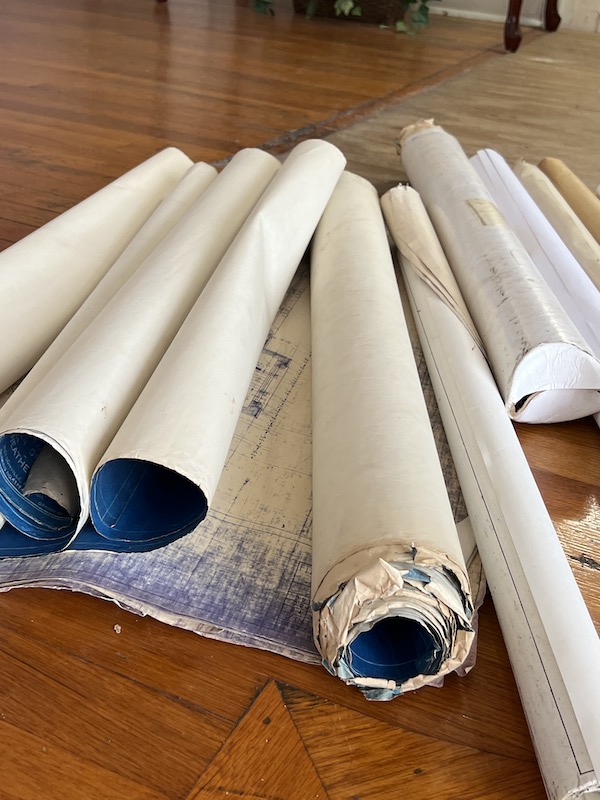
Karpeles closing week. Grandson and I visited to find a metal detector scanning premises.
Jacksonville’s library was housed in the old 1921 building built by Marsh and Saxelbye once was used for First Church of Christ in Springfield. David Karpeles died in January of 2022. The Jacksonville location closed in January of 2023 as will others around the country while Karpeles’ daughter, Cheryl Alleman, and her brother, Mark Karpeles downsize and reorganize. It has been reported they will go from 15 manuscript libraries to 10 over time.
Manuscripts laying on the stage the week of closing.
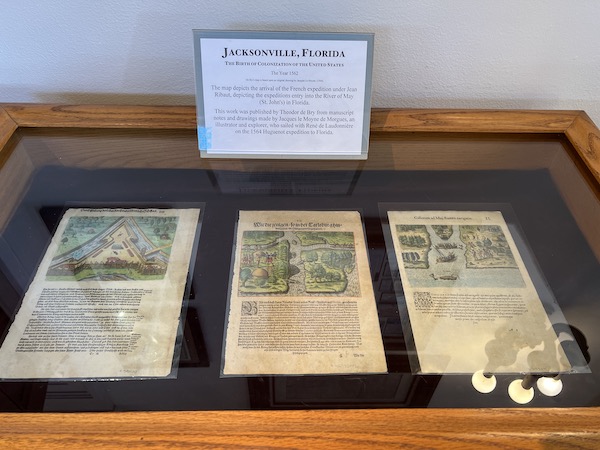
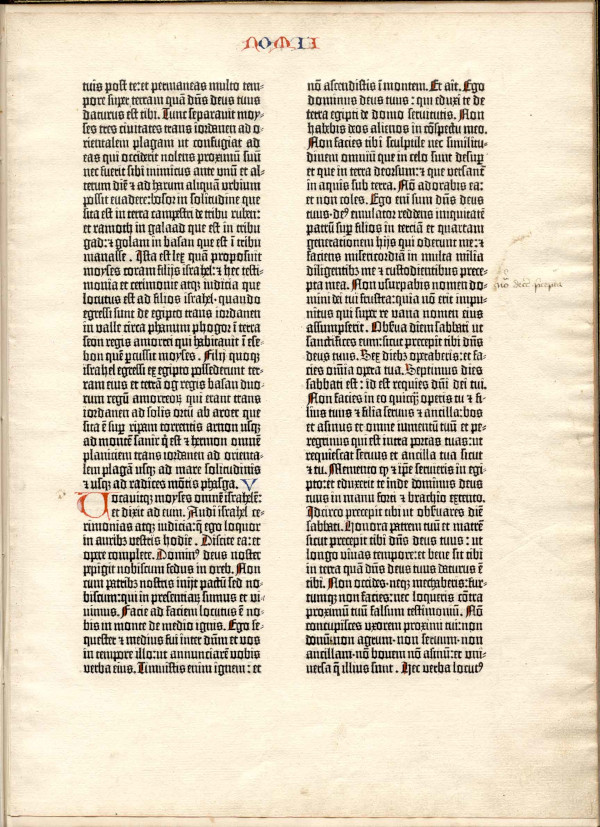
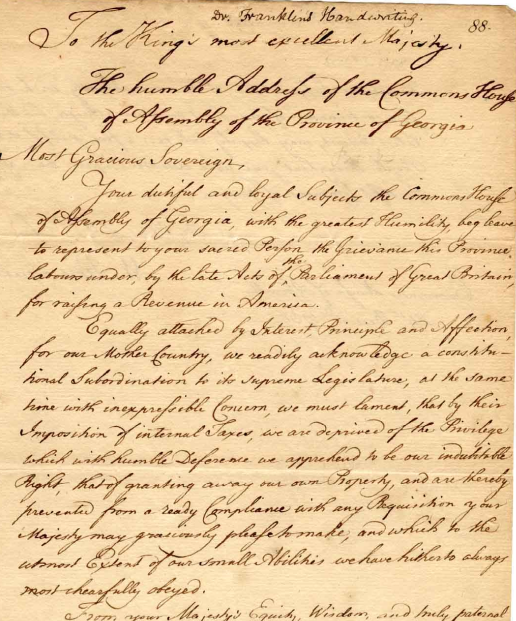
For thirty years, Jacksonvillians and guests could visit and find rare and authentic documents such as the first printing of the Ten Commandments from the Gutenberg Bible (c 1455), the famous E=MC2 formula by Einstein, the original manuscript of Roget’s Thesaurus, the sheet music of the Wedding March, Abraham Lincoln’s signature of 1861, the Apollo Translunar trajectory plotting America’s space flight and more. Through the years manuscripts were transferred from one library to another rotating the authentic pieces so many could view them in glass cases.
East Coast founding c 1500’s10 Commandments first printed by Gutenburg PressTaxation without Representation document
The library opened in Jacksonville in 1992 and closed its doors here in January of 2023. I am told there is a small library nearby that can be visited. It is being touted as “the smallest walk-in-museum in the United States” and is located in the Nation’s oldest city, St. Augustine.
Mini Museum in St. Augustine, Florida-Opened 2023
You should check it out. I’m going to….
See you tomorrow,
Nan
Location:
St Augustine location for Karpeles Mini Museum-
St George’s Row- Unit L
106 St. George St.
St Augustine, Fl 32084
9:am-10:00 pm daily
FREE
Old location of the Jacksonville Karpeles-101 West 1st Street ( formerly 1116 North Laura Street)
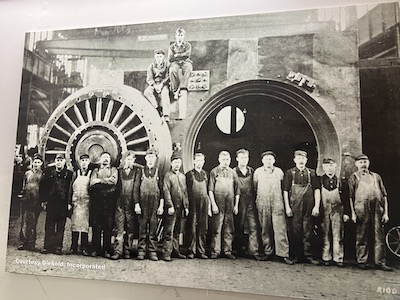
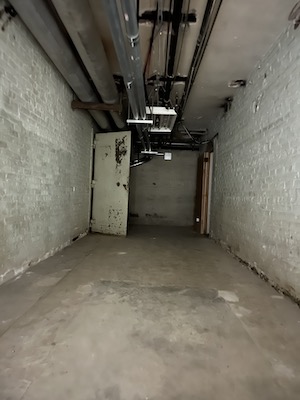
The most secure depository in the world is said to be that of Fort Knox. It is operated by the United States Department of Treasury. It seems to me and I’m no security expert, that the original three banks of downtown Jacksonville could have given Fort Knox a “run for the money” in terms of security back-in-the-day.
Diebold vault workers (Sass Collection-Diebold via Jacksonville Blogger)
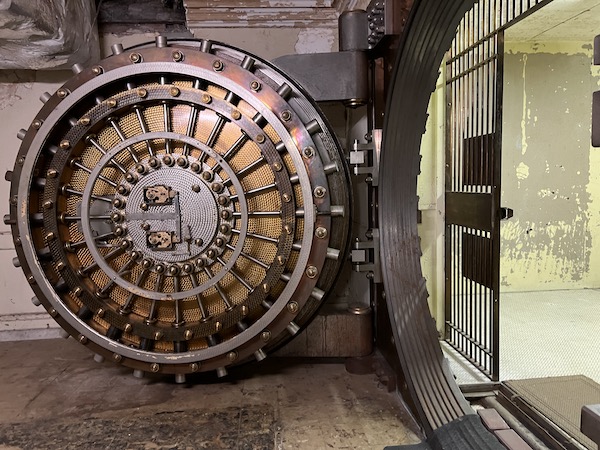
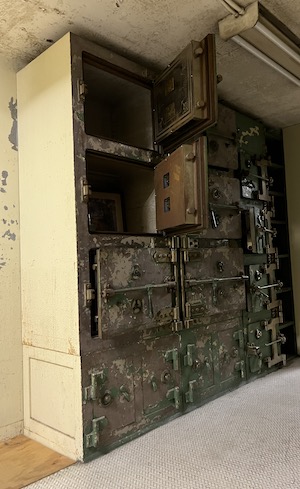
There are, at this moment still, in 2023, huge vaults under banks in downtown Jacksonville. If you take the Gary Sass tour you can see at least two and actually walk inside of one of them. Don’t close the door because if they can’t open some of the safes that have been there since 1877, they may not have the combination or key to the huge circular tumblers that open the vault. On the tour you can walk under the city streets , in tunnels prepared for vault use in the late 1800’s and early 1900’s by Jacksonville bankers.
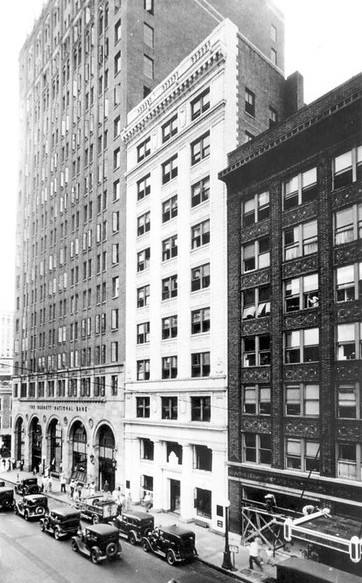
Early Banks in Jacksonville (Florida Memory via Jacksonville Blogger)
It has been suggested that the vaults were so big, they were put in the ground first and the banks built on top of them. For years they were used to store three of the biggest banks in Florida’s money. When the downtown Jacksonville boom burst, the vaults were left unoccupied and unused.
The Barnett Bank of Jacksonville opened on the corner of Forsyth and Main in 1877. It would become the largest commercial bank in Florida with an excess of 600 offices and over $40 billion in deposits. The buildings with vaults beneath them still stand.
The Atlantic National Bank began in 1903. Banking efforts have changed hands over the years and today it is called Wells Fargo.
The Florida National Bank opened in 1905 which would become the 2nd largest bank in Florida at some point. All of those banks used the vaults for transferring money.
Through the years there have been many changes. There was the Great Fire of Jacksonville, Indian ‘wars, the Civil War, but one thing that has not changed is the huge vaults that once provided safe storage for the millions and millions and million of dollars, certificates and actual gold stashed in them for safety. Of course, there is no money there(that we know of) but the vaults are safe.
The tour begins by going underground and walking through several tunnels. The tunnels, for the most part look like office walls and walkways until you realize you’re under Forsyth Street, and then Julia Street and you look to see how the path goes down.
When you get to the end, you walk through a door to see a huge Diebold vault. This company was known for it’s security of money, valuables, records and more late in the 1880’s. It’s truly an “ah ha” moment when you see the huge gold-bronze looking safe. It makes you want see more, turn its tumblers and close the door. In the vault area, are old lock boxes that individuals would rent, some that are still closed and no one knows the combinations or have keys to the century old relics. If confederate money is in there, there is no value anyhow. Right?
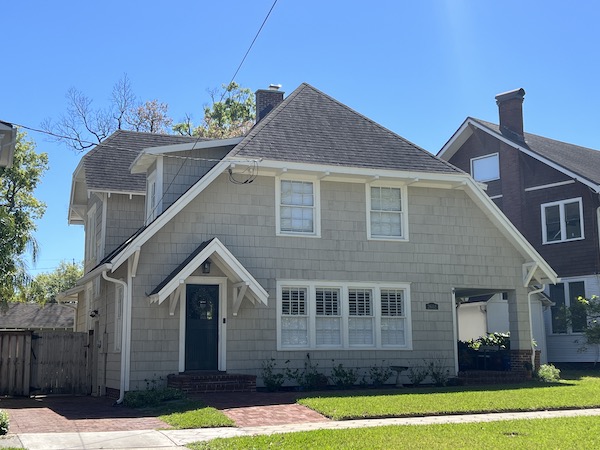
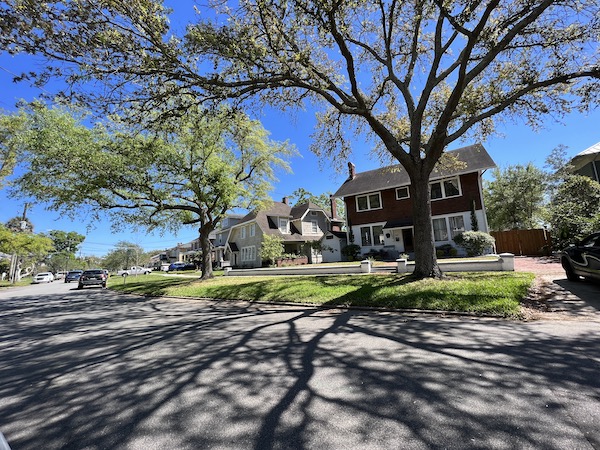
Recently, I read on a blog that Annie Lytle Housh, former teacher and principal of School number four, which was once called Riverside Park School and now called “Annie Lytle”, lived so close to the school that she could see the children at play. Unable to find that home in any records under her single or married name, I did research to find that Anne Housh lived off of Post on Hershell Street. The more I thought about it, stood on the street where she once lived, and looked towards the school, the more I realized that it could be true that she could see “children at play” on the school yard if…. Yes, children could be seen and heard by her from her front porch if the present walls of Interstate 10 were not there, no trees blocked the school yard and the homes in front of her house on Hershell were not there at the time.
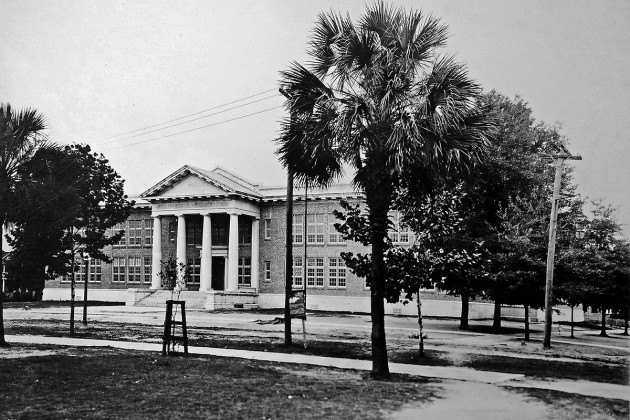
Annie Lytle School # 4- Interstate 10 above(Ramey Collection).
In many descriptions the school is said to “overlook Riverside Park”. That being the case, Annie Lytle could indeed watch and even listen to the children on the playground as she lived in the house overlooking the park from north to south in the neighborhood of the school in which she taught and was principal for over 35 years.
Annie Lytle (Yearbook Photo)
Even now, the Riverside area of Jacksonville, Florida is a quaint area with unique homes and many with sustaining presence for our city. Many important and upstanding people of Jacksonville’s history have lived in and around the Riverside area over the years such as former Mayor Jonathan Greeley, Captain William James, millionaire John Murray Forbes, Art collector, Nina Cummer , Senator Wilkinson Call and more. Annie Lytle would have good company in the Riverside area going forward.
Annie Lytle House 1940( Ramey Collection)
Mrs. Annie Lytle Housh was by the account of the 1940 census record at least 62 when she lived at that address on the North side of the Hershell Road address with her older sister, Elenor Lytle, and her younger sister, Mary with her husband Charles Roberts.
Lytle lived in the center of this Hershell Street. The school is to the northeast of this photo.
Riverside Park School has had quite a history over these more than 100 years. Prior to a school named in the former principal’s honor, there was an 1891 wooden schoolhouse at that location and was referred to as, Riverside Grammar school. There is a park in the front yard of the school thus the name “park” fit it perfectly.
In 1915, the Duval County Public Schools set up a bond program of $1 million to build new schools. Public school number four was one of them and artchitect Rutledge Homes would complete the job in 1918.
Annie Lytle (Preservation Office Photo)
Annie Lytle became principal at the school and in the 1950’s its name was changed to Annie Lytle Elementary School Number Four. The school rocked along for many years but when the busy interstate was literally built in its front yard, the noise from all of the traffic caused educators to realize the school was no longer usable for learning. The children could not hear themselves think.
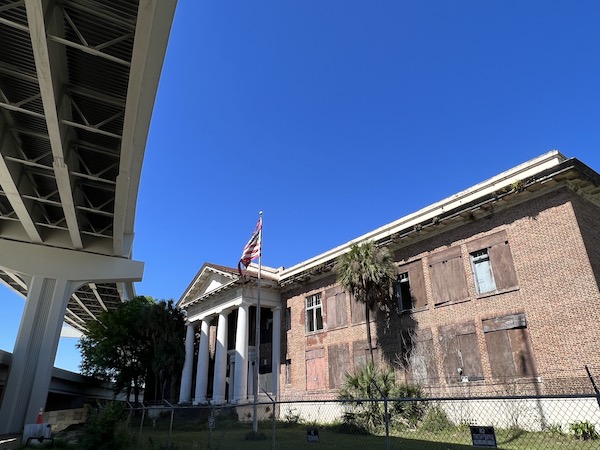
Very recently I dropped by to take some photographs of the old school. I walked the entire outer premises of the fenced building. I myself could hardly think due to the tremendous noise from traffic, fast-paced cars and automobiles zooming past above where I stood.
Annie Lytle school served the Riverside area for many years until an interstate road would disrupt its success and bring about great loss. At one time, the building, programs, events for learning was on a grand scale. The beautiful façade and the stately columns would serve the Jacksonville area well until it was closed in 1960. For at least a decade after closure, it was used as storage for the school system. It was condemned in 1971 and yet still some thought they might could rescue it from demolition. In 1980 the Ida Stevens Foundation bought the dilapidated school for $168,000 in hopes to put condos or living space there but eventually let it fall to tax default where it was picked up by Tarpon IV LLC in 2011 for a tax deed sale of $86,600.
Annie Lytle school was given the designation of an historic building in the year 2000. There were hopes someone would save it. In 2005, a team lead by Tim Kinnear, was formed calling themselves the “Annie Lytle Preservation Group”. For years they cleaned and did what they could to hold on to the dream to save the school but of late, the property seems too far gone and while many tried to save it, nothing substantial has come to fruition. From numerous break-ins, horrible graffitti, a fire, torrential rain coming onto the roof and it caving, the school is in such disrepair it is unfortunately, more than likely it is doomed.
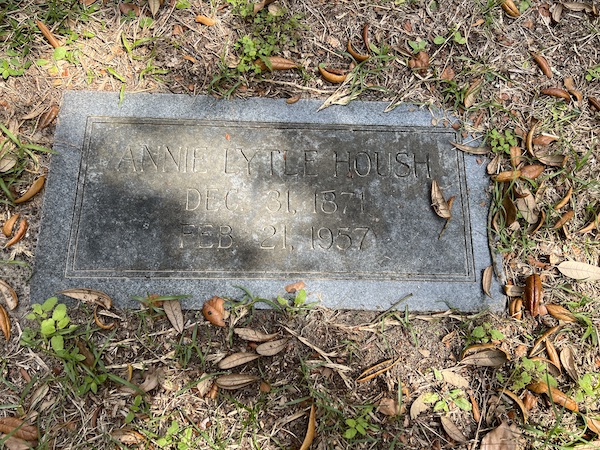
Annie Lytle House was born in Ohio on December 31, 1871. She began her teaching career at Riverside Grammar School at the age of 17. She would teach and become the principal spending at least 35 years there. The school closed some three years after her February 21, 1957 death. She is buried at Evergreen Cemetery.
Annie Lytle House Grave (Ramey Collection)
We’re still hoping for Annie Lytle Public School Number Four.
See you tomorrow,
Nan
Category: People, Schools | Comments Off on Annie Lytle # 4 Could See the Children Play From Her Own Home
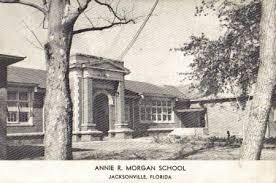
The Woodstock Park area where Annie R. Morgan School sits is bounded by McDuff Avenue, Commonwealth Avenue, Edgewood Avenue and West Beaver Street. Because of the outgrowth of the resurgence after the 1901 Great Fire of Jacksonville, neighborhoods around the city began popping up and the Woodstock area was one of them . It was located west of the city and platted in 1917.
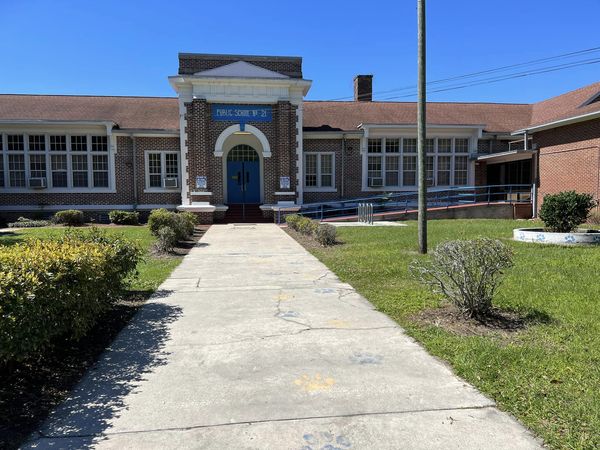
Annie R. Morgan- School # 21
According to “thejaxsonmag”, there were “three major rail yards and shops operated by the Seaboard Air Line, Atlantic Coast Line, and Southern Railroads”. It was beginning to be a busy neighborhood with a need for homes and schools.
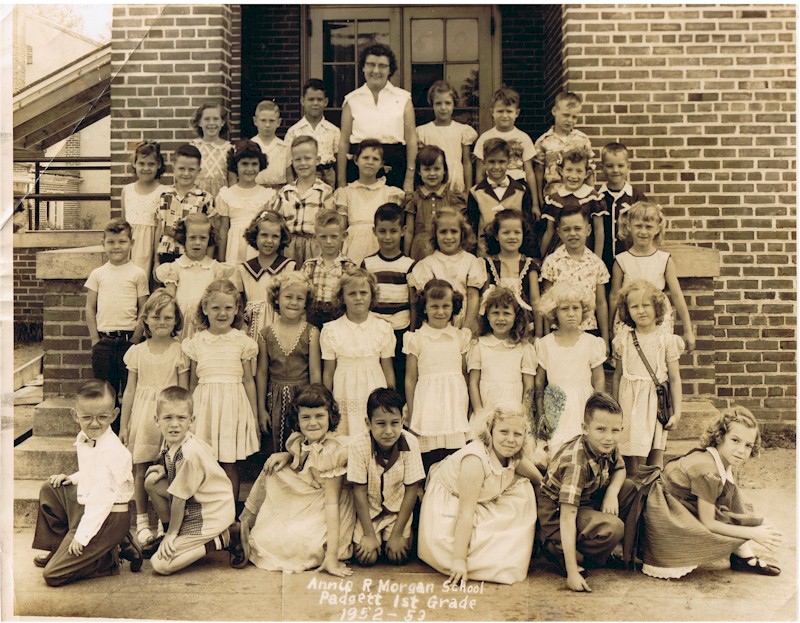
Annie R. Morgan Class Ms. Padgett, teacher (Paxon Facebook)
In 1915 Duval County voters approved a $1 million bond issue to build a dozen elementary schools. In 1919, School # 21 was built at 964 St. Claire Street. It was known as the Seaboard Shop School. According to the obituary of longtime principal Ruby Johnson, “there were four rooms, which now house the principal’s office, media center, teacher’s lounge, and the classroom adjacent to the principal’s office and auditorium”.
Annie R. Morgan, (Ramey Collection)
According to Ms. Johnson, Maida Lipscomb was the first principal assuming the position on May 8, 1917. On May 10 that same month, Miss Annie R. Morgan “was appointed to fill Miss Lipscomb’s place.” The details of this are unknown.
Records indicate that October 8, 1926, the Woodstock Parent-Teacher Association began. The name was changed in 1959 to Parent Teacher Organization with Mrs.Frances Austin serving as the first president.
Mrs Ruby S. Johnson came to the Woodstock school in 1935 and became principal upon the retirement of Miss Morgan in 1945. Ms. Johnson served Annie R. Morgan from 1945-1971.
She was followed by Mrs. Mildred Marshall. Other principals serving at Annie R. Morgan school were: Jon Thompson (1974), John Grieder (1976), Christine Solomon (1987-1991, Doris Deprell, Skip Hatcher and others.
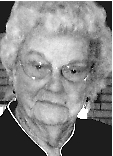
It is believed that Annie R. Morgan was born in 1880. She graduated from Quincy Academy Teacher’s Institute as discovered by Richard Gainey the admin for the Annie R. Morgan Alumni Facebook page. Her relatives were as found by Mary Browning, an Alumni member, were Robert Marcellus Morgan who is buried at Evergreen cem, F. F. Morgan of Quincy, Fl. , George M. Morgan of Mobile, Al, Sister- Eva M. Blalock, Tallahassee, Fl.
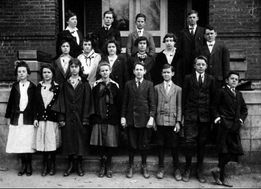
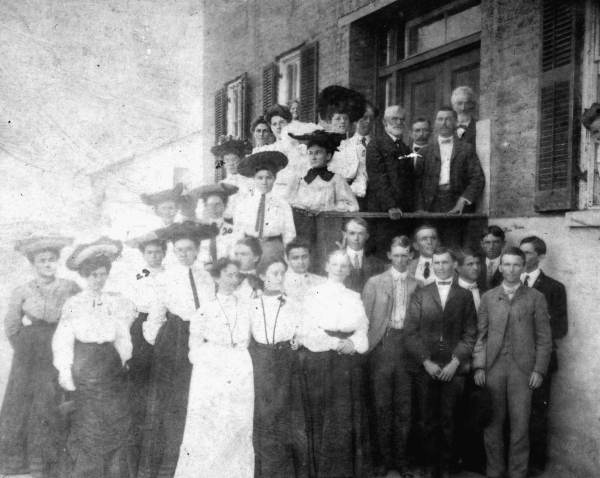
Annie R. Morgan-2nd left (Florida Memory), (Richard Gainey Collection).
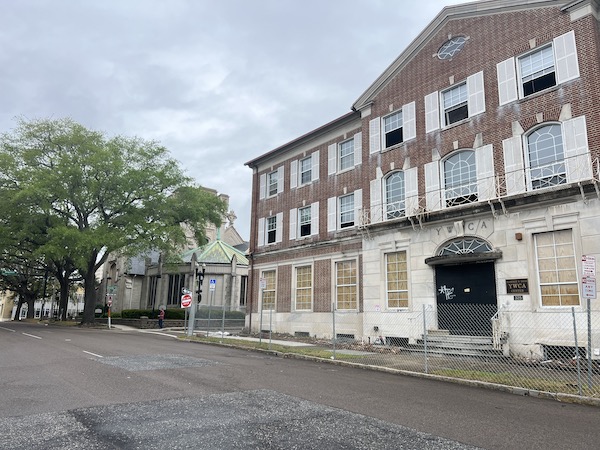
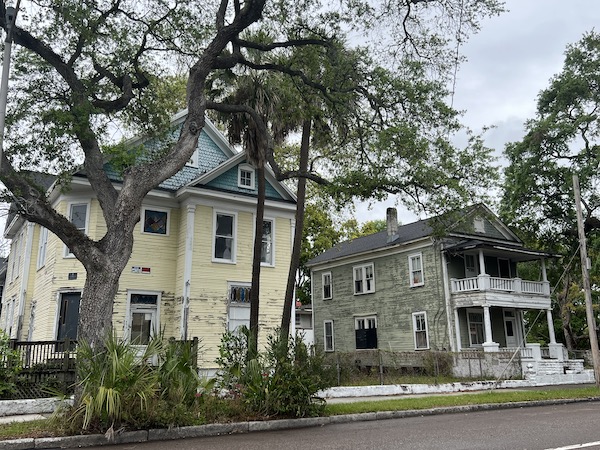
She lived at 305 East Duval Street when she was teaching and later lived on Wolfe Street in the Murray Hill area when she served as principal.
The homes at 305 East Duval are gone. The YMCA is being remodelled.( Ramey Collection).Homes just down from 305 Duval are still standing. (Ramey Collection).Homes in the Murray Hill area on Wolfe Street. ( Ramey Collection).
Ms. Morgan retired in 1945 at the age of 65. Her date of death and burial is unknown.
Tiffany Green began her teaching at Annie R. Morgan, taught at Woodland Acres Elementary School became an Assistant Principal and Principal. She is the current principal of School number 21, Annie R. Morgan.
If you have any details to add to this school history, please contact me.
See you tomorrow,
Nan
Sources: Paxon Facebook page, Sources: Ruby S. Johnson obituary, Ennis Davis of The Jaxson Magazine, United States Census, Richard Gainey, Mary Browning, Christine Solomon, Personal visit.
Please contact me if you have any additional information to add to this history. TY.
Category: History, People, Schools | Comments Off on Annie R. Morgan Elementary School #21