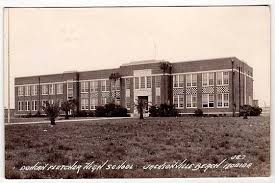
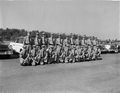
Duncan U. Fletcher High School was founded 1937. It sits on 20.5 acres and located at the beaches.
Beaches Museum Photo
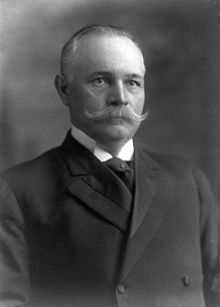
The school was named in honor of Duncan U. Fletcher. Fletcher was born in Georgia, graduated from Vanderbilt University and after 1880 moved to Jacksonville, Fl working as a lawyer. He became mayor of Jacksonville from 1893-1895. After the Great fire of jacksonville, Fletcher was instrumental in getting the city back on a positive path. Fletcher served as a member of the Florida Senate for some 30 years. By his pen, the Everglades National Park was introduced and signed into law in 1934 by President FDR.
Duncan U. Fletcher. Photo- Public Domain
He was chairman of the Board of Public Instruction from 1900-1907 and for many years was a trustee of John B. Stetson University and the St. Luke’s Hospital . (Wikipedia).
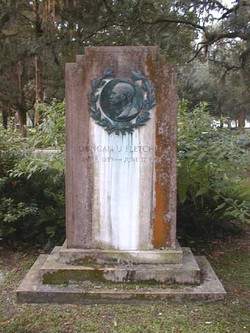
Fletcher died in Washington D. C in 1936. He is buried in Evergreen Cemetery in Jacksonville, Florida.
Memorial Evergreen Cemetery, Jacksonville- Photo-Find a Grave.
See you tomorrow
Nan
Sources: Wikipedia, Stetson University, Duval County, Personal visit to Evergreen and the school.
This information including Ramey photos may be used with credit to Ramey Collection. Photos may be 3rd party for which may be secured by copyrighted owner.
If you believe you are a copyright owner or can help with information regarding this article, including to clarify rights or information issues, please contact me. We are willing to remove any item from public view if there is any concern regarding ownership.
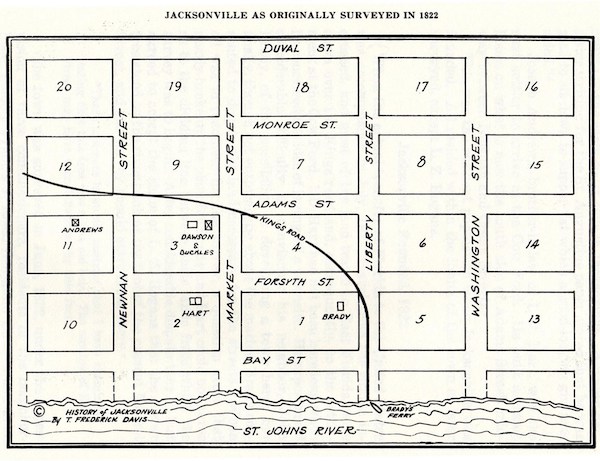
Prior to Jacksonville’s incorporation, it was settled by British colonists and called The Cowford because near the Bay and Market Street area, the river was used to ford cows across the St. Johns River. At that time, there were more than likely horse-mounted men to keep the peace. (No documented records).
1822- Jacksonville incorporated with the first Sheriff as James Dell. Jacksonville was named in honor of the provisional Governor of Florida at the time, Andrew Jackson. He was sort of a hero in that era. There is no evidence that he ever came to Jacksonville. During this time the Town Marshal would call upon citizens to keep watch of the town.
Photo: Florida Memory
1861-1865- Civil War years with martial law enacted. Troops kept the peace during this time. Citizens lived under civil war conditions and followed those mandates.
1870- Reconstruction laws were enacted. Dave Pettis became the first Black elected to the Police Board of Commissioners. At this time, according to the Jacksonville Historical article, “Five black police officers two black sailors and, two black constables were also elected.”
1897- The first bicycle squad on the force appeared about this time. Motorcycles would not appear on the scene until after 1900. Honda cycles would not be founded in Japan until 1948.
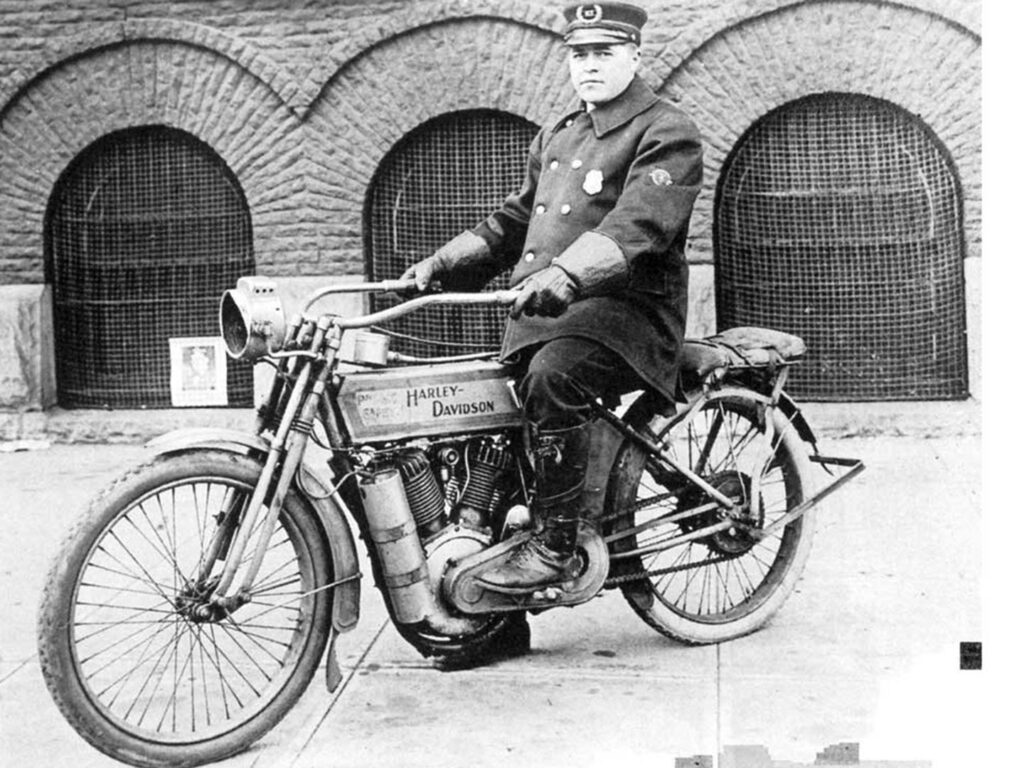
1908- It is believed the first Harley was delivered to the Detroit police department this year. These first units were like civilian bikes. By 1920 there would be great change.
Early Officer- Wikipedia
1911-Early motorcycle police and traffic enforcement began somewhere about 1911. Detroit and California are believed to be two of the first.
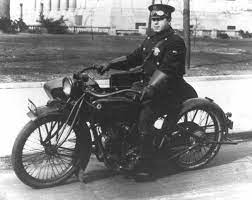
Example of an early motorcycle for police. (Florida Memory)
1920- Harley-Davidson created a special division for motorcycles.
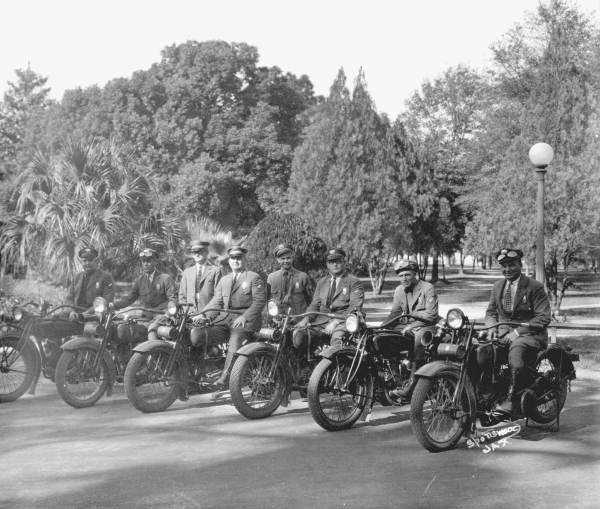
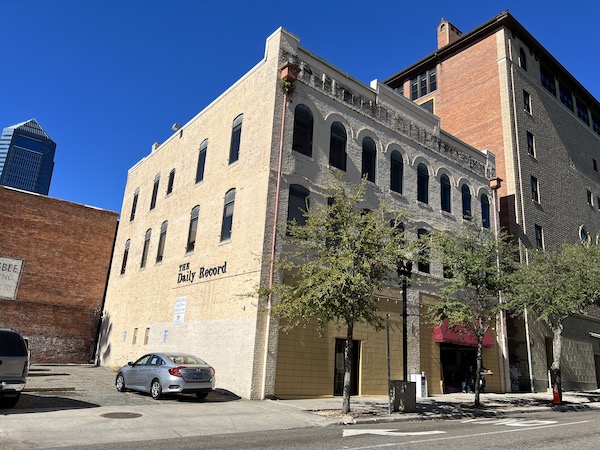
1926- While there may be more, there is a photograph of at least 6 Jacksonville motorcycles online with officers all wearing hats, not helmets. There is no documentation as to who or why they are pictured. The photo is taken by Spottswood whose photography collection was donated to state archives. It is believed there was a motorcycle store owned by James T. Flowers at 8 North Newman Street “which appears to be a small parking lot next to the “The Daily Record” building.
1928 – Officer Henry Martin Nissles stands beside his motorcycle wearing a police hat with goggles strapped, his uniform and tall black boots.
1930’s- There had been several 200 mile “endurance runs” in and around Jacksonville by this time so motorcycles were gaining popularity.
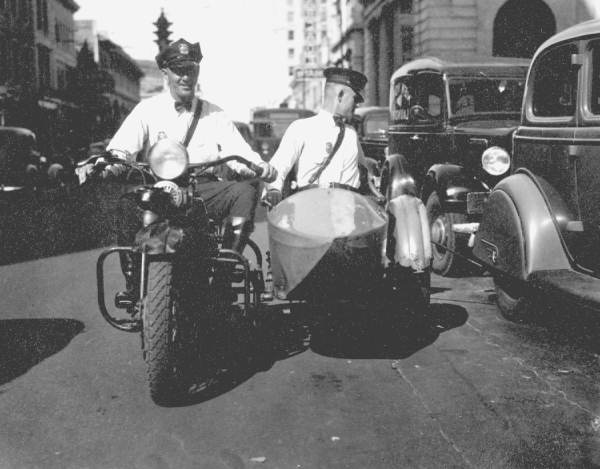
1931- Harley Davidson releases a three-wheeled serving-car which police units found helpful. There is one photograph online showing this type vehicle.
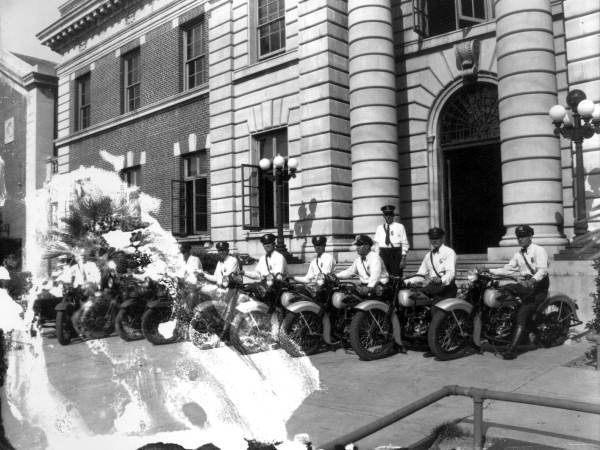
1933- There are 10 motorcycles with offices seated on them wearing regular police uniforms. Behind them stand an officerand 2 civilian-dressed men. They are photographed in front of brick streets. Sometime before 1940 the words “Road Patrol” is anchored on the front wheel. Officers had saddle bags on their cycles and goggles with cloth hats.
1937- John P. Ellis was on his last watch September 11, 1937 after losing his life in a motorcycle crash. Clarence Ballou was on his last watch October 15,1937 when he had a motorcycle accident.
1939- The Florida Highway Patrol Department was established under the direction of Colonel H. Neil Kirkman. There were troopers who patrolled using motorcycles during this time.
Spottswood Collection- Fl Memory
1940- Advancement in radios and engine technology on motorcycles.
1947- The Harley Davidson Sales co. was located at 1067 West Forsyth in Jacksonville and became a place for purchases. In this same year, Fred Higginbotham was on his last watch August 8, 1947 when he was involved in a motorcycle accident.
1950- Black officers were hired on the force: Henry Harley, Edward Hickson, Alvin Jame Beamon Kendall, Marion Massey and Charlie Sea. It is not known if they were a part of the motorcycle unit.
1950- Special unit squads set up now were given a unit a name. Bill McCart was one serving on the the Jacksonville Road Patrol in 1955.
1955-Charles J. Scriven, a black officer in the “Negro precinct” and according to him only worked in the Black community for the Jacksonville police force. It is not known if there was a motorcycle unit for this area.
1958 -J.L. Suber, J. H. Britts, J. Taylor, and seven others served on the force. At some point Bill McCooley served as well as Officer Phillips.
Robert Fisher Collection, Jacksonville, Fl Memory
In 1959 when John F.. Kennedy came, the Jacksonville Road Patrol gave him a motorcycle escort as he sat in an open -opped convertible car on Forsyth Street in downtown Jacksonville, Florida. By this time, offices are wearing helmets with shields.
1960- Earnest C. Register was on his last watch April 20, 1960 when he had a motorcycle accident.
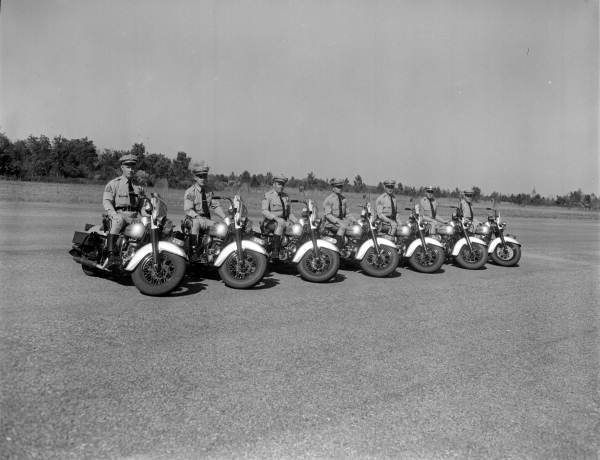
1961- A photo is taken of seven officers with their motorbikes in front of the doors of the Civil Auditorium. In 1962 there are at least 11 officers on road patrol as photographed beside the I-95 silver bridge. Officer Jake Edwards, Officer Malcom , Officer Gilbert, Officer Abbey, Officer Glen Rainey, Officer B. Brantley and Officer Ray are serving around this time. One of the first Black officers, Officer Wiggins takes to the bike around this era.
1962- Adamec Harley-Davidson was still located at their first location at 7622 North Main Street with two other motorcycle businesses of some kind at 1038 Kings Street and 1037 Hendricks Avenue according to staygreasy904 blogger.
1962- William E. McCooley was on his last watch September 5, 1962 when he was involved in a motorcycle accident.
1964- Civil Rights Act regarding non-discrimination is enacted which affected hiring of officers.
1965- Lou Ritter was Mayor of Jacksonville at this time and recommended a $40 pay raise according to the JaxDailyrecord. com article., effective July 1 of that year. Pay raise would go from $396 to $436 a month. At that time, there were approximately 400 officers on the Sheriff’s department force.
1965-Also, during the administration of President Lyndon Johson Affirmative Action was established by executive order that prohibited “ employment based on race, color, religion, and national origin”.
1968- Jake B. Edward was on his last watch when on February 1, 1968 he lost his life in a motorcycle accident.
1970’s-Harley was the main distributor of motorcycles for police units but in comes Kawasaki. By 1972 there are 13 all White officers on the motorcycle patrol.
David H. Reese was on his last watch when on February 28, 1970 lost his life in a motorcycle accident.
1974- Officer Glen Rainey was killed while he was on patrol when a woman turned in front of his motorcycle. The end of his watch was August 23, 1974.
1979- Due to a lack of diversity among the ranks, there was a “consent decree” to hire more minorities and women on the force.
1987- Jeffery Norman Ritchey, a U. S. Navy veteran serving with the Jacksonville Sheriff’s department for 18 years was on his last watch when he lost his life in a motorcycle accident escorting a funeral procession February 23, 1987.
1987. Officers named on the motorcycle force: Officer T. Chafin, and Officer Milford,
1988- Officer Charles R. Shinholser, Jr.(1958-1988) was on his last watch when he lost his life in a motorcycle accident December 14, 1988.
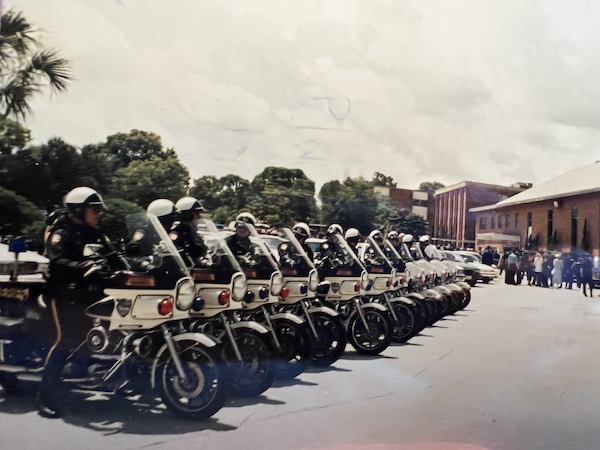
Jacksonville Police Patrol-1995- Ramey Collection
2004- “Operation Safe Ride” was established during this time.
2009- There are at least 20 all White, all male officers on road patrol in Duval County with Officer Causey being one of them. There is no evidence of a woman patrol officer but there could be?
2010- Officers P. T. Williams and others from Jacksonville, Florida compete at the 5th Annual Palmetto Police Motorcycle skills Competition.
2016- Officer Jack Adams Jr. visits birthday party of young Jacksonville citizen “Athena”. The motor patrol seeks to be a part of engaging with the public more.
2023- FREE motorcycle “SMART classes on motorcycle safety.(NE Fl Criminal Justice Training and Ed Center.)
2023- The Sheriff’s office is located at 501 E. Bay Street. It boasts 2,082 police officers, 950 corrections officers and 800 civilians. T. K. Waters is serving his first term as Sheriff.
See you tomorrow,
Nan
Sources: LEORF, staygreasy904, Jacksonville Daily Record, Police Memorial, Dale Carson history, Bob Morgan photographs( little or no commentary) Florida Memory.
Feel free to use this timeline with credits to: Ramey Collection or Jacksonville Blogger. All photos are in public domain. As always, use credits beneath them. If we have used any information or photos incorrectly, please let us know immediately for correction.
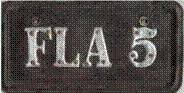
According to Google’s question area, Florida inmates still make license tags. Their labor today is not so much “car tags, cheap labor and chain gangs” like it once could have been but prisoners still make tags that ride on the back of today’s autos. And upon their death, a tag is placed on their tombs. The prison system as we know it began after the Civil War somewhere about 1868, long before autos but the basic human behavior has stayed consistent. Man needs limits.
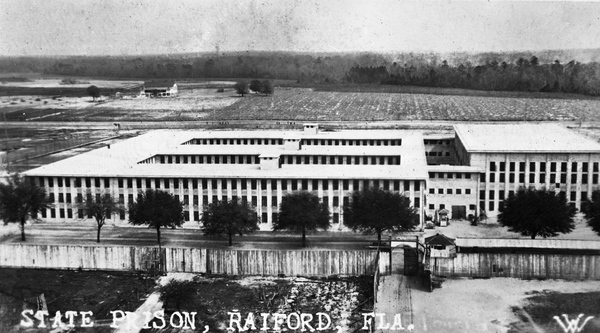
Early example of Fl State Prison
As Florida began to grow, workers were continually needed and the prison was a crowded place where businesses went to “lease laborers”. In 1877, Florida Governor George Drew and the first President of Jacksonville’s board of trade, ensured a leasing program whereby private businesses and industries could get the workers needed to move forward their workforce. To lease workers they would need to house them, feed and clothe them.
In 1911 the legislature began providing funds for establishing an actual prison farm which was completed in 1914. Prisoners were leased out to help build the new Florida growth. By 1915, prisoners grew crops on the prison farm, tended to animals and more. The prison was a working Florida farm. Men tended to harder labor and women to cooking, gardening and sewing.
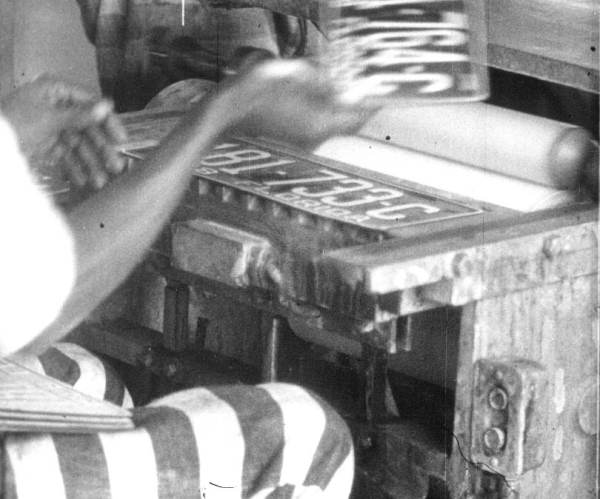
According to Scott Winters’ article, “Do Prisoners Really Make License Plates?”, the answer is that about 80% of plates made in the U.S. are made by about eight prisons.
The Florida Highway Safety and Motor Vehicles indicates that “its first motor vehicle registration certificate” was on August 1, 1905. With popular demand, over the years the department has “developed ways to regulate the motor vehicle industry”. From paper file to micro-film and now online
First tag issued ( Dept corrections)
With the onset of the new automobile, a man from Jacksonville and also the 19th Governor of Florida, Napoleon Bonaparte Bowden signed new laws requiring residents to pay a $2. registration fee to register their vehicles. The first tag was made of leather and issued in 1906. Some people made homemade tags at the onset but by 1915 certified tags were required and by 1907 Florida had 132 automobiles registered.
Tag office- Florida Memory
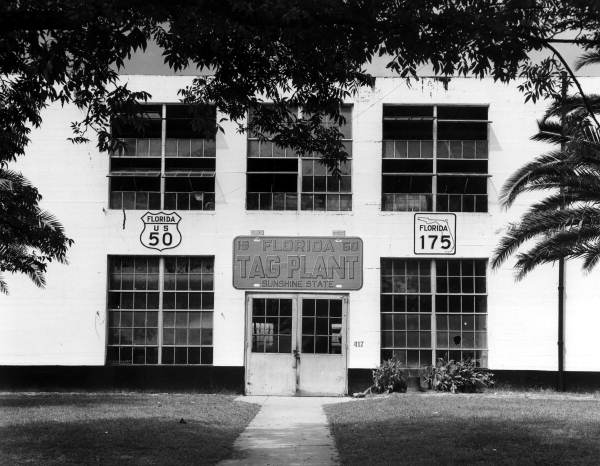
In the 20th century it is said that the early prison system could be harsh and unreasonable to inmates so by 1923 reforms were made. In 1927 the Florida Department of Corrections built an auto tag plant thus giving inmates clear work schedules and ways to pay their debt to society. Over the years there have been continued reforms for inmates but making tags is still an option.
Making Tags ( Florida Memory)
The PRIDE(Prison Rehabilitative Industries and Diversity Enterprises) program began in 1981 and a rehabilitative program for prisoners. For years, prisoners made license plates for PRIDE’s prison work program and they were sold to the Department of Highway Safety and Motor Vehicles. Scott Winters of FGR radio, says when he was small “his parents would tell him that if he didn’t behave he’d end up having a life in prison making license plates”. I’m glad to see he must have paid attention being at a broadcasting business when his article was written.
In 2013 a program run by Prison Rehabilitative Industries and Diversity Enterprises ( PRIDE) continues to organize work efforts for inmates and tag making is one of the tasks. On their website it says: “PRIDE is a self-funded enterprise whose mission makes a positive difference in Florida. We make communities safer and save taxpayers money by training eligible inmates in vocational skills and transitioning them into the job market upon completion of their sentences. This job-centered approach lowers the number of repeat offenders and reduces criminal justice costs for all citizens.”
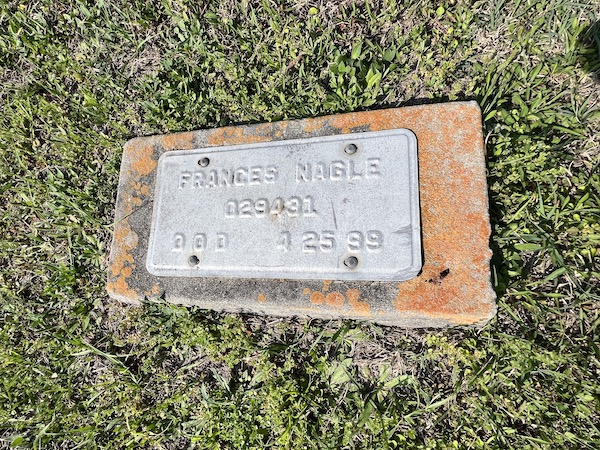
One of the few women inmates at Raiford Cemetery
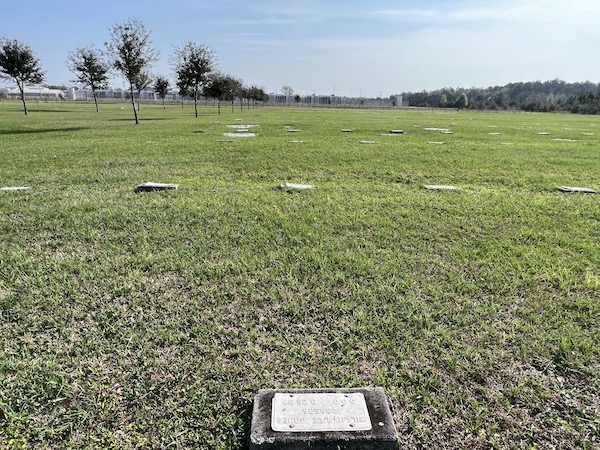
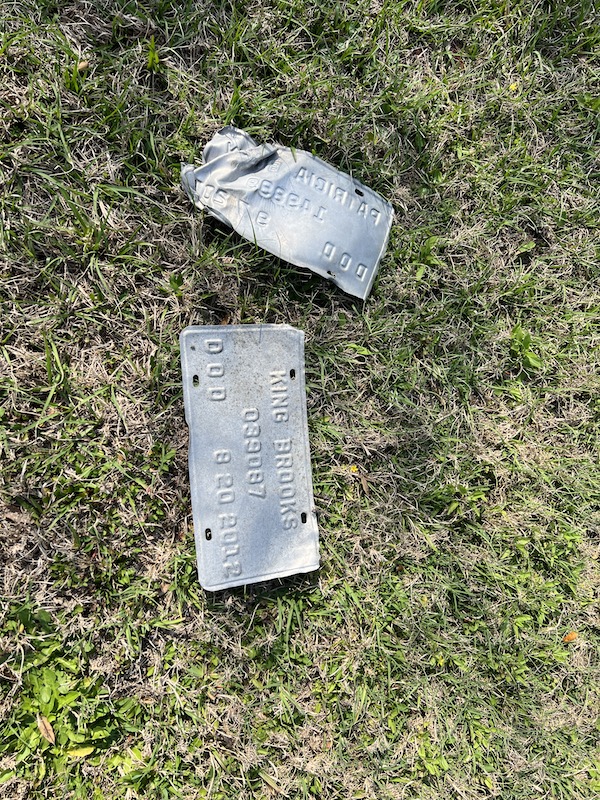
When an inmate dies in the Union County prison, a tag is made for the tomb stone of the inmate. The cemetery is located on the grounds of the prison just down the road from the front gate to the prison. The tag is simple, has the name of the inmate, the inmate’s prison number and DOD (Date of death).
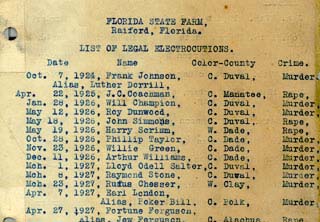
There are some former Jacksonville residents buried there such as Frank Johnson, Will Champion, Roy Dunwood, John Simmons, and Lloyd Odell Salter, to name a few; all convicted criminals. Donald Davidson died at Union Correctional Institution in Raiford this week. There is no word if a tag was made for his grave. If and when it will say “Donald Dillbeck, 068610, DOD-2-23-23 (DOD-date of death).
Tags that were detached from graves. Raiford
At the time of death, nothing matters but the relationship to one’s Maker. Of course, we hope rehabilitation for each person in the cemetery has taken place with God. May we all realize- “There go I save the grace of God”. Trust Him today.
See you tomorrow,
Nan
“Keep thee far from a false matter; and the innocent and righteous slay thou not: for I will not justify the wicked. Exodus 23:7”
“Thou shalt not kill.” Exodus 20:13
Sources: Bible, Florida Department of Corrections , Rob Goyanes, Wikipedia, dc.state.fl.us- Personal visit.
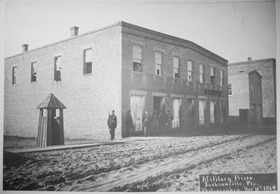
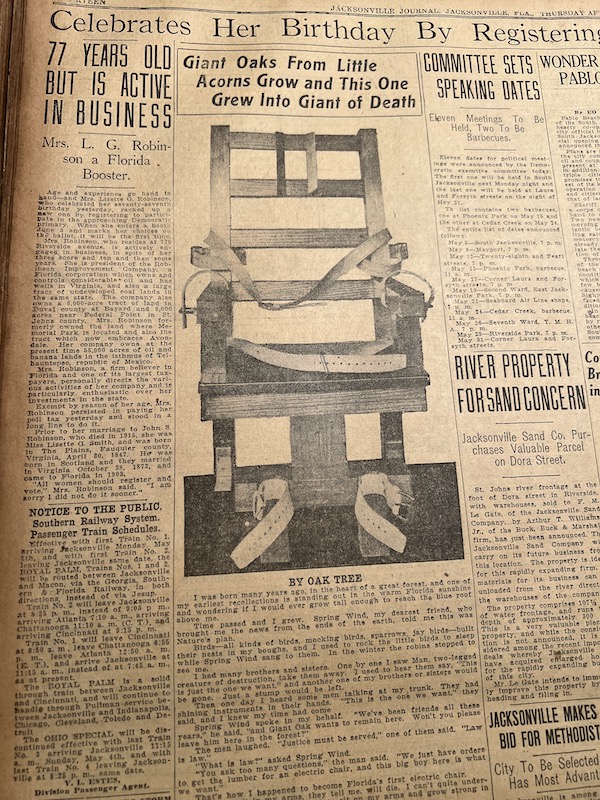
On May 1 1924, the Jacksonville Journal, former “Metropolis”, printed the first known picture of the first electric chair in Florida. It was on display at 10 Newnan Street, Jacksonville, Florida where both White and Black people dropped in to view and “discuss among themselves”.
It is said to have been built by inmates of the Florida State Prison. According to Wikipedia, the “electric chair was the sole means of execution in Florida from 1924 until 2,000 when the Florida State Legislature, under pressure from the Supreme Court, signed lethal injection into law”. Because of sparks emitted by the chair when being used from time to time, it caused great controversy and was named “Sparky”. A new chair was put in use in 1998 but no one has been executed by the chair in Florida since 1999.
Jacksonville Journal, 1924 (Ramey Collection).
Funds for the first Florida State Prison Farm, as it was known, were provided by the Florida Legislature in 1911. The very earliest days of the prison system is sketchy but in 1877, lawbreakers were a part of a “convict leasing program” whereby corporations leased their services having to also “clothe, feed, house and provide medicare for the prisoner”.
After 1913, prisoners were housed at the often called “Raiford Prison”, located northwest of Jacksonville, Florida in a small town named Raiford. It became a place where prisoners were used to build bridges, field crops, dig ditches and more. Women inmates sewed, made clothing, gardened and cooked. The inmate leasing program ended in 1923.
On February 23, 2023, Donald Dillbeck, the convicted killer of a precious soul, Faye Vann was executed by lethal injection, although he could have chosen the electric chair. Lethal injection was passed by the courts in January of 2000, however the choice of that or the alternative of the electric chair at the execution chamber would be that of the inmate.
The last chair was built in 1998 was a three-legged chair made out of solid oak. Hangings, which waere the means for execution in early 1800’s have not been used since the April 18, 1927 where a “large crowd gathered.” In South Florida. Schools were closed for the day and it is said “onlookers stood on rooftops”. The gallows were built behind the jail in Volusia County. While the Florida State Legislature had changed the methods for executions after 1924, “ a surprising Florida Supreme Court ruling called for one last local hanging” according to the Daytona Beach News-Journal.”
The first inmate executed by chair was in 1924. This chair, that sat at 10 Newnan in Jacksonville was taken to Raiford and used for many years. There is quite of list of inmates who used that practice and others.
Dept. of Corrections
The most recent execution was that of Dillbeck who was the 100th prisoner executed since the death penalty was reinstate in Florida in the mid 1970’s. Governor Ron DeSantis signed the death warrant and though his attorneys tried to stop the execution, the Supreme Court declined the request. Dillbeck declined use of the electric chair which was one of his last decisions. In all sincerity, I hope he decided to trust Jesus, a decision we all must make. That would be the decision of true life or death.
See you tomorrow,
Nan
“Then spake Jesus again unto them, saying, I am the light of the world: he that followeth me shall not walk in darkness, but shall have the light of life.” John 8:12
The Spanish conquistadors brought European horses to North America so we know that by the time Jacksonville, formerly called “Cowford” was established. Horses were a mainstay. With great grasslands, and water sources, horses were in fields for growth and expansion as they adapted to their surroundings.
Current Mountain Police Facility
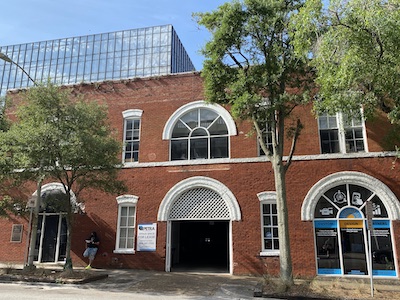
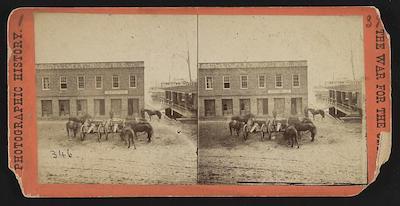
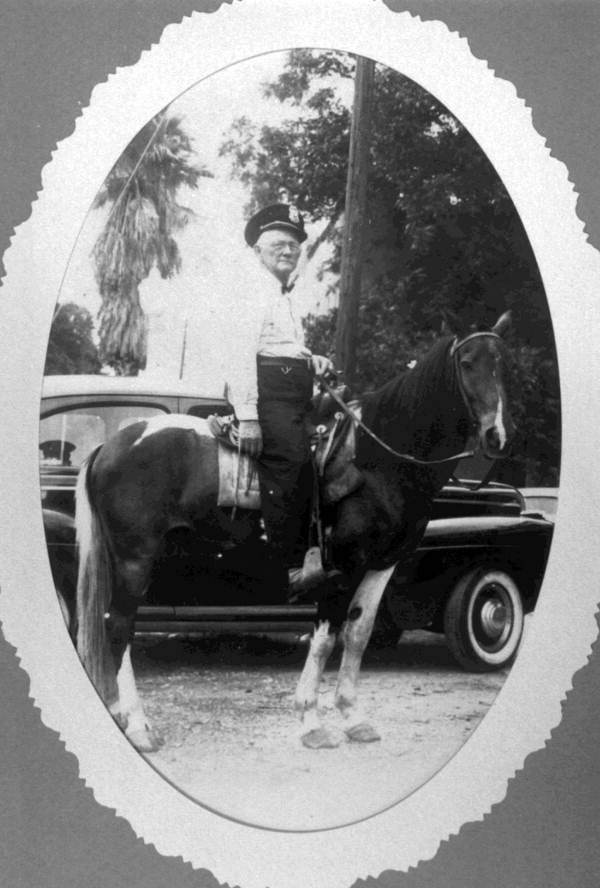
The city of Jacksonville police used horses dating back to 1822 when the first sheriff was James Dell. When you think about the 1869 headquarters for McMurray Livery Sale & Transfer Company at 220 East Forsyth Street, you can imagine that horses were of importance in the early years of the sheriff’s department . After the Great fire in 1901, another stable was built at that location and had a thriving horse business.
Livery Stable on Forsyth Street (Ramey Collection)
Little is known of the policing efforts during this period but Jacksonville was getting well established by 1832 including setting up the government which included law and order. By 1845, “all free males were to participate in evening patrol duty” so there had to be some mischief going on for so many to be asked to “participate”.
When the Civil War began, policing was done by the soldiers and so from about 1865-1869 patroling was under martial law which does not take away from the fact that mounted horses were used during this time by Union forces. The automobile would not come to Duval County until the first month of 1900.
Florida Mounted Police ( Florida Memory photo).
By 1888 James Hoey was serving as Chief of Police. The mode of transportation was horse, carriage and paddy wagon. The bicycle was gaining popularity at that time but could people afford them? The first bicycle squad for the Jacksonville police was in 1897.
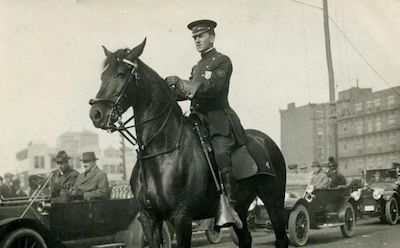
Florida Memory of a mounted police protecting Pres. McKinley.
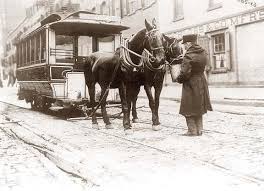
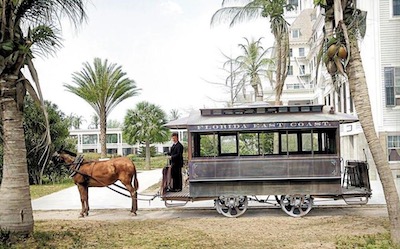
In 1895 the first patrol wagon was used with 2 horses pulling. Also prominent during this time was the trolley and streetcars that ran on tracks throughout Jacksonville, Fl. Early trolleys and street cars were pulled by horses. Over time horses were replaced by motorized cars .
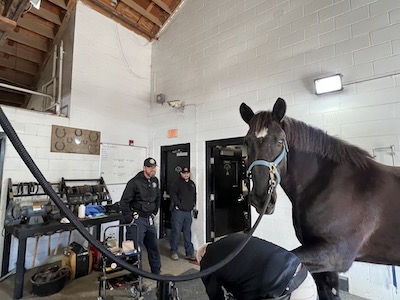
Current barn where horses receive care.
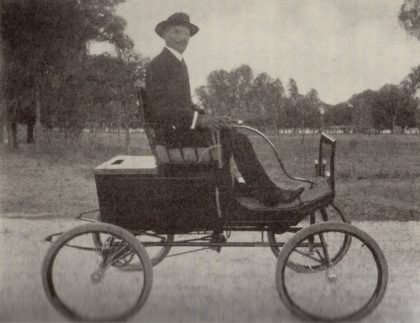
The first car to come to Jacksonville was on January 4, 1900. The Locomobile Stanley No.2 was purchased by Charles A. Clark. It could travel 40 mph and had a steam-motor. It would take time for citizens to grasp the enormity of owning a car and also to pay for it thus the horse, buggy and on occasion the bicycle was still prominent. The Sheriff’s department was still using horses.
With the car gaining popularity, the police department of Jacksonville established a “traffic squad” for downtown streets in 1919. The department was growing and by 1926 the Liberty Street Police building was completed. The automobile was replacing horse details and the change from mounted police and wagons to automobiles came after 1900 when Charles A. Clark, from Jacksonville ordered and had delivered the first car to arrive in Florida.
Charles A. Clark with the first car in Florida. (Florida Memory photo).
The automobile would prompt changes in laws and ordinances and by 1903 the speed limit was 6 mph. There were 32 cars in town at this time. By 1905 there were a total of 166 cars autos traveling the dirt roads and some gravel streets of Duval. The population in Jacksonville was 28,429 at this time so transportation by and large was by horse and carriage. Jacksonville was the largest city in Florida at this time. Financially, a horse was more cost-effective also.
In 1911 there were approximately 1,120 cars in the city. That year the police department acquired its first car. Mounted police were still in use for the department. Also, a “traffic squad” for downtown was established with the first traffic lights being installed in 1924.The horse would be less used as time went forward and the auto industry increased.
There is little mention of the mounted police for Jacksonville but there are references that indicate the use of the horse which was disbanded in 1911 to make way for the newer transportation options such as trolleys, streetcars, bicycles, motorcycles and the automobile.
Florida East Coast transportation.( Florida Memory).
The mounted police would return to Jacksonville in 1942 with little mention. In 1982 horses were used for crowd control, crime prevention and community engagement. In 2012 there were 5 horses on the Mounted Police squad. Mayor Alvin Brown’s administration cut the budget for the program leaving the canine unit in place. Horses were taken from the West Duval Street location in LaVilla and moved to the Lannie Road prison yard also known as the Montgomery correctional Center and prison farm where there were acres of grass and room to live easy. They were tended to by staff and inmates and received visits from their former riders.
At Super Bowl XXXIX, which was held in Jacksonville February 6, 2005 at Alltell Stadium the mounted police were used.
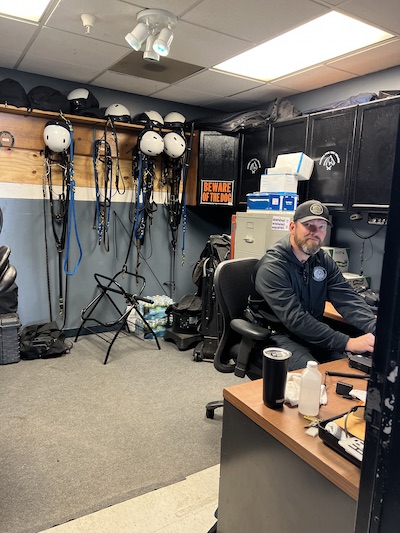
Sargent Rhoden-2023. (Ramey Collection)
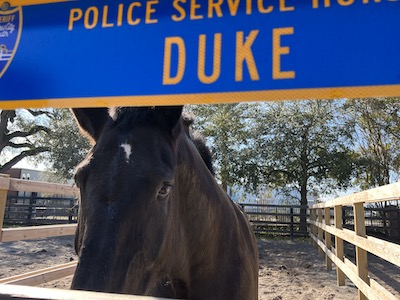
In January 2020 Duke, the newest addition graduated from his training program. All of the police horses receive training and the riders work with the horses for continued focus.
In 2022, when the Governor of Florida visited the Diamond D ranch, the mounted police were there more for a community service effort than for patrol. However, should there be a concern, they were all ready to do their duty and provide security. Guests were able to see their presence, and pet the horses.
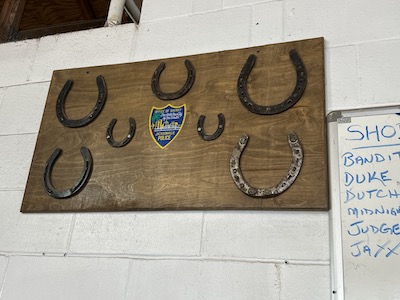
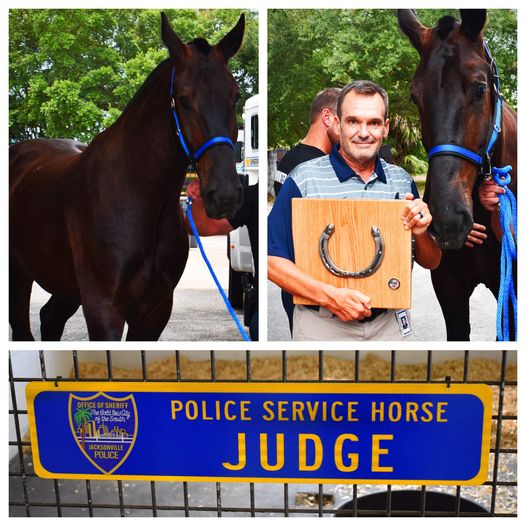
Funding again was provided for the unit in 2021. There are 6 horses in the current unit: Bandit, Midnight, Duke, Dutch, Jaxx and Judge. Judge completed his training this year and was named in honor of Jimmy Judge a former police officer. Judge and his rider were at his memorial held for Officer Jimmy Judge in January of 2023.
Tribute to Jimmy Judge (JSO Facebook page photo-2021)
Judge” is named after 30-year police veteran, Assistant Chief Jimmy Judge, who is currently battling ALS or more commonly known as Lou Gehrig’s Disease. Judge and his handler attended Office Judge’s home-going event in 2023.
Please help us in welcoming our newest member to the team. We hope you will say “hi” to “Judge” when you see him out and about in #Jacksonville.(JSO Facebook page-2021)
Current officers in the unit: Sergeant B. Rhoden, Officer J. Alexander, Officer M. Bergo, Officer T. Dudley, Officer M. Reddish.
See you tomorrow,
Nan
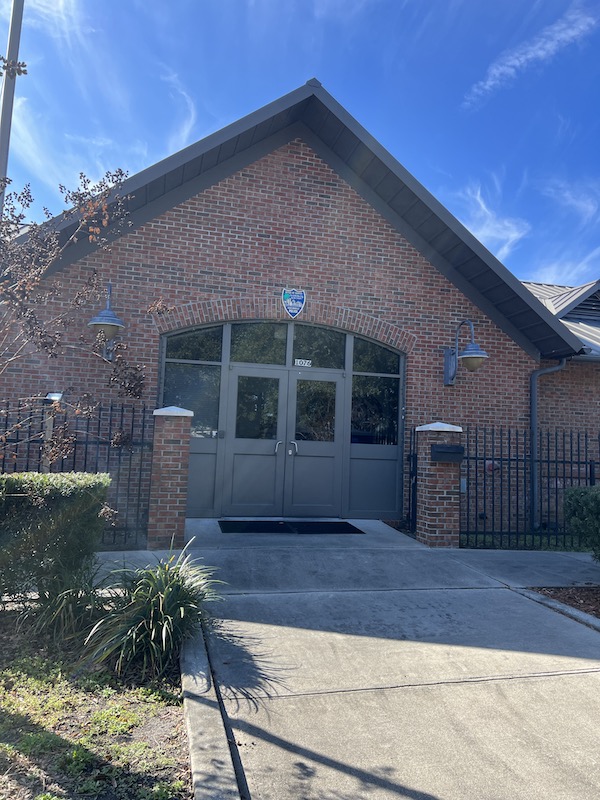
Jacksonville Sheriff’s Mounted Unit
1076 West Duval Street, Jacksonville, Florida 32204
Sources: James B. Crooks, Cowart, 1976 Annual Report: Dale Carson, J. Bailey, Mounted Police visit.2-10-2023. Feel free to use all information with credit to “Ramey Collection”.
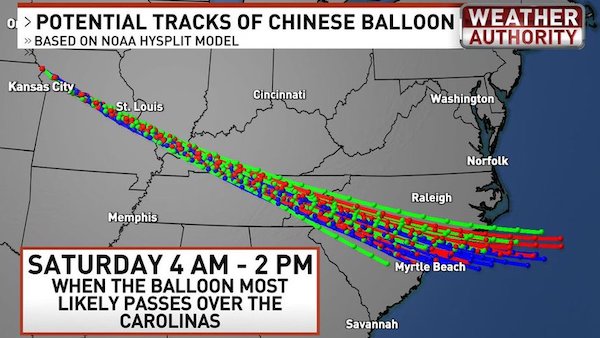
When the, what was thought and was, a Chinese balloon, drifted across the United States beginning sometime about January 28th, 2023, the trajectory was unclear. By Wednesday of the next week, we thought it could come Jacksonville way. The Weather Authority trajectory indicated it would go across the Carolina’s which was a little above Duval County but who knew?
NORAD trajectory- Ramey Collection
The powers that be decided not to shoot it down over civilian spaces so they waited for it to travel over the Atlantic Ocean. The huge weather-type balloon, they say the size of three busses began being noticed somewhere in Alaska. NORAD, the North American Aerospace Defence Command, Brigadier General Pat Ryder said on Thursday, February 2, 2023, “The United States government has detected and is tracking a high-attitude surveillance balloon that is flying over the continental United States”.
They indicated it was not a “military or physical threat to people on the ground at this time” according to General Glen VanHerck.
According to ABC News, a correspondent said the balloon was the size of “three busses and complete with a technology bay”. It seemed to be without power when looking at it on television newscasts and seemed to drift with the jet stream moving eastward. I thought it was possibly coming our way. Who knew?
The balloon was said to enter the United States airspace in Alaska near the Aleutian Islands news reports posted. As it floated eastward, and the Weather Channel posted a possible trajectory, I thought we may have a balloon in our sky in the coming days.
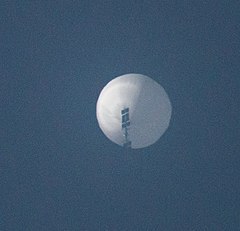
Chase Doak Photograph of Chinese Balloon
On Wednesday, February 1st, a freelance Montana photographer Chase Doak photographed the balloon and his photo went viral and is now used on Wikipedia. ( That had to be exciting for him). He was a freelance photographer at the right place, at the right time and just did his thing….
Chase Doak Profile-Linked In
Tomorrow I’ll post a basic timeline of the event and no, the balloon did not come across Jacksonville way or to Jacksonville Beach . It ended up in the Atlantic Ocean though, up the way near Myrtle Beach, South Carolina. It was shot down on Saturday, February 4th by a F22 Raptor fighter jet. The United States Military began recovery following that event.
It did not come here but, it was still too close for comfort.
See you tomorrow,
Nan
Sources: ABC News, NOAA, RORAD, The Pentagon, Helen Cooper, Pentagon correspondent, Edward Wong, correspondent, Breitbart, Google, Personal viewing of news reports…
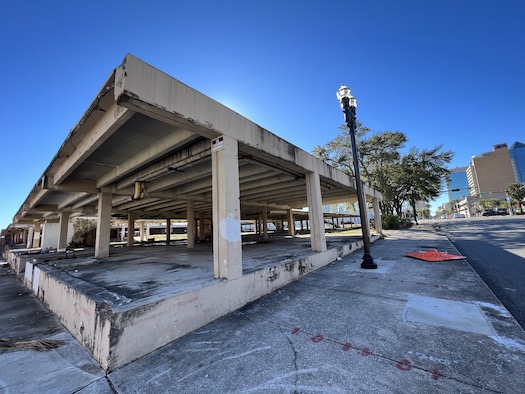
So, yesterday and based on author, Tim Gilmore’s 2015 article about Jacksonville founder, Isaiah D. Hart’s “Tomb Tower”, my grandson and I set out to find where Hart was first buried before being moved to Evergreen Cemetery. Truly, it was a little scary as there were drifters and obviously noticeable people both White and Black, on some type of substance in the area. It was early in the morning and as many as 10 homeless were in and about the carcass of what is left of history where the old 1966 Heart of Jacksonville Motel once thrived. Some were sleeping beneath the walls of the old block building and others gathered in a small group talking. Some were literally “out of it” and others actually showed friendly to my 9 year old grand and myself. They saw us with cameras and for once I did not click when I saw them, out of respect I suppose.
Laura, State and Orange Streets
At the borders of “Laura Street between State and Orange Streets”, the place remains a morass of “social rot and desperation” as described by Gilmore on 9/26/2015. So, man’s life without God has not changed. It is a reminder, I told my grandson that “we all need a Savior to save us from ourselves. “
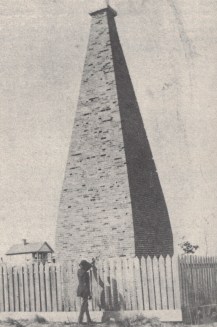
It’s hard to envision but it was there the 35 foot tall “Old Hart Monument” as described in the 1992 Jacksonville Historical Society journal once stood. By the photograph in the journal, it appears brick and was fenced.
Jacksonville Historical Society, 1992
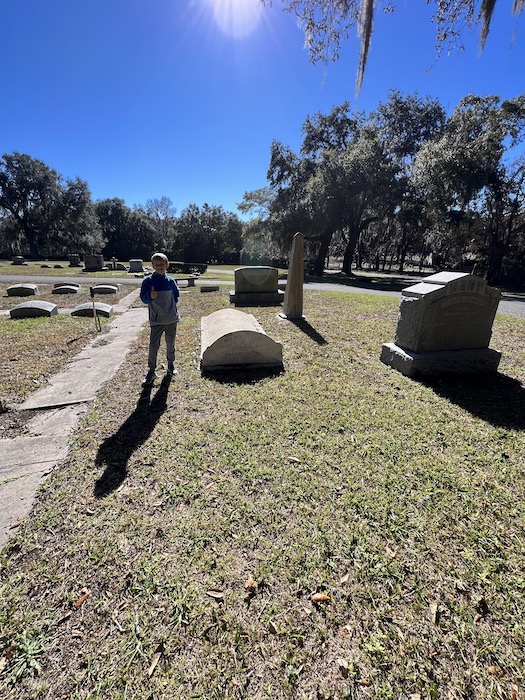
After spending time on this old motel block near Confederate Park, we drove to Evergreen Cemetery where we saw the now approximate 12 x 30 x 60 inch flat tomb where Hart and his family were moved. It says “ The Family Tomb of Isaiah David Hart The Founder of Jacksonville”.
Speaking of life without God. Hart owned slaves and was constantly working in an effort to make money. It is said that he became “respectable” after founding Jacksonville. I hope that meant he found Christ because while there is still a tomb no matter its location, he’s not there. ( If you know what I mean).
See you tomorrow,
Sources: Jacksonville Historical Society Journal, Jaxpsychogeo.com, personal visit.
Isaiah David Hart is the Founder of Jacksonville, Florida with no known photo.
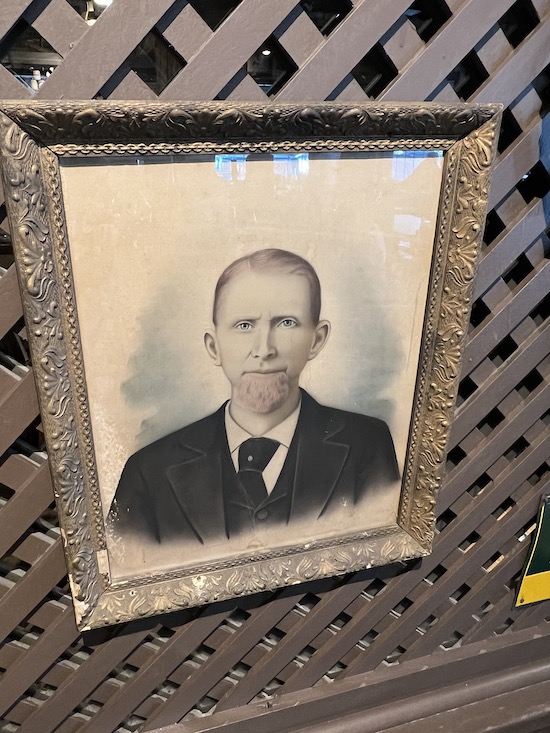
“Uncle Whats His Name”-Cracker Barrel
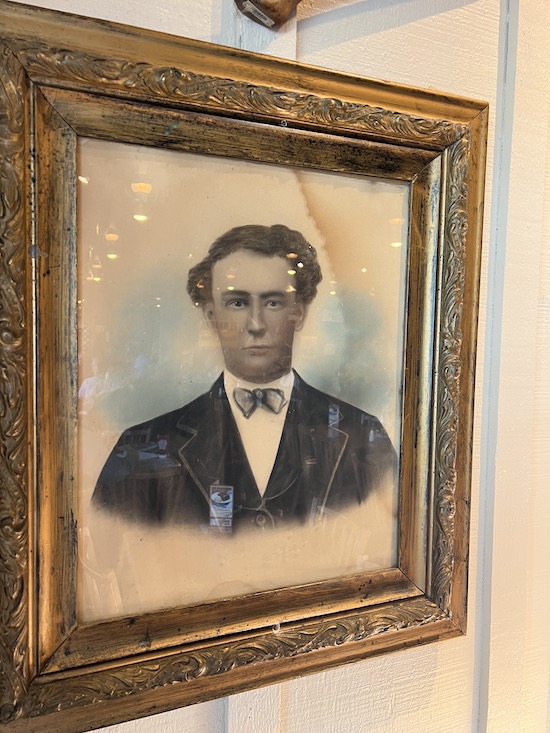
Sisters Pat and Marien formerly of Jacksonville, Florida used to talk about “Uncle What’s His Name”. It seems there was the photograph in a fancy frame of an unknown man on the wall of a prominent relative of the family for which no one knew his name. It apparently hung on the wall for many years to the point that it became funny to relatives and friends alike, as they walked towards, by and around this unknown soul. They called him “Uncle What’s His Name”.
Uncle “What’s His Name- Cracker Barel
Sometimes I wonder about Isaiah David Hart, the founder of Jacksonville who married Nancy Nelson in Duval County in 1818 according to the records. Could his mug be on the wall of some family member and they not know he’s the actual founder of Jacksonville, Florida? There is no known photograph of him and many historians like myself have tried endlessly to find one. And, why is there no photo?
Isaiah D. Hart was a prominent man who held not only a great deal of power but held high offices in Jacksonville and Florida. His father’s family was from Pennsylvania and he died in St. Johns County. His Mother was from Loudoun County, Virginia. Both are buried in Jacksonville’s Old Cemetery. Hart’s Mother birthed four children according to Find A Grave but some say twelve children. There are no family photos among many youngins’ and their families?
According to Find A Grave, Hart himself had 7 children but I don’t see Julia listed so even that history is sketchy. Those listed are: Oscar B. Hart, Ossian B. Hart, Laura C. Hart Farrar, Lodiska Hart Beers, Isaiah David Hart, Daniel William Hart and Nancy Hart. Of those 7 children only one has a photo on the grave listings and that is of Ossian who became the 10th Governor of Florida in 1845. Was Isaiah or any of his siblings at this inaugural event and if so where are the photos?
Isaiah David Hart wore many hats…He was a planter, ranch owner, plantation owner, slave trader (not to his credit), Deputy U. S. Marshall in East Florida, Clerk of County Court in Duval, Commissioner of piolatage, railroad investor, 1939 member of the Whig Territorial senate and one of the founders of the Whig party. His children held different and various jobs in the city of Jacksonville and Ossian was the 10th Governor of Florida. Where in the world are the photos of this man, surely someone has at least one?
Could there be a photograph of Isaiah David Hart on the wall of some family member with them all calling him “Uncle What’s His Name”? I certainly wonder…..If you solve this, I’m in need of this photo. Please contact me…..
UPDATE: In Dena Snodgrass’ article in the JHS, Volume V “Papers”, she writes…”Listed among his belongings were a clock and a watch at $100. each; a portrait of himself at $25….” SO, there was a portrait of him at some point. I wonder on whose wall it can be found as “Uncle What’s His Name”?
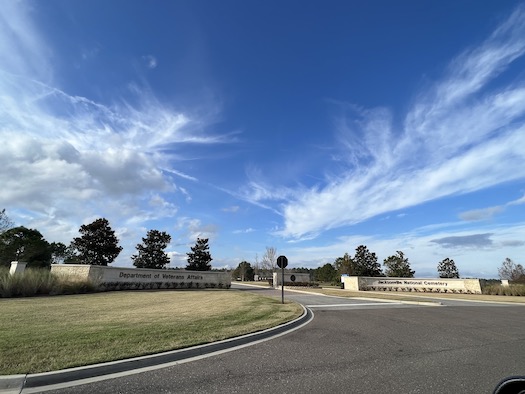
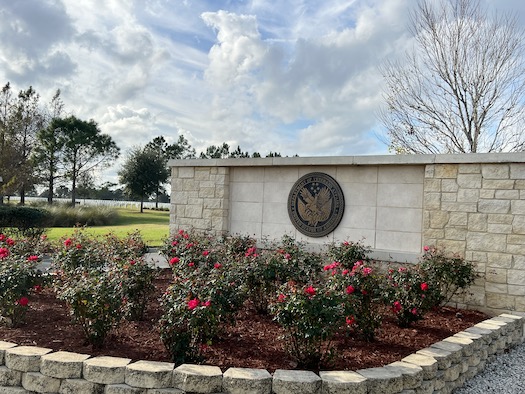
The Jacksonville National Cemetery has new signs of opening phase 2 in the burial grounds. The cemetery is located way out Lannie Road on the Northside of the city. It is available to bury members of “the armed forces who have met a minimum active duty service requirement and were discharged under conditions other than dishonorable”, as written on its web page.
Eligibility includes the following:
“A Veteran’s spouse, widow or widower, minor dependent children, and under certain conditions, unmarried adult children with disabilities may also be eligible for burial. Eligible spouses and children may be buried even if they predecease the Veteran.
Members of the reserve components of the armed forces who die while on active duty or who die while on training duty, or were eligible for retired pay, may also be eligible for burial.”
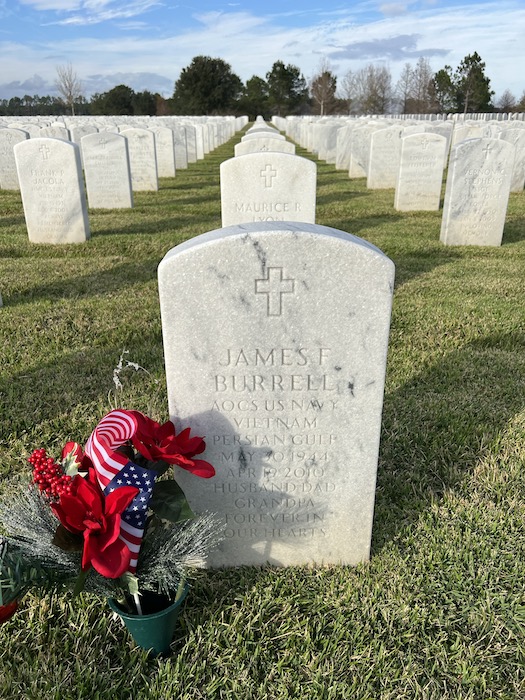
As I rode through the huge space, I noticed so many Christmas decorations left by family members. Most years wreaths are laid on the tombs. Today, being December 15, I’m not sure.(UPDATE- Wreaths Across America was 12-17-22 and my Grandson participated with his Trail Life troop.)
The cemetery is 526- acre’s and is expected to serve Jacksonville veterans for “the next 100 years”.
See you tomorrow,
Sources: Jacksonville National Cemetery, Google Search
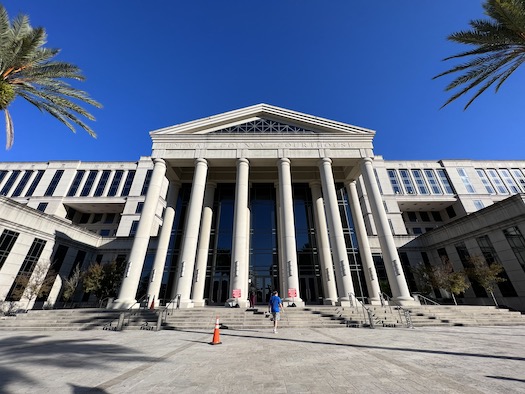
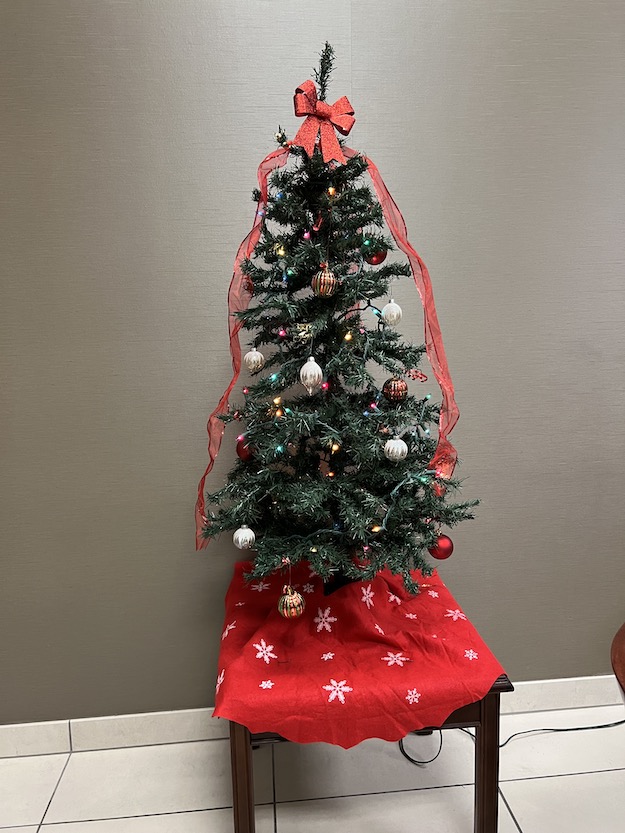
This big building is of the Jacksonville, Florida Courthouse on Adam’s Street. The little tree is the only Christmas decorations (with the exception of a clerk who had Christmas cards posted on the wood behind her desk) that I saw on my visit today.(Granted, I only visited two floors and a few departments).
The tree below is the only one that I found while visiting the two floors on which I went. Apparently the employees in the filing area (room 73) decorated this tree to make the season bright in their area. Beautiful.
Of course, I only visited a couple of floors and departments so maybe there were other trees throughout? For sure, there was not even a sprig of greenery or bolt of lighting in the open lobby today though.
Merry Christmas to all and I do hope the employees go home to Christmas joy. They don’t seem to be getting much yule tide cheer at work. (Not being critical just being observant). Also, don’t most businesses have a ‘decorating committee”?
UPDATE: I have been told that the Courthouse has no budget to decorate for Christmas. Also, someone suggested the reason there is no Christmas tree is to not show partiality to one religions since its a courthouse? Still, there should be a Christmas tree put by the city but I’m grateful someone in an office celebrated “the reason for the season”.
See you tomorrow,
City Courthouse: 501 West Adams St., Jacksonville, Florida 32207 (904) 255-2087
This. Is a true story.
This big building is of the Jacksonville, Florida Courthouse on Adam’s Street.
The tree is the only one that I found while visiting the two floors on which I went.
I do hope the courthouse workers have a Merry Christmas and have trees at home to enjoy. They don’t seem to be getting much yule tide cheer at work.