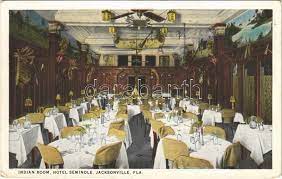
The ole’ Seminole Hotel once sat at the SE corner of Hogan and Forsyth Streets. Complete with three elevators and 10 stories high, it was quite the structure. The hotel was a beauty and the “place to be” and the place to be seen. With the theme of Indian lore, it had a dining area decorated and called “The Indian Room”; canoe and all. If you look carefully at the postcard, you can see the hanging canoe in the front of the room.
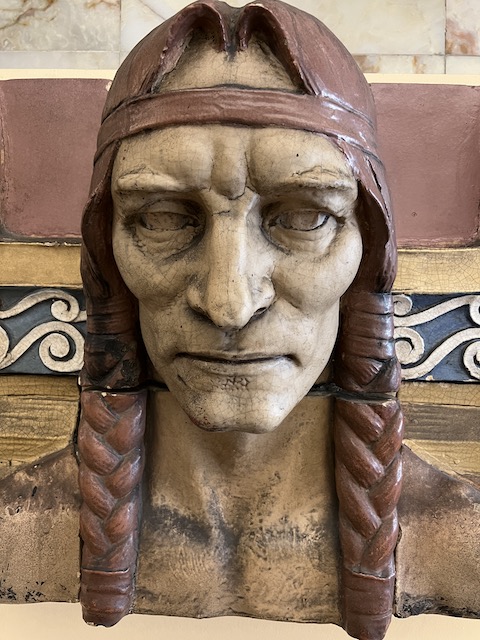
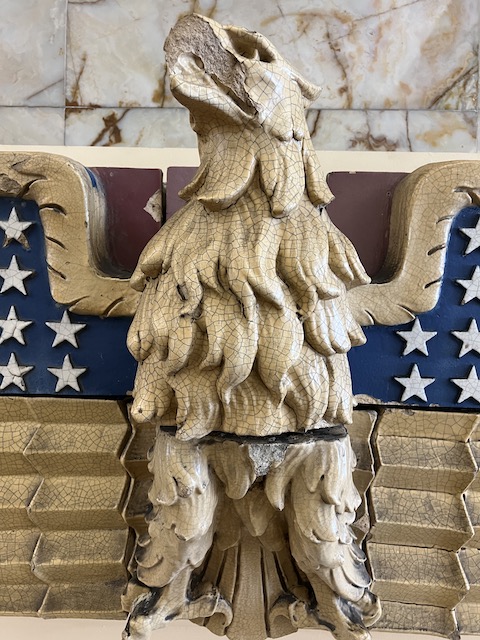
If you go to the Ed Ball building at 214 North Hogan Street, you can see and even touch the huge terracotta decorations that once were on the building’s structure. There are two pieces at that location; the Seminole Indian and the eagle flanked with a flag.
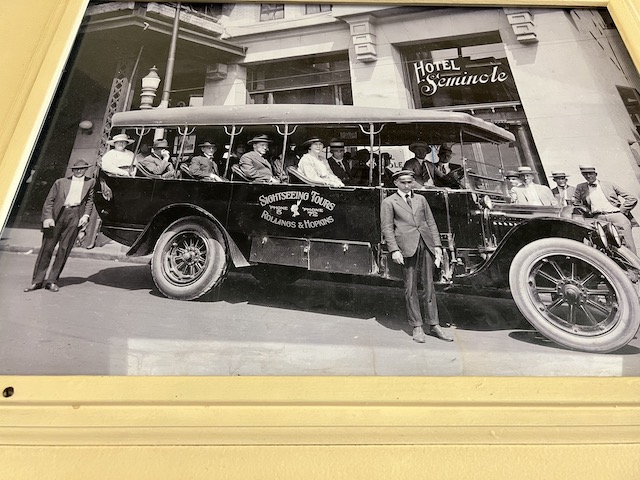
The building was built in 1909 by architect, Henry John Klutho and demolished in 1974.In its hey day, people took sightseeing tours to the building, had grand parties and events there and it was quite the show piece for the city of Jacksonville.
After it was demolished, it was used for a parking lot. Now the Bank of America Tower is located in the space. Gee, things change. I wonder if they’re hot in those clothes?
This week, I visited the First Baptist Church of Augusta. It was the site of the founding church of the Southern Baptist Convention. Also visited was the first Baptist Church in Georgia which is in Appling.The interesting thing about both is that they tie to Jacksonville; sort of….
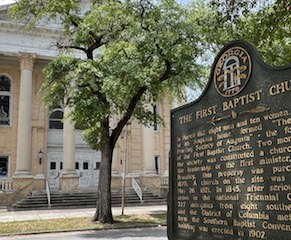
The First Baptist Church of Augusta, located at 802 Greene Street began in 1817 with a “Praying Society”. It expanded and in 1821 a brick building was dedicated . The fellowship continued and in 1845, the Southern Baptist Convention was established. A historical marker is outside of the church with this inscription:
In March 1817, eight men and two women meeting in an Augusta home formed “The Baptist Praying Society of Augusta” – the forerunner of the First Baptist Church. Two months later the society was constituted a church under the leadership of the first minister, Wm. T. Brantley, this property was purchased in 1870. A church on this site was dedicated May 26, 1821. In 1845, after serious friction arose in the national Triennial Convention, 327 delegates from eight southern states and the District of Columbia met here to form the Southern Baptist Convention. This building was erected in 1902.
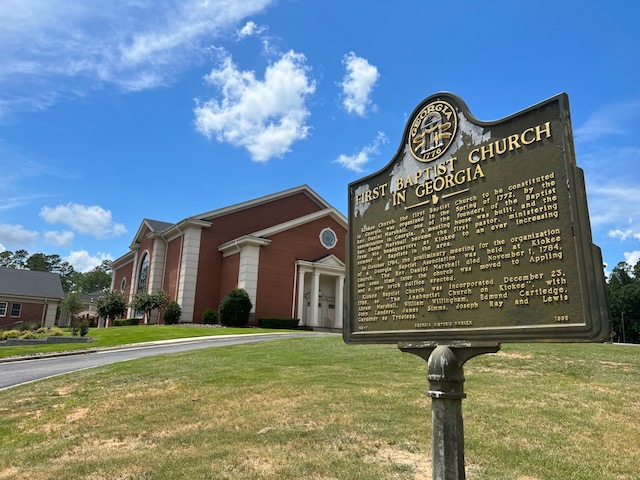
The first Baptist Church of Georgia, Kioke Baptist Church, is located in Appllng, outside of Augusta. It began with a meeting house in 1772 with the Rev. Daniel Marshall as pastor. It held church meetings at least 45 years before the First Baptist Church of Augusta
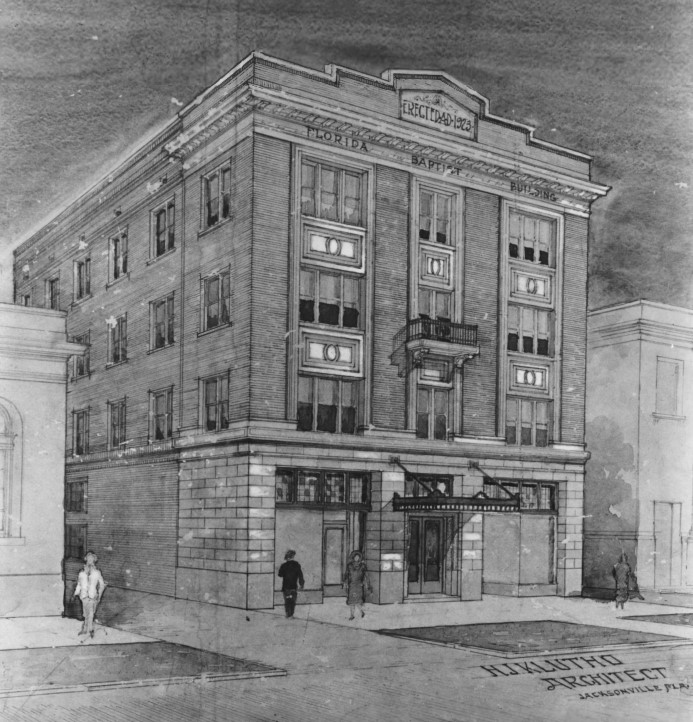
In Jacksonville, Florida, there is a historic building at 218 West Church Street less than a block from the Historic Hobson, the First Baptist Church, built after the Great Fire of Jacksonville. The “Florida Baptist Building” was designed by the Jacksonville famous, Henry John Klutho. In January of 1984, it was designation a U. S. National Register of Historic Places. It is now being repurposed to have apartments and living quarters for residents. It was there that Southern Baptist Convention business was conducted, newspapers for the Southern Baptist Convention were written and more.The photo below is the original rendering by Klutho.(credit:unknown).
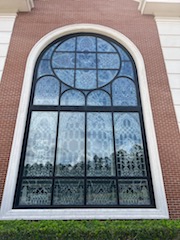
When Kioke Church, the oldest Baptist church in Georgia, built its beautiful current facility, it asked the Southern Baptist Convention founding Church, the First Baptist Church of Augusta which was in disrepair since they changed their facility to another location, to give them some of the stained class windows from their former church in downtown Augusta. They did and today, those beautiful windows can be seen in their lovely facility in Appling, Georgia. The former church where the Southern Baptist Church was formed is in total disrepair but their former windows are seen in beautiful display in Appling.
In Jacksonville, The building once used by the Southern Baptist Convention in Jacksonville, which through the years has moved to another location in Duval County, is being repurposed to house others and create living and retail space.
In all, the Church is alive and well although the facilities have changed, God remains The I AM.
Old Kings Road travels long North and South all of the way from Georgia to below St. Augustine. It has been less than a long and winding road but instead a long, fairly straight and meaningful path for so many including my own family.
On our trips to see family in Hampton, South Carolina, we often took the Kings Road through Georgia and then over to South Carolina so I feel as if I know some of the road’s ins-and outs.
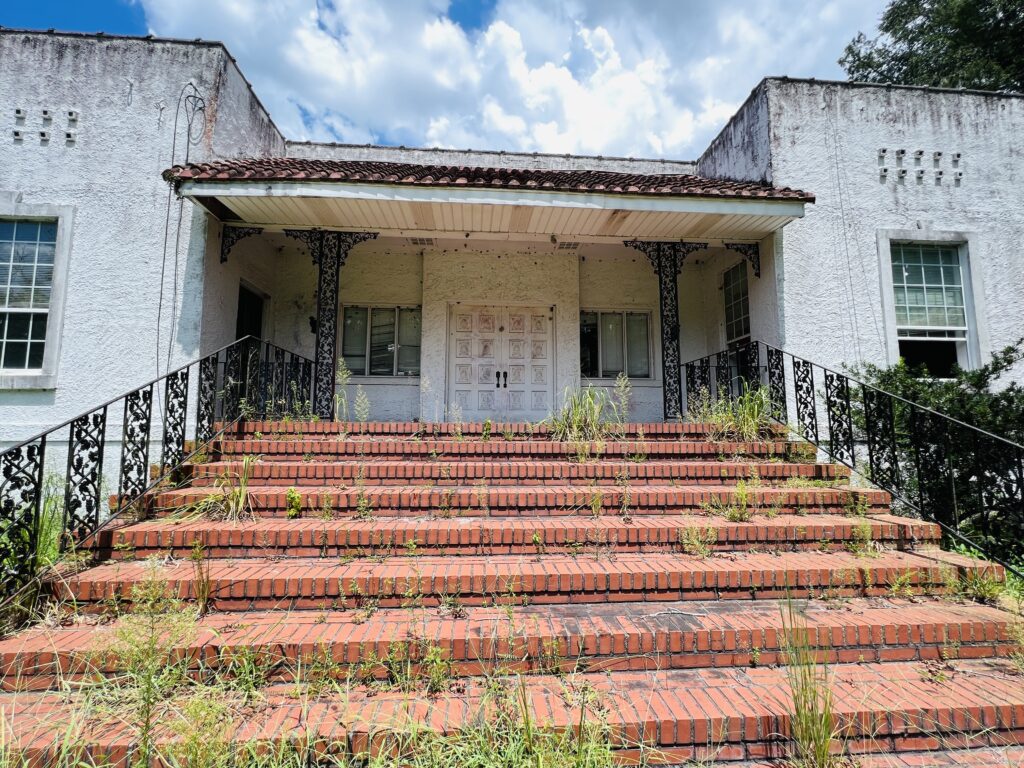
Recently, I was traveling Old Kings Road and saw an old but fancy farm house so I dropped by to photograph it and then later find out some of its history.
8701 Old Kings Road
The house is vacant as of the summer of 2022 but the land to the left is being used as a car, truck and dumpster park. I asked a guy walking across the street for permission to photograph the house. He told me he knew nothing about the old house but to click away; he was only there to get his parked 18 wheeler.
And so, with his permission, I parked and photographed the home that I later found out was built on 13 acres and constructed in 1901. The owners at that time appear to be Charles Henry Long (September 3, 1907- May 16, 1971)and Lavaughn Riggs Long(1910-1995). The two married on June 7, 1925. They had 2 children: Charles Jr. who died at 18 in service to his country and Eva Bernice who was born in 1929.
The Long’s were cattle buyers and had a meat processing farm often called an abattoir or slaughterhouse. Meat was processed for human consumption.It has been written that they also provided food for the Jacksonville Zoo animals on occasion.
The meat processing barn and other out-buildings including the fences for keeping livestock are not in view but you might can imagine a life of cattle and livestock. There was also, on Beaver Street, a meat processing house for packing and distribution.While I’m not sure of its owner, it is still located there and is known as being owned by a demolition business. It looked abandoned except for a newer model car in the yard in 2022.
Over the years, the property was used by others including businesses associated with the American Forest, Famous Historic Trees, Johnny Appleseed, Florida LLC and Leaf Me Along, Llc. As mentioned, it is most recently used as a parking facility for large trucks and equipment.
Meeting a driver gave me opportunity to photograph the place. I can imagine already the fine events held in the sun room or at the pool out back. It must have been a beauty back-in-tha’-day. One thing for sure, someone will have to take care of the hundreds and hundreds of wasp nests hanging on the old stucco siding which was probably put there when remodeled in 1920.
Oh, and my Mother’s maiden name is Long. I could be kin to these folks.. (More research needed here). Ha!
(Sources: S. Strickland of Call Box, Google Books, T. Gilmore, Florida Memory, Ramey Collection)
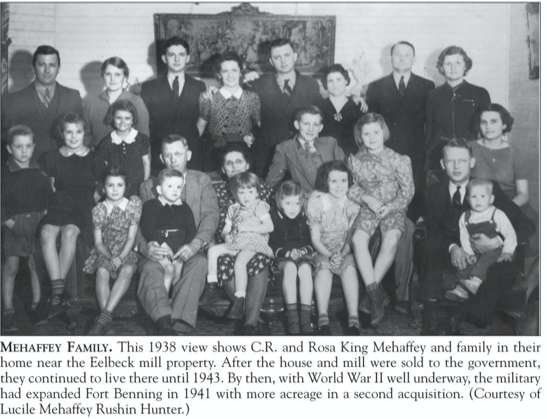
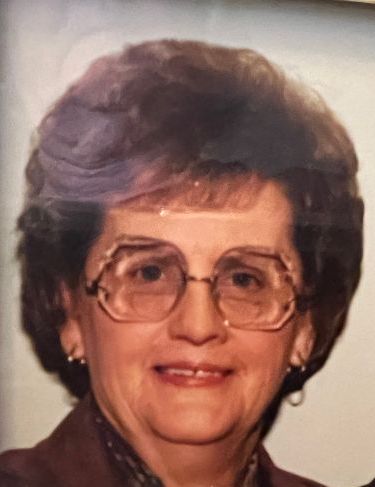
Emily Carolyn Mehaffey was a long time First Baptist Church of Jacksonville member and director of youth and adults over her 40 some years at the church. She worked in various places in the fellowship including church training, the ladies department, with young people and as a director in the Women’s Department under the leadership of Miss Guinell Freeman. In her young adult career, she worked at the Eelbeck warehouse on Beaver Street in Jacksonville, Florida. Later, she became a real estate agent with fine skills of order, and detail. Mehaffey had a lot of satisfied home buyers.
Google Books, Kenneth Jr.
Emily was born October 30, 1918 in Eelbeck, Chattahoochee County, Georgia and died in Duval County on August 21, 2012. She was buried in Columbus, Georgia.
Emily Mehaffey
She was preceded in death by her parents and many of her siblings including Clifford, E. L, Hubert, William, Madeline and Lucile.
It was her parents who built the Eelbeck Grits and Pancake company in Columbus, Georgia. The name Eelbeck was derived from the homeplace of Henry J. Eelbeck, the postmaster, who married Sarah Cook whose father owned the property. Over the years, it became a milling business and called “Eelbeck”. Mr. Cliff Mehaffey leased the property and Eelbeck Milling became a house-hold name.
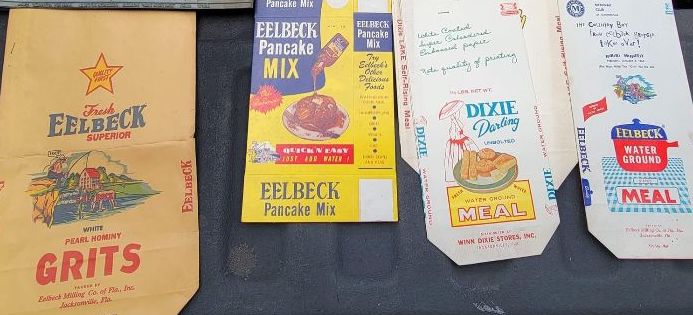
Note: “Jacksonville” on the Eelbeck packaging. Courtesy of Jason Wittkopp
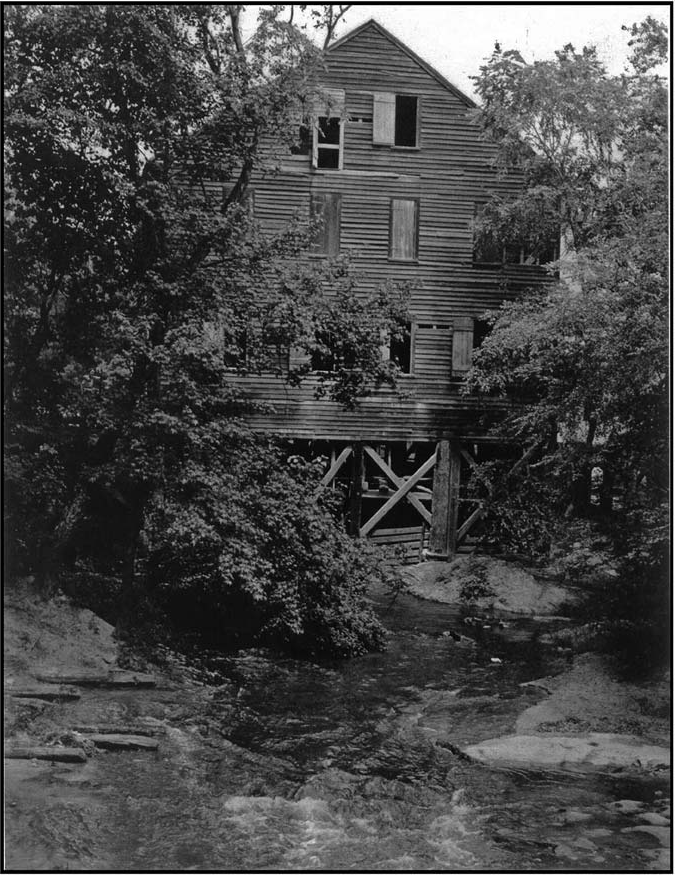
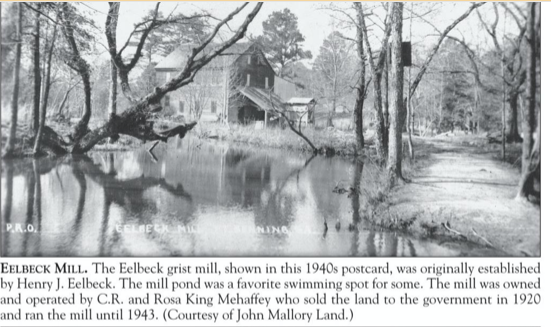
“The mill is a large wooden structure which age has blackened but notimpaired its sturdy longleaf pine timbers and weather-boarding. The lumber was cut on the site which once had many beautiful bodies of original timber. Every beam and every board in it was dressed on both sides by hand. This was done mostly by slave labor. Every piece of it appears today as sound as it was theday it was put in place. Inside the mill are parts of the original equipment, such as the meal bins and elevator. The former are made of solid pieces of long leaf, pine twenty inches wide, which gives an idea of the size of the timberonce foresting the section.”( Chattahoochee Cty GaArchives, 1922)
Eelbeck Mill, Photo- Mehaffey
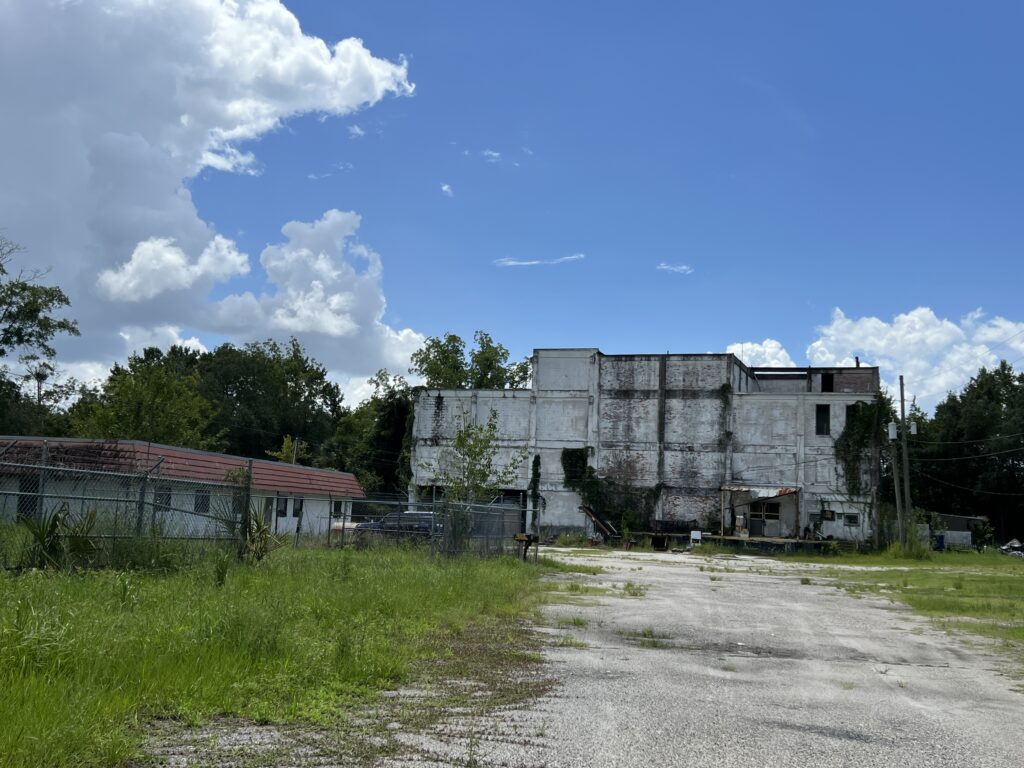
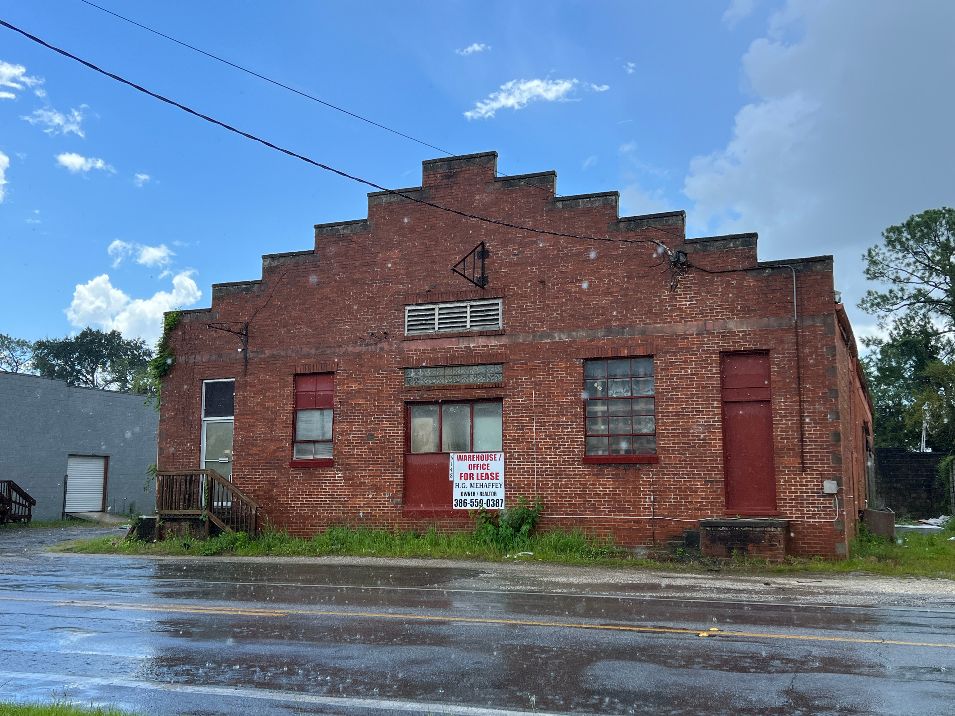
The actual plant site was sold to Fort Benning Military Reservation. The family moved to Jacksonville and the Eelbeck name continued on with warehouses on Beaver Street in Duval County. Emily worked in the office on Beaver Street before retiring and taking up the real estate business.
The Beaver Street warehouse in Jacksonville, Florida for Eelbeck Grits, and pancakes.(Photo 2022)
Until 1941, the site was filled with all of the workings to make grist but that year, it was absorbed by Fort Benning. Military Reservation. The Eelbeck Mills complex was dismantled in 1943.
Eventually, Eelbeck sold to Martha White, an American brand of flour, cornmeal and mixes. It was established in 1899 in Nashville, Tenn.
Andrew L. wrote on Emily Mehaffey’s “Find a Grave listing”, “You are loved and missed by your First Baptist Family.” We can all make a difference. Right?
See you tomorrow,
Sources, Find a Grave, Sarah Cowie, H. G. Mehaffey, photo, Chattahoochee County GaArchives History-Eelbeck 1933, N. K. Rogers, Google Books, Kenneth, Jr.,J.M. Land, Jason Whittkopp Collection (photo).
So, this building is the Edward Ball Building. There was a zoning meeting there this morning of which I went to attend. As I left the area, I saw the front of the huge 141 feet, 11 floor office building and thought we all should know about it.
The Edward Ball Building is located at 214 N. Hogan Street in our fair city. It is an annex for the Jacksonville City Hall and has other important government office departments. The construction of the building began in 1960.
It was named in honour of Edward Ball who managed the duPont Trust. Ball’s sister had married the wealthy Alfred I. duPont and came to Florida with his sister. He began to work for duPont and through a turn of events had various dealings which made great wealth.
Ball worked for his brother-in-law who created the Nemours Foundation. He had dealings with St. Joe Paper Company (also a founder), the Florida East Coast Railroad and the Florida National Bank.
The building was later purchased by the city for $23 million. It was voted on to name it the Edward Ball Building by the city of Jacksonville because of the many contributions he made to Jacksonville.
Oh, and I was there for a 12:00 meeting but when I found out it was rescheduled for 1:00, I signed in and left my letters to the commission members.
See you tomorrow,
Category: Buildings | Comments Off on The Edward Ball Building