Sometimes I think I missed my calling. While in graduate school we were told to get an interview in a place that if we could choose to work, we would seek employment. My choice was the Florida Times Union. In my mind…If I could have any job in the world, it would be a reporter/writer/photographer for the Florida Times Union. I made an appointment with an editor and sat in her office for about an hour at 1 Riverside Avenue( now demolished-2022) discussing the possibilities.
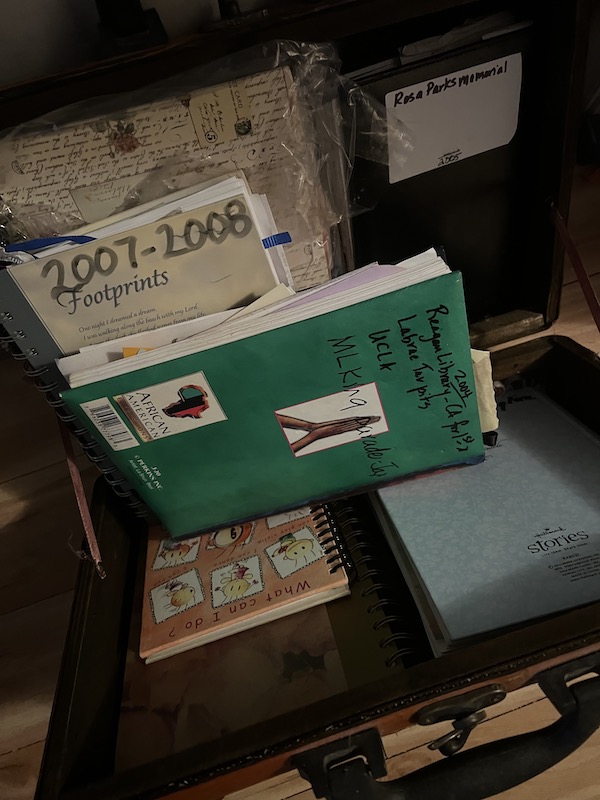
One case of many journals.
I never pursued that job and for almost 40 years loved being a teacher, administrator and for a few years, adjunct professor at UNF teaching a teacher’s course. Looking back, I was so happy in the education field. On the side and in my free time, I spent hours photographing, writing and publishing stories. That continues to this day. There has always been a journalist inside of me even as a youngster.
Having an interest in writing causes one to save stories, old documents and collect memorabilia related to writing. My files are many and it is a constant thing to keep up with what has been collected such as unique items, pens, pencils, letters, documents, photos, old newspapers and the like. There are five things that are especially unique that I’ve saved over the years: 1. Two authentic bound huge newsprint books from the early 1920 Florida times Union years. 2. A collection of vintage, old and rare ink pens. 3. Unique historical items, letters, documents, related to America and her people including Presidents, Royalty and Rosa Parks; a personal favorite. 4. Literally thousands of photographs. 5. Jacksonville stuff in general.
There is no way of knowing how differently my life would be if I had gone the path of a newspaper girl but I am grateful that I got the life of both.
Still, I wonder what life I would have had as a full time reporter? In the meantime, I’ll see you tomorrow as I report from the sidelines.
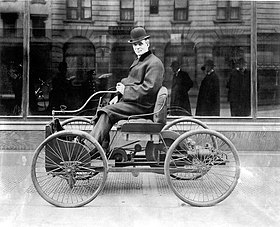
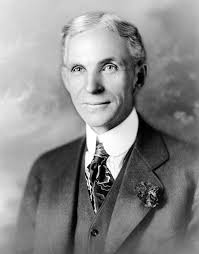
Henry Ford revolutionised the way of travel world-wide. The 1896 the quadricycle was the first vehicle on four bicycle wheels. It was powered by a four-horsepower engine.
Ford Quadricycle- Photo- Ford Company
With 12 investors the Ford motor company was incorporated in 1903. By 1907, the inventor had the now-famous scripted “Ford” logo.
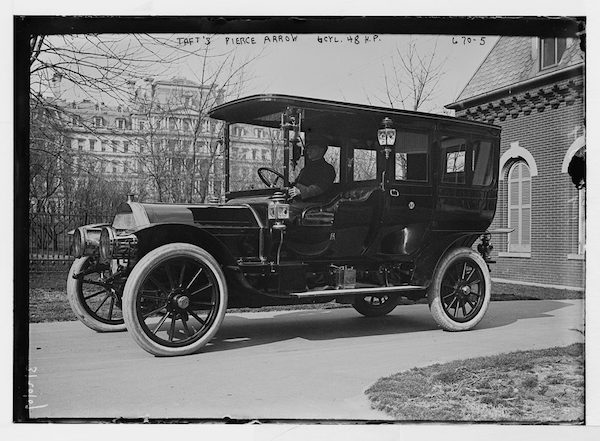
HIs 1907, his first assembly line was in Highland Park, Michigan. He purchased a 130-acre tract of land and would build a factory to speed up wheels on the ground.By 1908, the Model T automobile was introduced and the assembly line was set up to mass produce autos. From there the auto industry was on the move and on the rise. According to Whitehousehistory . org, “Congress appropriated $12,000 for the purchase of the first two White House motor cars despite heated protests”. Pierce Arrow was the first chauffeur for President William Taft.
Whitehouse first car- William Taft- Photo- White House
Henry Ford was a busy man and traveled from place to place, even abroad. In time he had as many as 31 plants . This was all before the Great Depression.
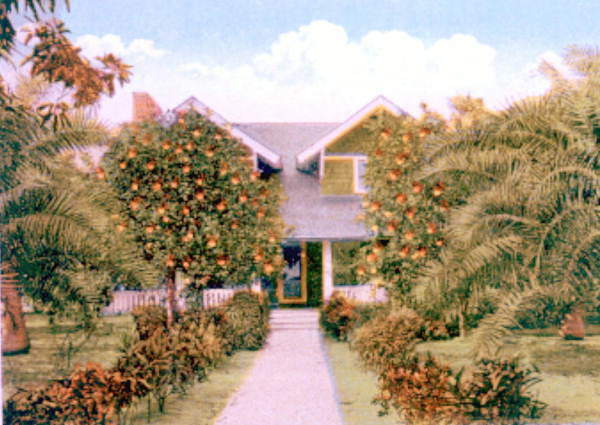
Ford traveled on Flagler’s Florida east coast railway and at the invitation of Inventor Thomas Edison took his wife Clara and son Edsel to visit Fort Meyers, Florida They liked the vacation so well, Henry Ford bought a 2 story riverfront home there next to Edison.
Ford Estate in Fort Meyers
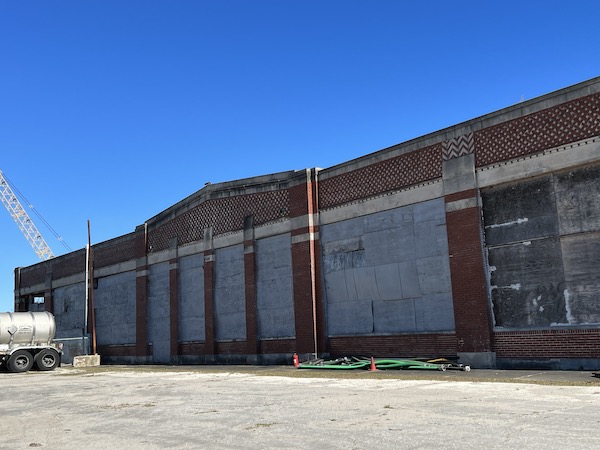
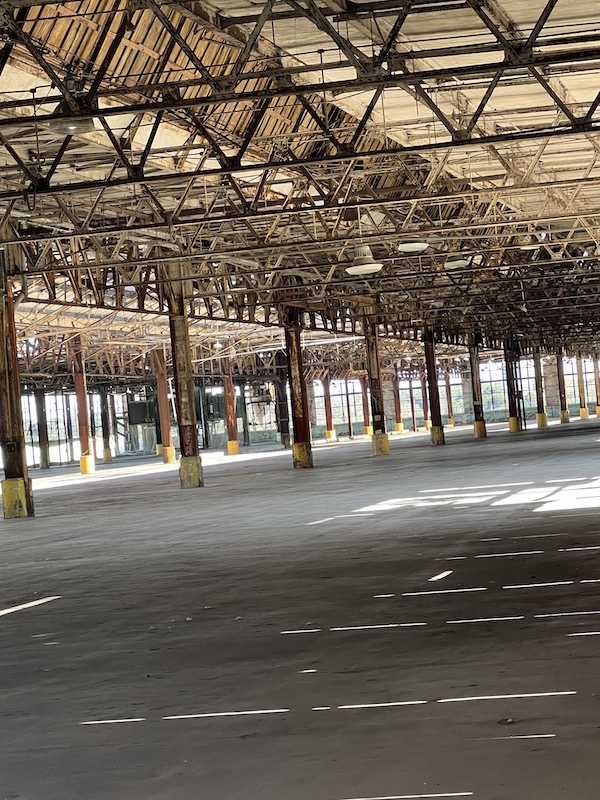
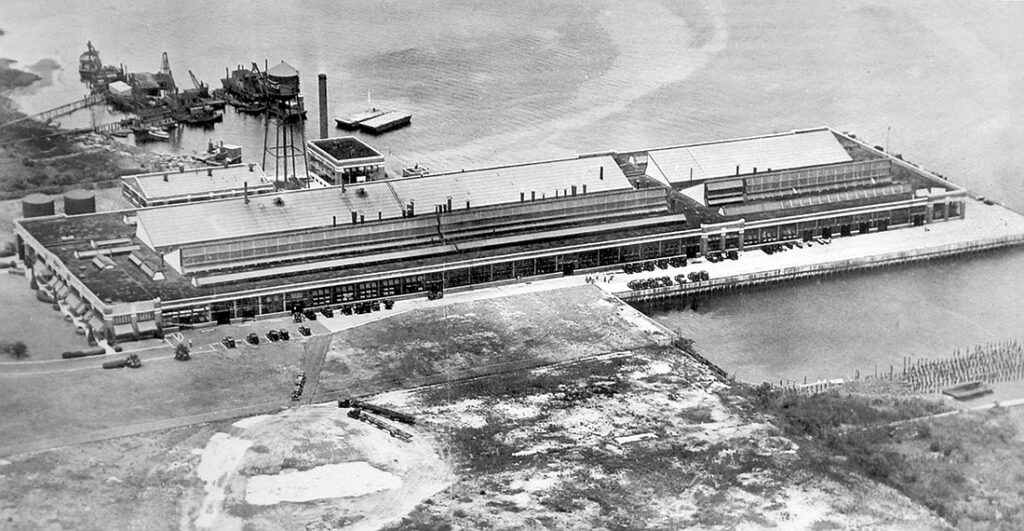
With the auto industry booming, factories were being made and in 1924 Jacksonville, Florida would join Charlotte, NC, Chicago, Il, Memphis, Tn, Salt Lake City, UT in having an assembly-line plant. The Jacksonville, Florida factory was on the St. Johns Riverfront at 1900 Wambolt Street. It served from 1924-1932.
Ford Plant- Photo- 2022- Ramey
The Great Depression hit from 1929-1939 affecting so many businesses. It is believed the boom of the 1920’s, a stock market crash, poor management of the Federal Reserve and other causes brought about this downturn.The Jacksonville, Florida Ford plant was one of them. This period of serious economic depression affected everyone and the auto industry was hit hard. The Jacksonville plant closed in 1932. Over the years following, the land-area was used for parts and distribution which ended in 1968. From then until about 2015, various companies used the space including a wooden pallet manufacturing business.
Ford Plant- 2022- Ramey
The Jacksonville Historic Preservation group was in hopes of saving the Ford Manufacturing plant naming it a designated local landmark in 2003. In 2015, the same year it was purchased by Amkin Hill Street LLC, Henry Ford was inducted into the Florida Inventors Hall of Fame. Over the years the factory building has been in disrepair and every day losing its former glory.
Ford Plant Jacksonville- Florida Memory
In October of 2022, Mike Mendenhall of the Jacksonville Daily Record announced that the “Jacksonville City Council will allow the owners of the historic former Ford Motor Co. factory in Talleyrand to demolish the 97-year old riverfront landmark for a possible maritime industrial redevelopment project”. This was a sad day for the historians of Duval County.
We’re living in sad days where our history is continually removed but , keep taking those photos so we can at least have the memories…..
Remembering Henry Ford- Florida Memory
The original Michigan Ford Motor Auto plant remains in tact. It was made a National Historic Landmark in 1978.
See you tomorrow,
Nan
Sources: Ford Motor Company, Whitehouse. Org, Jacksonville Daily Record, Mike Mendenhall, Wikipedia, Personal visit to the plant-Ramey.2-2-23
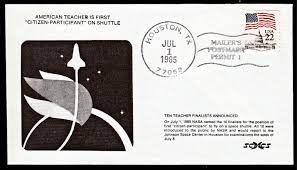
Many of us applied for the Teacher in Space program back-in-the-day. Teachers were invited to fill out some paperwork in order to be considered for the NASA space program. The paperwork was done by hand and mailed in. Having been a teacher for only about 9 years I applied anyhow. After a time, a letter was sent from NASA indicating if a person was in the running for a spot with NASA and the Teacher in Space program.
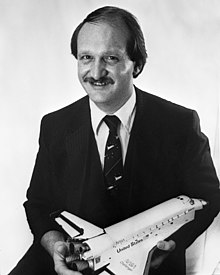
Mike Reynolds was born on March 30, 1954. He was a Jacksonville teacher who had grown up in Duval County and ended up being one of the final five contestants. He had attended Duval County schools and began teaching at Duncan U. Fletcher High School. Later, he left town to attend Thomas Edison State College in New Jersey and in 1982 had returned to receive a Masters at the University of North Florida right here in our city. He later received a Doctorate in science education and astronomy in 1990 from UF.
Press Photo for Reynolds
In 1985 Reynolds had applied for the Teacher in Space program and became one of the top 5 candidates. In 1986, Reynolds was teacher of the year at Fletcher High and from there he traveled to the Kennedy space center to be a part of the teacher in space program events and later would be invited to watch the Challenger space shuttle blast off into space.
NASA Program logo
On this cold day, January 28, 1986, the Space Shuttle Challenger with 7 NASA astronauts aboard, lost their lives in a shuttle disaster only 73 seconds after take off. The cause of the explosion was cold weather when the 0-ring seal failed. It was a sad day for all of America and even the world. Jacksonville residents mourned the loss.
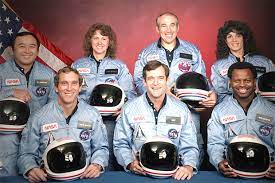
Challenger Crew
Mike Reynolds went on to work at Florida State College, Chabot Space and Science center, Meade Instruments and the Association of Lunar and Planetary Observation. He died October 15, 2019 at the age of 65. He had spent his whole career in the science, astronomy and in the education field.
For me, I probably could not have figured out the math.
See you tomorrow,
Nan
In honor of those who lost their lives, we name them and thank them for their service:
The last Challenger mission, dubbed STS-51L, was commanded by Francis R. “Dick” Scobee and piloted by Michael J. Smith. The other crew members on board were mission specialists Ronald E. McNair; Ellison S. Onizuka, and Judith A. Resnik; payload specialist Gregory B. Jarvis; and teacher S. Christa McAuliffe. (Credit: NASA).
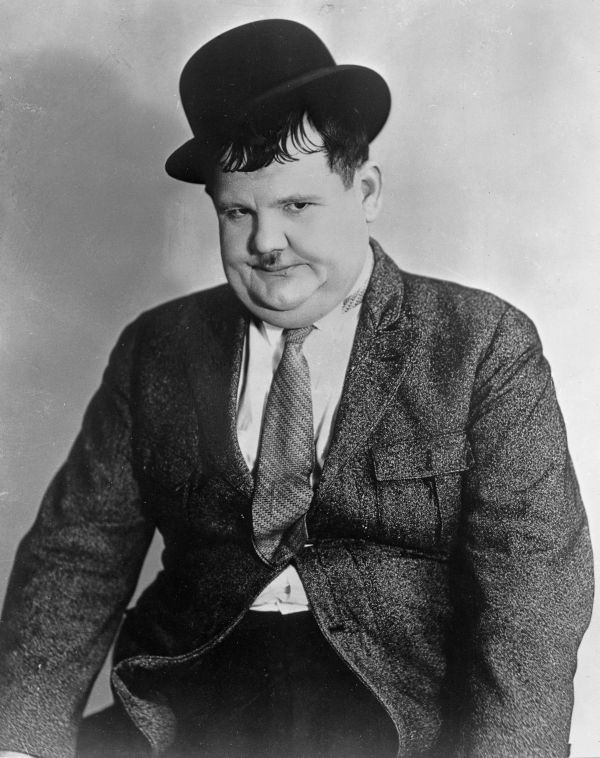
In 1913, the singer/actor-obsessed Oliver Hardy of Georgia moved to Jacksonville in hopes to get a better opportunity in the film industry. At that time, Jacksonville, Florida was a hub for making movies and the Lubin Manufacturing company that produced and distributed films was a part of that success. At night, Hardy was a singer-actor and by day he worked at the Lubin Manufacturing Company, one that produced and distributed films. Jacksonville was a place for the cinematography industry for filming after summer wore off and was called the “winter film capital of the world” at one point.
Florida Photographic Collection
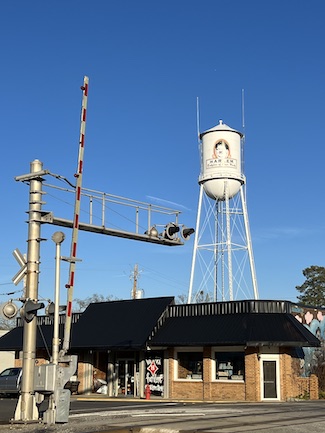
Oliver Hardy was born in Columbia County; Harlem, Georgia. Today, that little town is growing in leaps and bounds with a population of over 3,000 people. Even as recent as yesterday, I saw logging trucks hauling off huge trees and the railroad tracks still rumbling from the sound of ingoing and outgoing train cars although there is no depot stop for passenger trains. In 1913, it is documented as having 10 passenger trains a day. In 1835, the train tracks were being laid from Augusta to Eatonton. Harlem, Georgia was a stop but the last passenger train came through in 1983. Now it’s only commercial. Interesting to me was that nearby there was a community called “Saw Dust”.
Oliver Hardy Water Tower- Photo-Ramey
From the account written on the Harlem city website, in 1857, a Medical College of Augusta, just miles away moved to the area and sold land for a dollar an acre. He donated land for the Baptist and Methodist churches and for a school; now Harlem Middle School. Within 10 years, Newnan Hicks was known to quit his job for being asked to work on Sunday and thus wanted to have a town that did not sell liquor, moving down from Andrew J. Sanders, that process began and by 1870 the town was founded and named by a visiting New York relative from New York, thus “Harlem”.
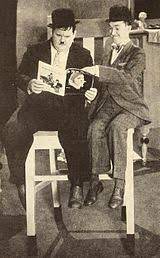
Laurel and Hardy-Wikipedia photo
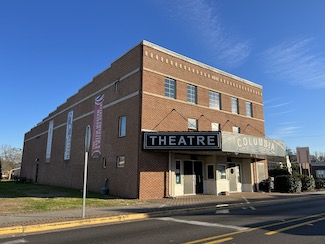
The theatre where Hardy and his counter part, Stan Laurel performed was right there along the train tracks. I can imagine the whistle blew and rails rumbled time after time before, after and yes during performances. It is now a museum.
About the time Hardy moved to Jacksonville, he met and married Madelyn Saloshin, a pianist. A Lubin facility was opened at 750 Riverside Avenue in Jacksonville, Florida. Hardy played a small role in his first movie “Outwitting Dad”. That was only the beginning of his career. He would team with Stan Laurel and make more than 100 comedy films.
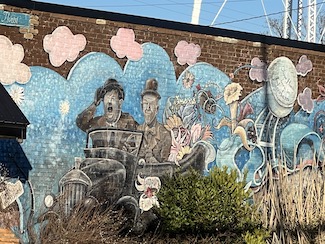
Oliver-Hardy Wall- Photo- Ramey
The Lubin Manufacturing Company, based out of Philadelphia was active from 1897-1916 with a studio in Jacksonville beginning in 1913. It was in the Lubin film company that Hardy was billed as “Babe Hardy and appeared in “ some fifty short” films. During those years, the company had legal battles with the Thomas Edison motion picture business, a “disastrous fire” at the main Lubin studio, destroying a great many negatives and World War II came causing additional losses. All of these things brought about a bankruptcy in 1916 with the end of the company and the company closing completely.
Oliver- Hardy Museum- photo- Ramey
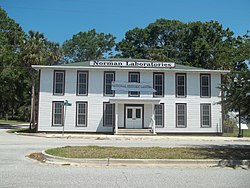
In terms of the film industry in Jacksonville, the Florida State Archives indicates that “the political atmosphere in Jacksonville turned against the movie industry due to accusations of fraud, ties to political corruption and fear of endangering the public welfare with elaborate stunt sequences.” The movie era in Jacksonville was over and it moved to Hollywood California.Basically, the only thing left of the film industry in Jacksonville is the Norman film building but that’s a story for another day.
Norman Studio in Jacksonville-Wikipedia
According to ta Tampa Bay story Oliver Hardy wrote in a letter to a friend, “”The best times of my life were spent in Jacksonville.” So, those must have been some good days.
See you tomorrow,
Nan
Sources: Silentera. Com, The Coastal, Wikipedia, Tampa Bay Times, Visit to Harlem 1/26/23.
Jacksonville’s involvement with “The Ship of Gold” tells a story of respect, love, fear, betrayal, riches and more. Life magazine called it “the greatest treasure ever found” but did the treasure show the greatest or bring out the poverty in most all connected? After researching the story and finding the boat in Northeast Florida, the real question is, which is the “Ship of Gold?: The SS Central America?, The Arctic Discoverer?, or the man who hauled a great bit of the gold away and then disappeared? I’d say, all three.
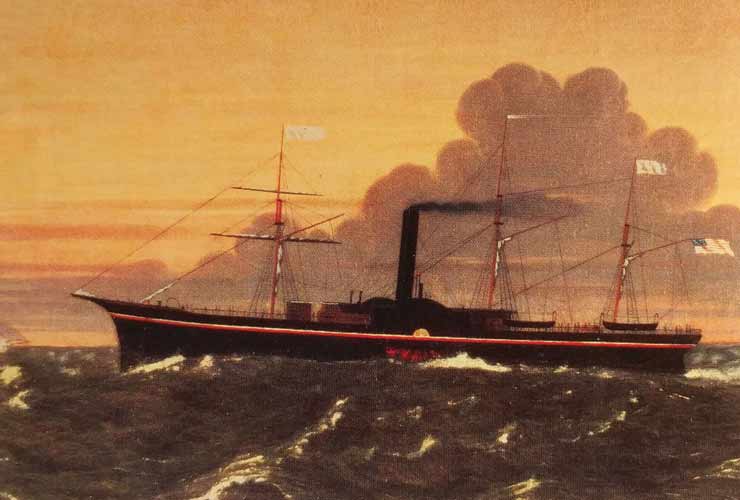
Contemporary painting of Central America ship
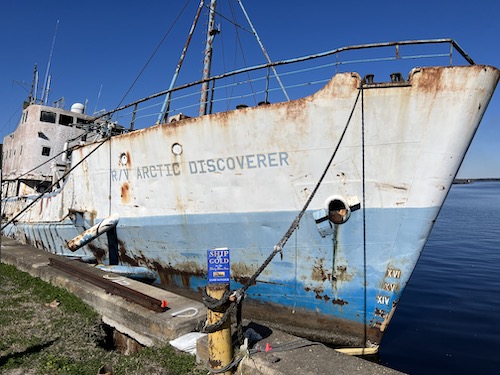
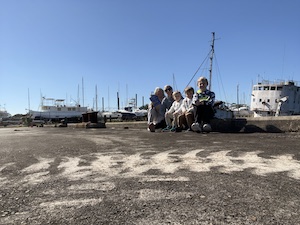
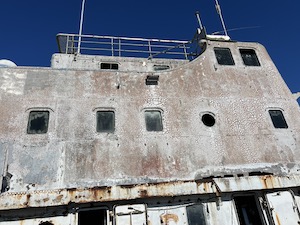
My grandsons are nine, four and four. Knowing the ship was so near, it was a must-see, so we, their mother and me, did. Our nearby travels took us less than twenty minutes to see the Arctic Discoverer. It’s basically, just down the road. It’s an approximately 65 year old deserted boat along a dock in Green Cove Springs, Florida. We all totally enjoyed the trip. With Gary Kinder’s book in hand, we basically knew the story start to finish except for the details of what Thompson will now do.
Arctic Discoverer- Photo- Ramey
Over 30 years ago, the 180 foot ship was called the A.T. Cameron. It was then sold and renamed the Arctic Ranger when an investor seeking to help Thompson’s exploration bought and repurposed it. He brought it to Jacksonville, and Green Cove Springs, had it painted light sky blue and white and for a “nominal” fee, rented it to Thompson for his exploration. Thompson and his crew took it to sea to find gold and lots of it. Along with it, they took a, what many called a “miraculous” 12,000 pound underwater robot named Nemo that could be deployed remotely. The trip was orchestrated by a young Tommy Thompson, an engineer who had a passion and drive to hunt down and find the sunken ship, SS Central America.
Ship of Gold- Photo-Ramey
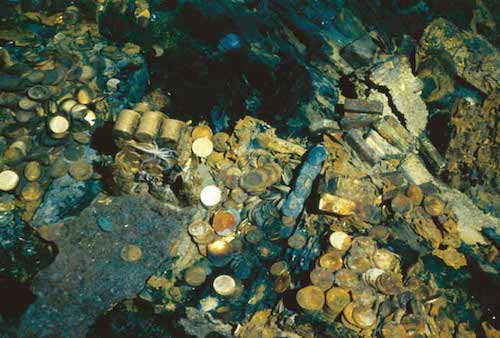
September 1857 the Central America ship carrying some 600 passengers was returning from the California Gold Rush when it sunk off of the coast of South Carolina due to a hurricane. Over 20 tons of gold, other treasures and some 400 lives were lost.
Ship Gold- Recovery Limited Photo
In 1985, Tommy Thompson, with his company, Recovery Limited Partnership, set out with a group of 141 investors to discover and find the Central America . The plan was to recover the treasures lost. He and his team used “Nemo”, the underwater vessel along with other recovery equipment to find and explore the bottom of the sea where it sunk. Using special computer equipment and savvy methods for capturing such , including robotics and far-advance oceanography tricks to the trade, the team not only found the Central America but was able to bring up a great amount of items from the wreckage including luggage, documents, the ship’s bell and millions of dollars of gold coins and gold bars.
By 1989, the crew discover the shipwreck bringing great attention to this disaster. After this incredible find, over 35 insurance companies sued Thompson saying their policies gave them rights to the gold. Through years of litigation, and continual protection of the shipwreck site, Thompson and his company were rewarded 92 percent of the recovered gold with the remainder to pay insurance companies. Within two years, Thompson sold his companies’ portion of the gold to California Gold Group for $52 million
Investors cried foul and said that Thompson never returned their investment money thus there were further lawsuits against Thompson. High profiled businessmen sued him including The Dispatch Printing Company, directors of the Columbus Exploration group and Donald Fanta, an investor along with nine technicians who helped with the discovery.
The Arctic Discover in 2023- Photo- Ramey
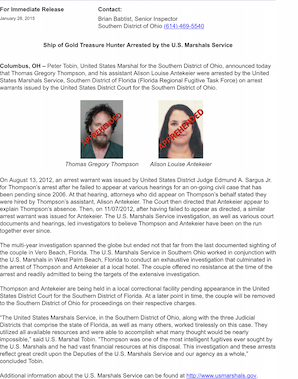
In March of 2012 Thompson filed for bankruptcy but the filing was dismissed. It was then that Tommy Thompson did not show up in the next court session which prompted an arrest order. Thompson and his girlfriend Alison Anterkeier disappeared and for at least two years their whereabouts were unknown. According to The Columbus Dispatch, the resident going by the name of Susan Owens was actually Alison, the manager of the motor lodge, Virginia said. She moved there after being a no-show for a court date. This information came out in federal papers in June of 2015.
It was in January of 2015 also that, Thompson and Anterkeier were found in a Hilton hotel in Boca Raton. Those involved in the case said they had been paying cash for their living expenses. They were arrested and jailed. Thompson’s girlfriend, Alison spent a month in jail and then released.
In 2018, Thompson said he did not know where the gold was. That same year, the judge ruled that what artifacts were available could be sold and the $19.4 million in damages could go to the plaintiffs.
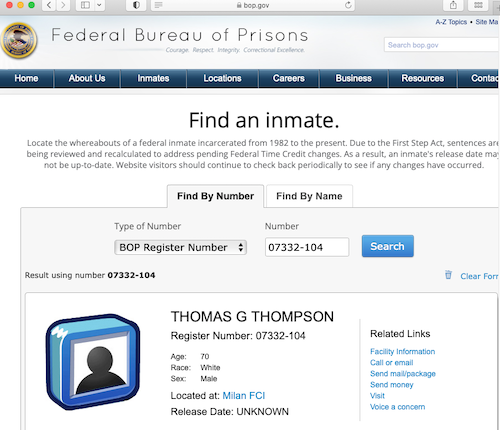
Thompson has remained in jail since the arrest and being unwilling to tell where the gold is to this day. He is being held in a federal detention center in Milan, Michigan according to news organizations . When searching his name under “inmate”, there is no release date listed.
Did Thompson bury the gold in Boca? Green Cover or even Jacksonville? If you read the court transcripts you might find out. Some say he’s given hints. If you find the gold, it would be yet another “great treasure find” pertaining to the “Ship of Gold”. The Arctic Discoverer is at present docked just outside of Duval County city limits.
See you tomorrow,
Nan
Scripture for the day: “Thou Shalt Not Steal”. Also
Exodus 20:16 — “Thou Shalt Not Bear False Witness Against Thy Neighbor.”
There is probably more to this story that we don’t know.
Sources: Columbus Dispatch, Ship of Gold, Gary Kinder, Coinworld, Odyssey Marine, Recovery Limited, Wikipedia, Personal visit.1/27/23
Mae Boren Hoyt was the co-author to the famous pop-artist, Elvis Presley’s first RCA Singles hit, “Heartbreak Hotel”. It was in Jacksonville, Florida on the Westside, on Dellwood Avenue in 1955 that she and guitarist Tommy Durden put the tune together. Durden had seen a sad situation concerning love and heartbreak and got with Mae. The two put together the song.
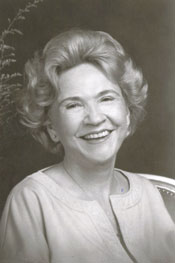
Mae Boren Hoyt-Publicity Photo
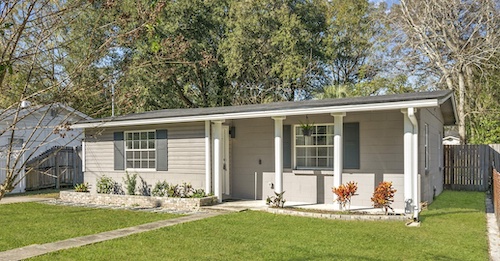
Through a turn of events, I was interested in finding the home where the song was written. After a little research the house was found. On a stroll down Dellwood Avenue on that day, it was as I expected, a small 1,288 Sq Ft home, 3 beds and 2 baths. It sold February 28, 2022 for a whopping $298,812. Because of the high price, I wondered if the buyer knew that Elvis had been in the building?
Listing photo
On You Tube, there are several interviews with Mae and other artists; one being Elvis. It was obviously one of his first interviews, if not his first, and he told about his humble beginnings and thanked her for her support and willingness to “have his back”.
Mae Boren Axton was born February 9, 1914 in Texas. She died August 4, 1997. Her claim to fame was, while living in Jacksonville, she co-wrote Heartbreak Hotel with Tommy Durden . The day after the writing, she pitched it to Elvis. He liked it and it was the song that brought the two of them into the limelight launching both of their careers.
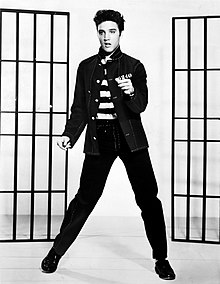
1956 Promotion Photo
Before meeting Elvis, Mae met and married John T. Axton, a Navy officer. They moved to Jacksonville, Florida where he was stationed in 1949. Later, Axton became the first coach at Paxon High School and Mae, on occasion substituted as a teacher having her bachelors degree from University of Oklahoma. Mae also taught at DuPont and Lee High Schools. While she taught school, her focus was on music and writing. Over the years she would work with: Mel Tillis, Reba McEntire, Willie Nelson, Eddy Arnold, Tanya Tucker, Johnny Tillotson, and Blake Shelton.
The success of Elvis music and launching both of their careers, Mae named her music Company “Dellwood Music”, it is believed, after the street on which she lived.
Jimmy Tennant, also called Jimmy Velvet, a friend of hers and one who lived in the same Jacksonville neighborhood met Elvis through Mae and had a life-long friendship with him. He spent time on American Bandstand and managed other singers, even having his own popular singles, “We Belong Together” and “Its Almost Tomorrow”. There is also a long list of other songs he has performed. In an interview with him, “Spa Guy” confirms a lot about Elvis and his time in Jacksonville, Florida and on Dellwood Avenue.
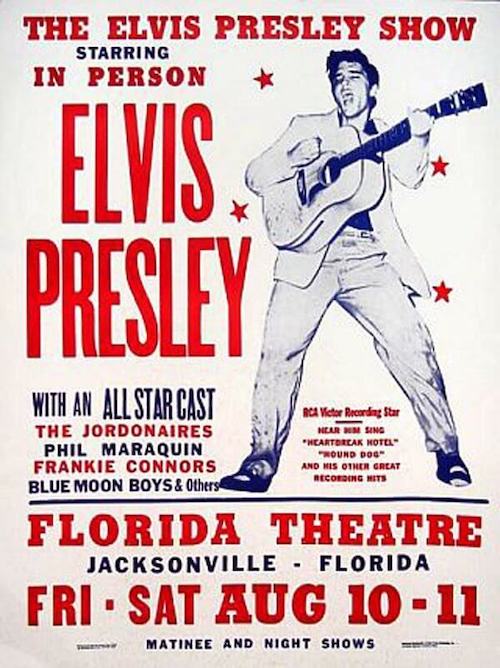
Elvis performed in Jacksonville August 10 and 11, 1956. His last performance was May 30, 1977 at the Jacksonville Coliseum. It was his 5th performance in Duval County and his last.
Credit: Jacksonville Historical Society
Elvis Presley died August 17, 1977. While Elvis has left the building, he is still in the hearts and minds of many of Jacksonville who went to see his last performance. The Times Union reported over 10,000 fans went. Were you there?
See you tomorrow,
Nan
Sources: Jimmy Velvet, Spa Guy, Wikipedia, JHS, Jimmy Velvet,
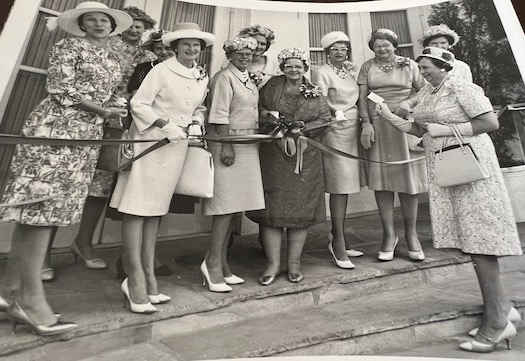
Ground Breaking, Photo: Garden Club, Jacksonville Historical Society
My Aunt Bette, was a garden club member. She fit right in. Bette Long was beautiful, gracious, loved people and philanthropic. For as long as I remember, she talked about her beloved Cherokee Rose kind of Garden Club. While it was located in neighbouring Orange Park, it had the same focus and drive as the Jacksonville Garden Club. It was there that she had her memorial service upon her home-going. For sure, she probably never actually potted a plant with her beautiful nail-painted hands but more than likely gave a ton of money to help the needy and further the cause.
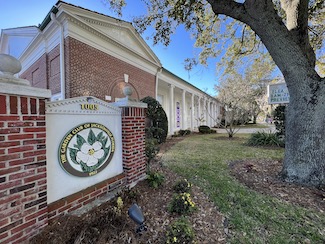
Garden Club Photo: Ramey
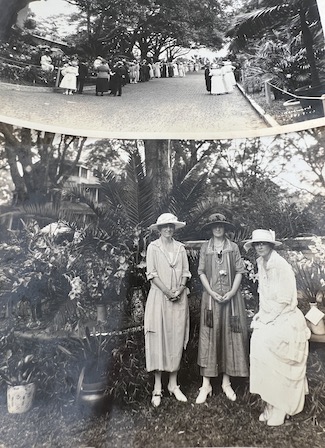
Many times, she and her group would join the Garden girls at the Jacksonville Garden club for annual meetings and the like. With Aunt Bette, the more people the better. That is how I learned about the Downtown Jacksonville Garden Club which began its life on March 22, 1922.
First Garden club show.. 1922( Garden Club, JHS)
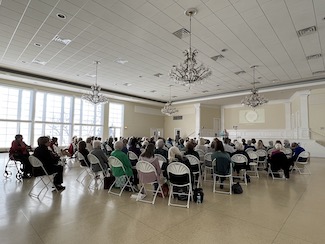
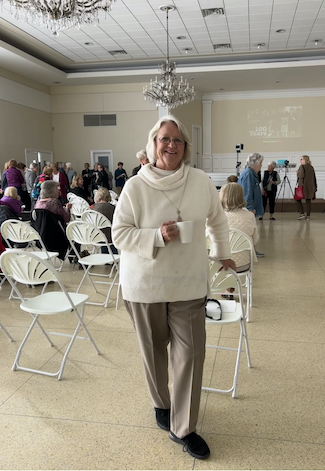
Yesterday, a group of about seventy five ladies gathered at the Riverside area Garden Club to hear interim archivist Emily Cottrell talk about how the Historical Society of Jacksonville archives its items. It seems that in July of 2020, the historical society came to the garden club to view hundreds of documents, photographs, scrapbooks and more that were in the possession of the club. By the end of that year, the garden club group had donated these items to the Historical Society and they were carried away by several trips to be archived and documented.
The speaker and archivist, Emily Cottrell a UNF graduate first volunteered at the Historical Society and now is a member of the staff in charge of this massive historical archive. As many of 10 scrapbooks, dozens and dozens of documents, booklets, brochures, and pages of different and various “circles” are now in her possession at the JHS to archive, decipher and digitize. With the help of Ethan and Tova, members and other volunteers, many have worked diligently to put items together by date, time and group.
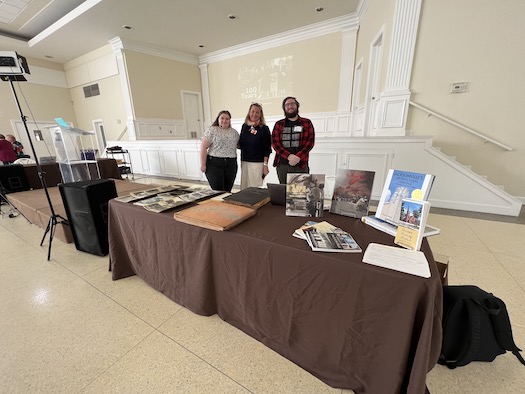
The event yesterday was presented on a slide show and with a table display of some old and long-standing documents and photos. There was the first garden show and ribbon cutting event pictured. Also was shown, an old scrapbook of 1946 newspaper clippings dating back to the early 1900’s. Other projects shown was that of a 1963-64 “Garden for the Blind” where at least 25 students from the St. Augustine Deaf and Blind school were celebrated with a “sensory garden using the senses of touch, taste, smell, feel, and see, set up for them.
The Jacksonville Garden Club was founded by Ninah Cummer with a group of some 17 friends in 1922. It was a “small organization to further their garden research and to enhance city spaces. “
During Cottrell’s talk, she mentioned 2555 Gilmore Street as a place of service. After the event, I rode past to see what and where that was. It is the home of Central Riverside Elementary School which was built in 1916 so within it first few years, the Garden Club was helping beautify the school grounds.
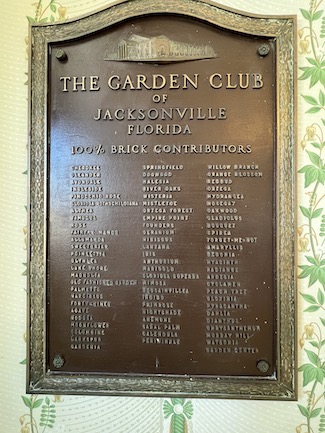
There have been as many as 170 “circles” ( garden groups) over the years. Cottrell indicated there are 130 active groups at this time. Some of the names of circles over the years have been: Cherokee, Oleander, Avondale, Ingleside, Magnolia, River Oaks, Lantana, Red Bud and my favorite, “Old Fashioned Garden”.
Aunt Bette would be proud I went to the Garden Club of Jacksonville. I’m all about giving too but rarely put my hand in the dirt to plant either….Ha!
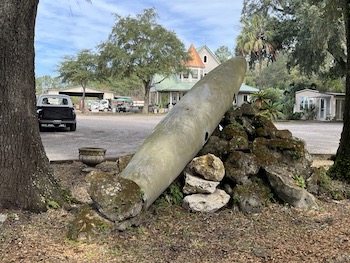
This past month, I took a trip to Marietta which is in West Duval County to see the area where Jacksonville founder Isaiah David Hart, sometime after 1822, had a large plantation. I found the hugely wooded area and imagined all kinds of scenarios of how and where Hart may have lived but I had no idea I’d find a jet fuel tank out there with other yard art.
Jet Fuel Tank- Photo:Ramey
While driving up and down the densely populated trees, I found huge ones of every kind including tall pines, large oaks and even Florida palms. The interesting find that day was that of a jet fuel tank set up in the yard of long time Westside resident Guy Lachapelle. That, was some serious history! How in the world did it get there and from where?
There is really a simple answer. Lachapelle is, as listed on his linked page, an “expert total” in “selective dismantling and demolition since 1979”. Fuel tank removal would be one of the things he might do.
While being inquisitive, I saw Guy in his yard and was able to ask him a few questions and get permission to photograph in the area. Wearing blue jeans, an open collar shirt, and in country fashion, he told me how he was in the business of demolition. He explained that one of his jobs was on Normandy Blvd. some years ago and part of the job was to remove a jet fuel tank. Thinking it was unique, he used his large equipment, brought it home and leaned it artistically in his front yard. Boom! Yard art!
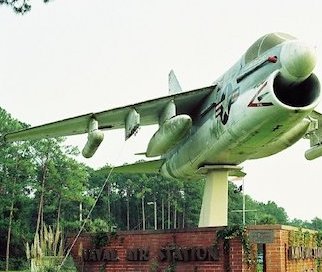
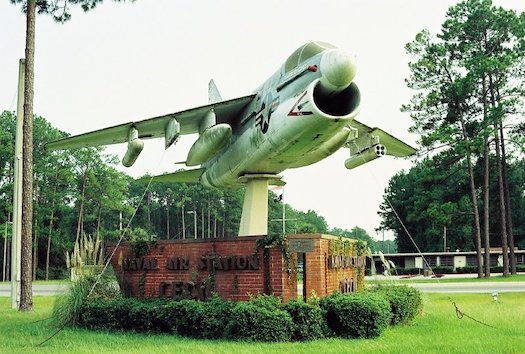
On Normandy Blvd there was the home of Cecil Field Naval Air base which operated from 1941-1999. It is now called Cecil Commerce. Lacapelle did not say he got the tank from the base but it made sense that it certainly could have come from there with the base once serving as “one of four naval air stations to be designated as Master Jet Bases specifically used for the operation of carrier-based jet aircraft”.
Cecil Field Entrance-Unknown Photo credit
His wife came out about the time I was leaving and when I mentioned the yard art, she said looking around with a smile, “Sometimes there is just too much yard art”.
Other items in their yard were dated old rusty trucks and a Seaboard Coastline train car sitting on actual tracks. HA! I wonder what Isaiah Hart would say?
See you tomorrow,
Nan
Sources: Wikipedia, Google Search, Lachapelle, Ramey
My Father, Alec P. Vaughan, Jr. worked at Jacksonville’s Cecil Field his whole career. He worked in the public works area at both NAS Jax and Cecil . Working longer at Cecil there was a long-lasting friendship of staff developed with his leadership. He was a kind man and honest to the core.
Cecil opened 1941-closed 1999- Photo Credit: unknown
When we were growing up, the base, located on Normandy Blvd. near our home, was a place we frequented often. My Mother, a stay-home Mom and with a family with only one car would sometimes take my Dad to work giving us a car for the day. That would mean she would have to take him to work and pick him up at the end of his work schedule. We would all pile in the car before day break to take him, go shopping, run around and do car things and then return at the close of the day to pick up Daddy.
In the morning we could stay dressed in our pj’s or play-clothes but if my Dad wanted us to check out his digs, we had to dress the part and put on Sunday-go-to-meeting clothes. Ugh! We all, the three of us, hated that, but the perk was, we got to go see Daddy at work, see the airplanes and meet all of these people who hugged and petted us. We liked that just fine. Who doesn’t like the bosses kids and we were well behaved. Daddy was kind-hearted but we were expected to mind our manners and we did.
During my Father’s time at Cecil Field, it was the largest Naval Air and military base in terms of land area with over 22,000 acres. He worked there from the mid 1940’s until his retirement around 1975. During that time, he managed public works including the telephone and communication office and in addition worked to provide furniture for Navy members and their families.
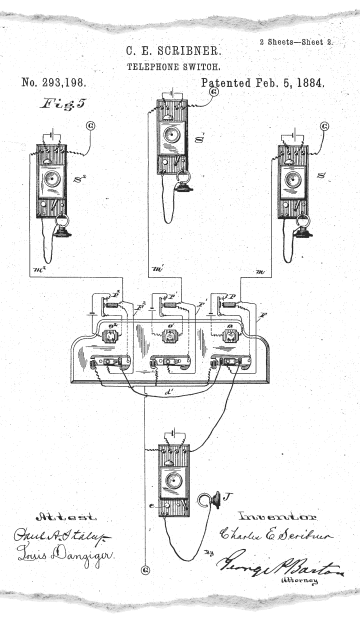
Telephone patent
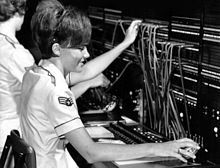
We visited the furniture storeroom on occasion as well as the office where the phone lines were pulled in and out using an old phone switch, later called a phone jack. This, dating back to 1884 evolved over the years but was used into the 1960’s with ladies saying “number please” and making connections. That was always an intriguing visit.
U.S. military operator, 1967
Cecil Field was a full fledged Naval base and we spent much time on and off of the property as my Dad served well.
Since a visit to the Old City Cemetery on East Union Street, I realize there is a focus by the government of Jacksonville to improve the cemeteries in the city where rot and decay resides. There is though more than one battle of blight where the dead are concerned.
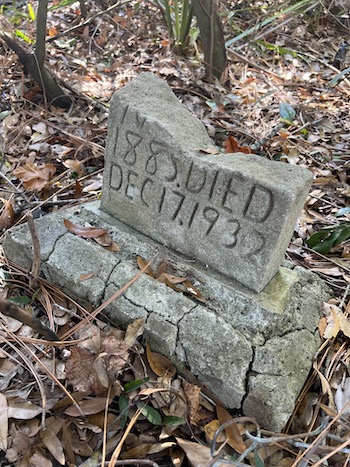
Tomb stone 1885-1932
Trying to research the history of the oldest downtown cemetery has piqued my interest and now comes an online map shared by Kelsi Hasden about the whereabouts of another old cemetery near downtown Jacksonville. After looking up St Nicholas Bethel Baptist Church Cemetery on the City Council agenda, I see it’s one of the Black cemeteries getting distinction of being another of the old burial cites and will receive monies provided to improve it. I wanted a closer look. By its name, It was probably a plant by Bethel Baptist from downtown Jacksonville in the 1880’s. Bethel and First Baptist began together in 1838, and was the first Baptist church in the city. Both Black and White members worshipped together.
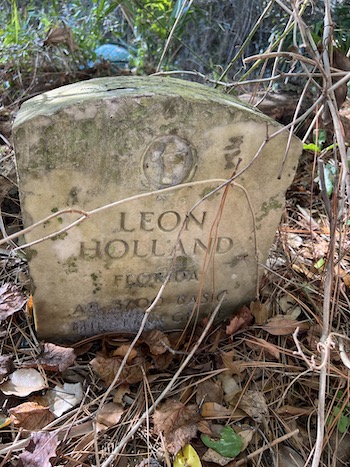
Military stone with cross at the top
This morning, I set out to find this southside church and cemetery. The cemetery was once under the care of St. Nicholas Bethel Baptist Church at some point was enclosed with fencing such that unless you know it’s a cemetery, its just a place of broken cement and where roaming feral cats and the possible homeless frequent. While there, I saw broken stones when peeking through the fence and multiple cats as well as a homeless bag-pack. I did not open it.
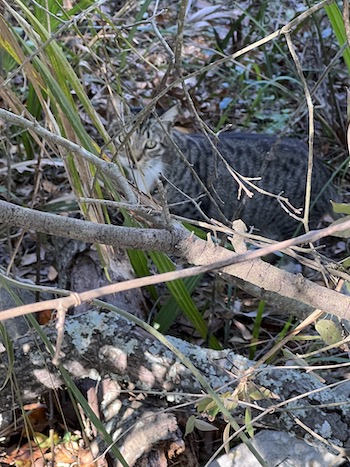
Feral cat among many
Using the map provided on the January 5th blog of “The Jaxson” write-up, I was able to go right to the location and photograph the remains of the remains. While looking through the view-finder on my camera I saw a tabby cat, grey Russian blue type and a solid black cat. Living beside an apartment complex and frequenting the dumpster area seemed like a good thing for them. They all appeared full and healthy but ran when I reached towards my camera to zoom closer.
The grounds are completely grown up with wood rot, tree growth and thick brush. Beneath all of that were broken tombstones, cement slabs and obvious lack of care for the dead. The two stones that I found intact were difficult to read but I was happy to see the cross boldly engraved at the top.
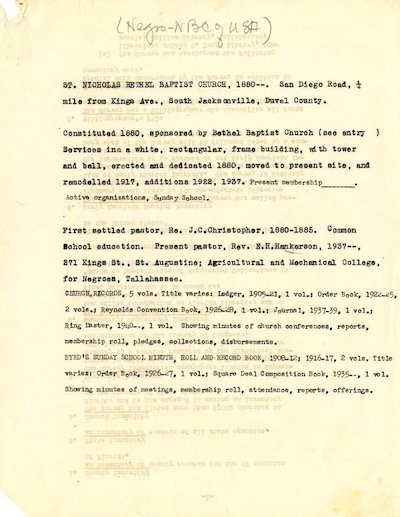
Florida Memory. com offers a document of the founding of this church to be 1880, located on “San Diego Road, 1/2 mile from Kings Avenue, South Jacksonville, Duval County.”
Florida Memory.com church doc
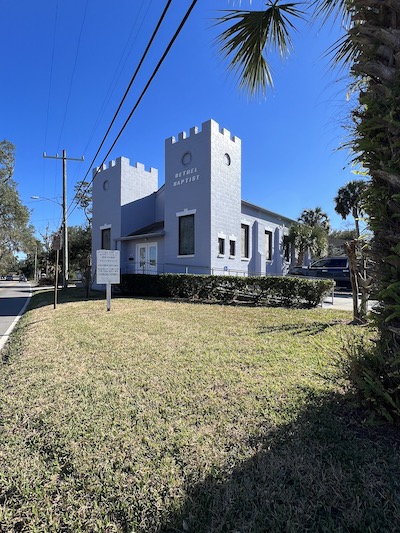
At that time this was a white building which was moved to the present site, and remodelled in 1917. It does not say from where it was moved unless it was closer to the cemetery? The present church is slate blue. The pastor is Carl C. Patterson according to the sign out front.
St Nicholas Bethel on San Diego Road
The pastor at the time was J. C. Christopher serving from 1880-1885. It looks as though the city of Jacksonville will allocate funds in order to help get the graveyard cleaned up which will allow respect to be paid to the interments. There appears to be both military and civilian graves in the area. This will be no small job but kudos to the City Council for approving this project. Its current address is 2602 San Diego Road so there is a lot more than a cemetery clean up. There is the history to ponder.